// SPACE.COM — SPAZIO & SCIENZA
Why do we care so much that Pluto isn't a planet?
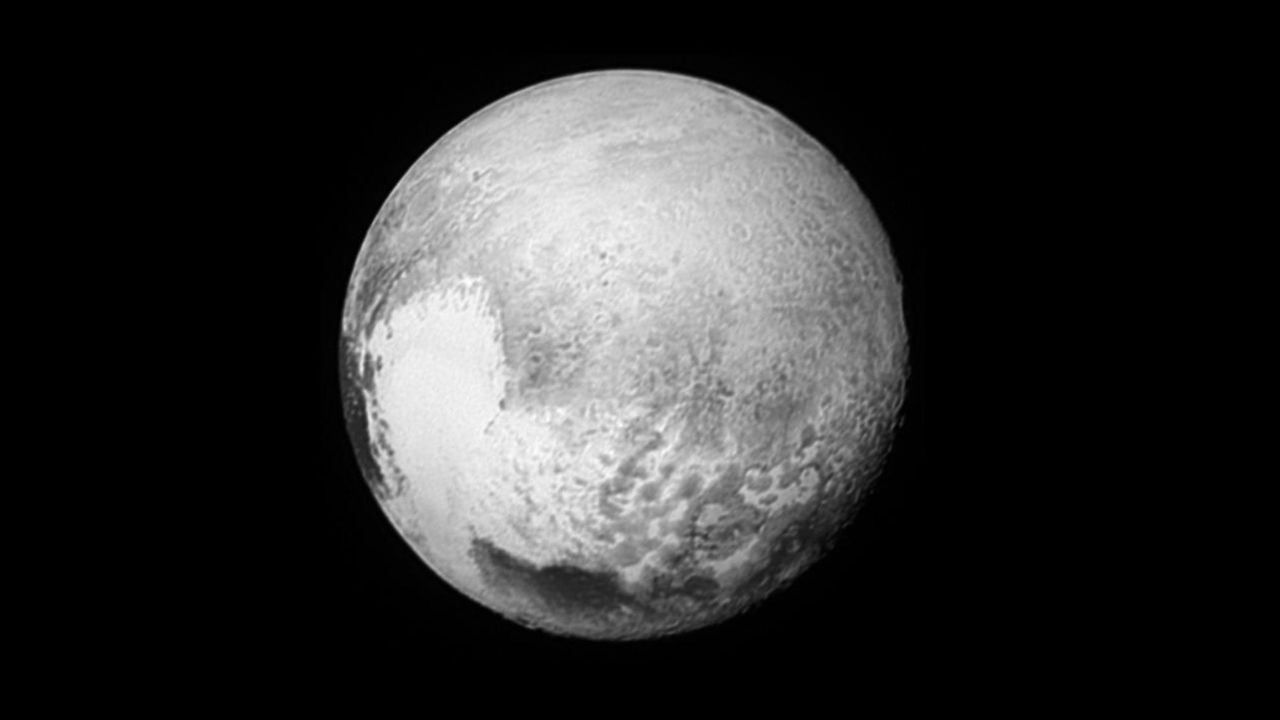
The fight over Pluto's classification says more about memory, nostalgia and human nature than it does about astronomy.
When you purchase through links on our site, we may earn an affiliate commission. Here’s how it works.
Twenty years after Pluto lost its planetary status, people are still arguing about it.
This spring, NASA Administrator Jared Isaacman publicly threw his support behind "make Pluto a planet again," reigniting the familiar debate. Social media threads are filled with people arguing over whether Pluto should be grandfathered into the planetary club, whether dwarf planets are simply another kind of planet, and whether the distinction matters at all.
The disagreement dates to August 24, 2006, when members of the International Astronomical Union adopted a definition of a planet that placed Pluto in the dwarf-planet category. The scientific debate over how best to define a planet has continued in the years since, and the public has many thoughts, too — many people still cling to Pluto's identity as a planet. But why?
From its discovery on February 18, 1930 to its demotion, Pluto belonged to one of the first maps of the universe that students learned: our solar system. There were nine planets, usually memorized in order through classroom diagrams, models and mnemonics such as "My Very Elegant Mother Just Served Us Nine Pies."
Deana Weibel, a cultural anthropologist at Grand Valley State University, says those childhood associations have staying power long into adulthood. As a planet, Pluto was also particularly memorable: the farthest planet, the smallest planet, and a relatively recent addition to the solar system. "It was the knowledge that new planets could be added, with its story of being discovered in the 20th century," says Weibel.
For people who absorbed that version of the solar system as children, the 2006 decision required replacing something that had been an established fact. Laurie Groh, a licensed psychotherapist and owner of Shoreside Therapies in Milwaukee, says that helps explain why the change could provoke an emotional reaction disproportionate to its effect on everyday life. "People aren't grieving a planet," says Groh. "They're grieving the idea that what they learn is permanent. It isn't. Science changes and evolves."
That attachment may fade as generations raised with eight planets get older — but there's not a black-and-white cutoff date. Rob Crotzer, founder and editor of OuterSpaceTrip.com, has watched his own nine-planet upbringing filter down to his daughter Emily, who was born well after Pluto's reclassification. She learned about Pluto from him, her grandmother, and an astronomy atlas published before the 2006 vote. "My daughter was born into the eight-planet solar system," Crotzer says, "yet she has decided that eight isn't enough."
Nostalgia isn't the only force at play. "Our brains work via comparison and categories. That's how we make sense of anything and everything," says Matthew Leahy, a licensed clinical psychologist who studies memory and cognition. Humans rely on categories to organize enormous amounts of information, and changing an established category requires revising a framework that was already functioning perfectly well.