// HACKER NEWS — CYBERSECURITY
Beyond Good and Evil: Nietzsche and the Great War
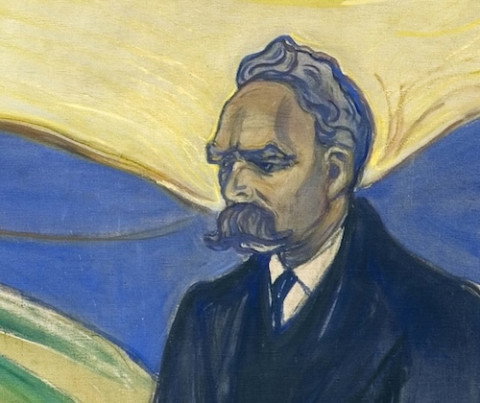
As a frontline soldier in the First World War, the German artist Otto Dix fell under the spell of the writings of Friedrich Nietzsche and his assault on Christian morality.
It was not the front, but the journey to the front that was the worst: ‘There was some shit in people’s pants, I tell you.’ Two years into the war, Otto Dix had seen it all. In 1914 he had signed up enthusiastically to the field artillery. Back then, people had assumed that victory would be swift in coming, but that hope had been disappointed. A great gash of trenches had come to score the western front. Neither side could force a decisive breakthrough. Now, on the slopes above the river Somme, the British and the French armies were making a concerted effort to smash a hole through the labyrinth of German trenches. All summer the battle had been raging. Dix, approaching the Somme, had been deafened by artillery fire of a volume he had never imagined possible and seen the western horizon lit as though by lightning. Everywhere was ruin: mud and blasted trees and rubble. In his dreams Dix was always crawling through shattered houses and doorways that barely permitted him to pass. Once he had arrived at his post, though, his fear left him. Stationed with a heavy machine-gun battery, he felt mingled excitement and calm. He even found time to paint.
Back in Dresden, the famously beautiful city in Saxony where he had been an art student, Dix had experimented with a range of styles. Only 23 when war broke out, and from an impoverished background, the sense of urgency he felt as a painter was that of a man determined to make a name for himself. By night, as Dix huddled beside a carbide lamp with his oils or his pens, flares over no-man’s land would light up corpses grotesquely twisted on barbed-wire entanglements. Then, every morning, dawn would illumine a cratered landscape of death. On 1 July, the opening day of the battle, almost 20,000 British soldiers had been mown down as they sought in vain to take the enemy trenches and another 40,000 left wounded. A fortnight later, every yard of the German lines had been pounded by shells. New ways of killing were being developed. On 15 September, monstrous machines called, by their British inventors, ‘tanks’ grumbled and ground their way for the first time across the battlefield. By the end of the month, flying machines were dropping bombs on the trenches below. Only in late November did the fighting grind to a halt. By that stage, casualties numbered a million. To Dix, hunkered behind his machine gun, the world was transformed. ‘Humanity’, he wrote, ‘changes in demonic fashion.’
There were plenty, though, who thought themselves on the side of the angels. Back in Saxony, a year before the outbreak of war, a vast monument had been unveiled to mark the centenary of a bloody victory over Napoleon. The centrepiece of the Völkerschlachtdenkmal was a colossal statue of St Michael, winged and armed with a fiery sword. That Germany’s struggle against its foes mirrored the cosmic war of angel against demon was a conviction that reached to the top. The Kaiser, as the war dragged on and a naval blockade of Germany began to bite, grew ever more convinced that the British were in league with the devil. Patriotic Britons, for their part, had been saying much the same about Germany. Bishops joined with newspaper editors in hammering the message home. The Germans had succumbed to ‘a brutal and ruthless military paganism’. They had returned to the worship of Woden. In Germany, The Times announced, ‘Christianity is beginning to be regarded as a worn-out creed.’
It was easier, perhaps, for armchair warriors to believe this than for soldiers on the front. Behind the British lines at the Somme, in the small town of Albert, there stood a basilica topped by a golden statue of the Virgin and Child. A year previously, the spire had been hit by a shell. The statue had been left hanging precariously, as though by a miracle. Rumours began to spr