// SPACE.COM — SPAZIO & SCIENZA
From spy satellite to space telescope: The unlikely origins of NASA's Roman Space Telescope
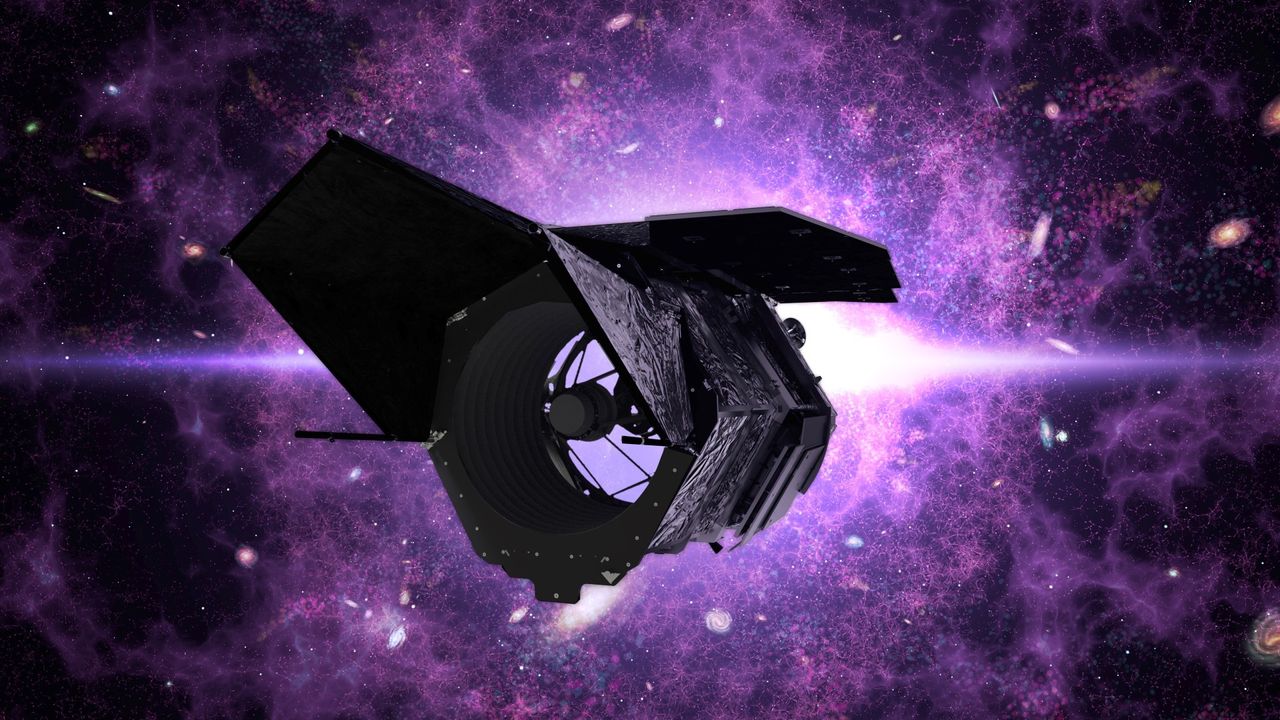
At the heart of this next-gen space telescope lies the parts of old spy satellites.
When you purchase through links on our site, we may earn an affiliate commission. Here’s how it works.
NASA took the guts out of old spy satellites to build the groundbreaking Nancy Grace Roman Space Telescope – but how? And why?
Years of hard work and anticipation are culminating as we sit on the verge of NASA's launch of its next-generation space telescope. Set to lift off this upcoming Sunday (Aug. 30) aboard a SpaceX Falcon Heavy rocket, the Roman Space Telescope will push astronomy into the future, exploring the mysteries of dark energy, studying far-off worlds and expanding our understanding of the universe around us. But to get to this point, NASA used some … unexpected technology.
At the core of the observatory lies the Optical Telescope Assembly. This houses the telescope's primary mirror, its main mechanism through which it surveys the cosmos, nine additional mirrors, supporting structures and various sorts of electronics. But where did all of this tech come from? The National Reconnaissance Office (NRO), which builds spy equipment for U.S. agencies like the CIA. That's where.
In 1999, the NRO stood up the multibillion-dollar "Future Imagery Architecture" program, which contracted out new spy satellites. The NRO contracted Boeing for the project, having the company design a whole suite of new optical and radar imaging reconnaissance satellites. They're basically spy satellites. In 2001, in a post-9/11 America, this effort continued to ramp up with national security concerns at an all-time-high. However, this flurry of spy satellite development was short-lived. And with billions of dollars in overrun costs from Boeing, the project closed in 2005.
At the time, the New York Times called the program "perhaps the most spectacular and expensive failure in the 50-year history of American spy satellite projects."
But one program's spectacular failure is another program's free space tech treasure.
Years later, in 2012, the NRO donated two unused space telescopes from this program to NASA. With optics said to be similar to the Hubble Space Telescope's, two free telescopes presented the agency with a tantalizing opportunity. This donation happened just a couple of years after Roman (then known as WFIRST) was originally proposed — and even though it would cost money to rework the hardware and build the rest of the space telescope out, this provided the possibility of a serious cost alleviation to the mission.
After considering the possibility, the team decided it was the right call. And in 2011, years before Roman (WFIRST) was even formally designated as a mission by NASA, the agency announced that they would be reusing this spy satellite technology. This decision followed the 2010 National Academy of Science Astronomy and Astrophysics Decadal Survey, which pointed to Roman as its highest priority.