// SPACE.COM — SPAZIO & SCIENZA
Trump tried to scrap NASA's Roman Space Telescope last year. Now it's ready to launch
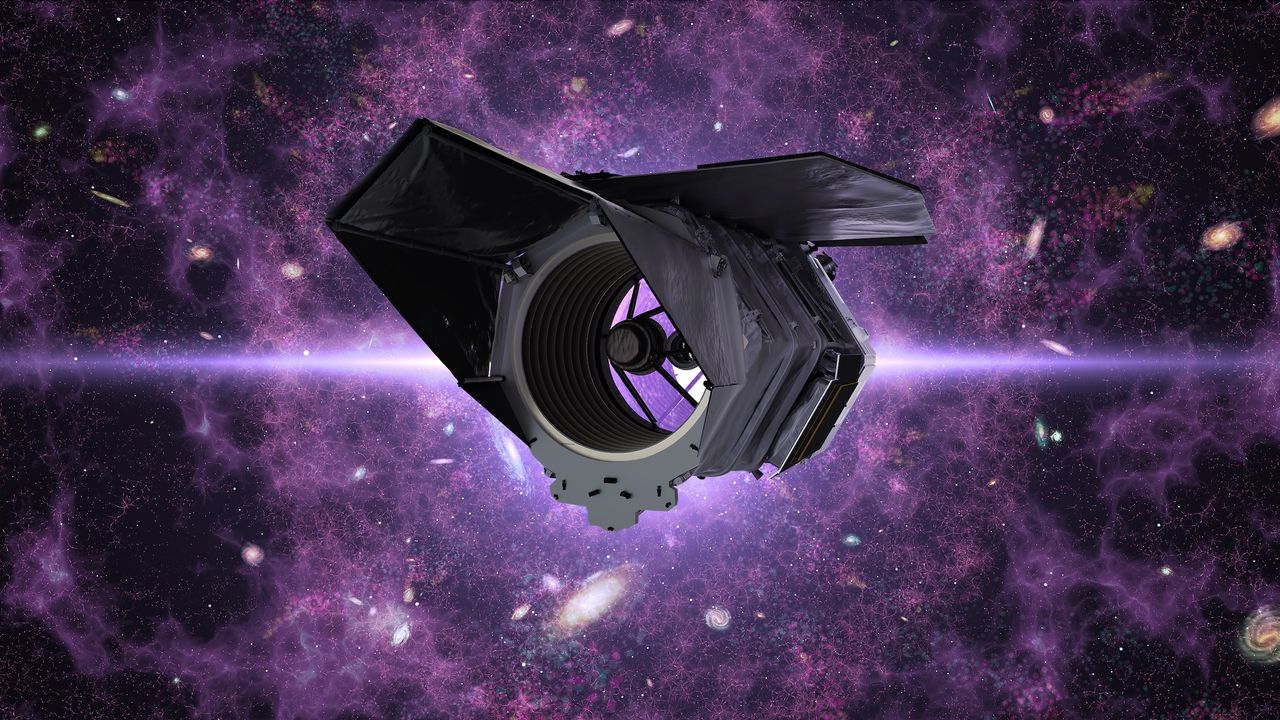
"People were giving up their weekends, and at the same time, there was this compartmentalized knowledge that it could all get cut."
When you purchase through links on our site, we may earn an affiliate commission. Here’s how it works.
The hours are counting down to the launch of NASA's newest flagship orbital observatory. The spacecraft recently got its last glimpse of terrestrial light before being encapsulated in its rocket's protective payload fairing last week and is imminently bound for liftoff.
The Nancy Grace Roman Space Telescope is NASA's next-generation research satellite, and it's currently slated to launch on Sunday (Aug. 30). Roman will lift off atop a SpaceX Falcon Heavy rocket at 7:27 a.m. EDT (1127 GMT) from NASA's Kennedy Space Center in Florida. The scope will then head to sun-Earth Lagrange Point 2 (L2), an orbital sweet spot about 930,000 million miles (1.5 million km) away that will park the spacecraft on the side of Earth opposite the sun.
Roman's upcoming launch will cap nearly two decades and $4 billion of development and usher in a new wave of astronomical research into dark matter and dark energy, exoplanet discoveries and the ability to capture visible-to-near-infrared images of the universe that are 50 times wider than the field of view on the James Webb Space Telescope (JWST). But last year, as Roman's assembly and testing neared completion, President Trump's leaked budget proposal for fiscal year 2026 (FY26) stoked fears that the entire mission could be canceled.
In April 2025, reporting about initial "passback" budget documents outlined a proposal for the largest cut in NASA's history — a 24% overall reduction in funding, with a 50% loss to science programs. The document detailed continued support for missions like Hubble and JWST but allocated "no funding … for other telescopes." The news shocked scientists and engineers across NASA missions, who were suddenly dealt a dose of uncertainty as their job security teetered in political limbo.
For Roman's team, the prospect of abandoning the telescope just before the finish line hit hard. Lisa, an engineer who worked on Roman's team at NASA's Goddard Space Flight Center in Maryland and wished to be identified by an alias, was left confounded at the time. "We're 95% there. If it gets canceled, it would be really ridiculous, and I don't know how I would handle it," she told Space.com in an interview. "This is basically my life's work."
Others working on Roman took the news in stride. Jamie Dunn has worked at Goddard since 1991. He served as Roman's project manager from 2018 until he was appointed director of the center this past June. During a question-and-answer session with a committee of the National Academies of Sciences, Engineering, and Medicine on Aug. 10 — part of a congressionally mandated assessment prompted in part by reporting from Space.com about accelerated facility closures and consolidations at Goddard last year — Dunn described a calmer reaction to Roman's potential cancellation.
"Out of the eight years I [worked on Roman]," he told the committee, "we were zeroed out in the president's budget … in at least half of them. Not to be casual about it, but that happens."
When the president's official "skinny budget" proposal was published a few weeks after the April leak last year, Roman's prospects shifted from dire to just worrisome. Instead of cancelling the mission outright, the administration's budget request allocated just $156.6 million to Roman's continued development in FY26 — less than half of what the project received in FY25.