// SPACE.COM — SPAZIO & SCIENZA
Partial lunar eclipse stuns skywatchers with an ‘almost blood moon’. Here are the best photos
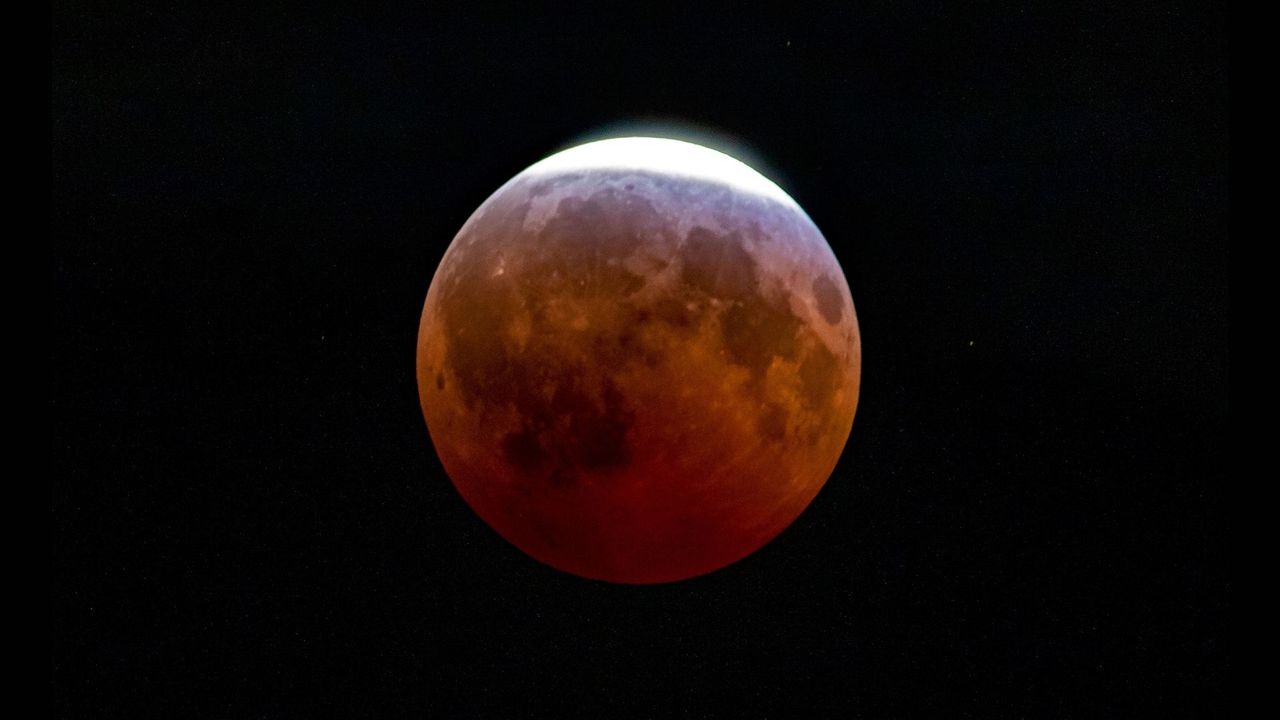
See the best photos of the August 2026 partial lunar eclipse
When you purchase through links on our site, we may earn an affiliate commission. Here’s how it works.
A gorgeous partial lunar eclipse delighted stargazers overnight on Aug. 27-28, as Earth's shadow darkened the full "Sturgeon Moon" in an impressive display of orbital mechanics, and we've got the photos to prove it!
The lunar eclipse occurred as Earth passed between the sun and the moon, granting viewers a spectacular view of our planet's deep umbral shadow as it advanced to cover 96% of the lunar disk, leaving a tiny crescent exposed to direct sunlight.
Photographers were ready and waiting to capture the moon as it turned blood red around the point of maximum eclipse on Aug. 28, as light filtered through Earth's atmosphere via Rayleigh Scattering saturated its shadowed surface. Read on to see our favorite photos of the Aug. 27-28 partial lunar eclipse.
We kick off with a gorgeous photo of the full moon was captured from the Hungarian village of Zsujta by Robert Nemeti just as Earth's shadow took its first "bite" out of the lunar disk, shortly after the partial phase of the eclipse began at 10:33 p.m. EDT on Aug. 27 (0233 GMT on Aug. 28).
Tycho Crater is visible in the lower region of the lunar disk close to the shadow, while bright ejecta rays of reflective material brighten the darker lunar seas, where lava solidified to form basaltic plains billions of years ago.
The eclipsed moon shared the stage with the Parthenon in Athens in this tranquil wide-angle photo from Costas Baltas. Earth's curved silhouette can be seen clearly on the lunar disk, serving as proof of our planet's spherical shape, just as it did for the ancient Greek philosophers who helped pioneer the idea over 2,000 years ago.
Giuseppe Pappa created a stunning composite image of the eclipse depicting Earth's shadow as it rolled across the lunar surface during the partial phase from Pedara, Sicily.
Pappa snapped the images using a Canon 760D with a 300 mm lens to capture the lunar seas standing out on the remaining sunlit portion of the lunar surface.