// NATURE NEWS — SPAZIO & SCIENZA
Heisuke Hironaka obituary: mathematician who smoothed out geometry’s complexities
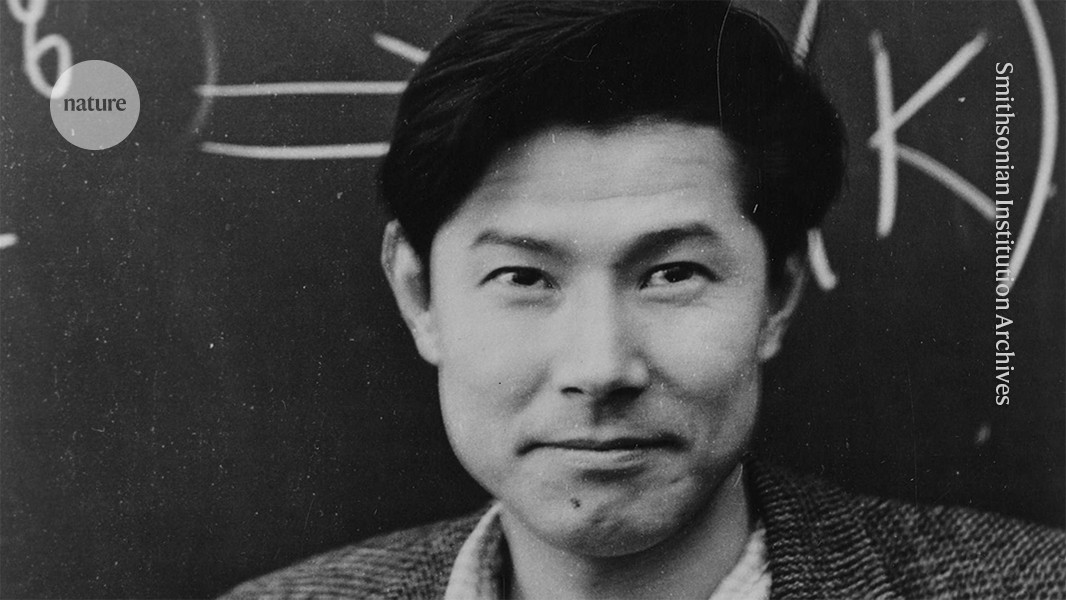
Allyn Jackson is a freelance writer and editor specializing in mathematics and theoretical computer science and can be contacted through allynjackson.com.
Search author on:
PubMed
Google Scholar
Heisuke Hironaka, a prominent figure in algebraic geometry, was renowned for his landmark 1964 proof of the “resolution of singularities”. His work provides a way to unravel complicated phenomena in geometric objects, such as cusps, spikes and self-intersections. This fundamental result is a standard ingredient in research across a wide swathe of mathematics. Hironaka has died aged 94.
The length and complexity of his 1964 proof inspired awe. For this work, Hironaka received the Fields Medal in 1970. His mentor Alexander Grothendieck, one of the 1966 Fields recipients, called the proof “doubtless one of the hardest and most monumental proofs known in mathematics”.
Hironaka grew up in Yamaguchi, Japan, as one of 15 children. His father had yearned to be a scholar but took over the family textile factory. On 6 August 1945, the people of Yamaguchi could see the detonation of the atomic bomb dropped on Hiroshima, but the 100 kilometres separating the two cities protected the Hironaka family from the radiation.
As a student at Kyoto University in Japan in the 1950s, Hironaka studied algebra intensively. “But algebra itself is too abstract — it doesn’t catch your heart,” he said in an interview in 2005. What did catch his attention was the combination of algebra and geometry embodied in the work of Oscar Zariski, a key figure in algebraic geometry who visited Kyoto in 1956. Zariski, a professor at Harvard University in Cambridge, Massachusetts, suggested that Hironaka should join him at Harvard. Hironaka accepted and earned his PhD under Zariski’s supervision in 1960.
Hironaka drew inspiration from fellow students Michael Artin, Steven Kleiman and David Mumford, all of whom became leaders in algebraic geometry. Grothendieck, who in the ensuing decade would rework the foundations of algebraic geometry, was another big influence. He visited Harvard in 1958 and invited Hironaka to spend the 1959–60 academic year at the Institute of Advanced Scientific Studies outside Paris.
After positions at Brandeis University in Waltham, Massachusetts, and Columbia University in New York City, Hironaka became a professor at Harvard in 1968. In 1975, he returned to Japan to become a professor at the Research Institute for Mathematical Sciences at Kyoto University. He retired from Kyoto in 1991, but served as president of Yamaguchi University from 1996 to 2002.
Hironaka’s work begins with polynomials, which encode relationships between numbers. The set of solutions to a collection of polynomial equations is called an algebraic variety. Represented as geometric objects, algebraic varieties can be perfectly smooth — like a parabola or a sphere — or can have singularities, similar to the sharp points along the margin of a holly leaf.
“Singularities are all over the place,” Hironaka said. “When you write a signature, if there is no crossing, no sharp point, it’s just a squiggle,” he noted. “If everything were smooth, then there would be no novels or movies. The world is interesting because of the singularities.”