// HACKER NEWS — CYBERSECURITY
Accidental Aesthetics and Romance of Power Wires
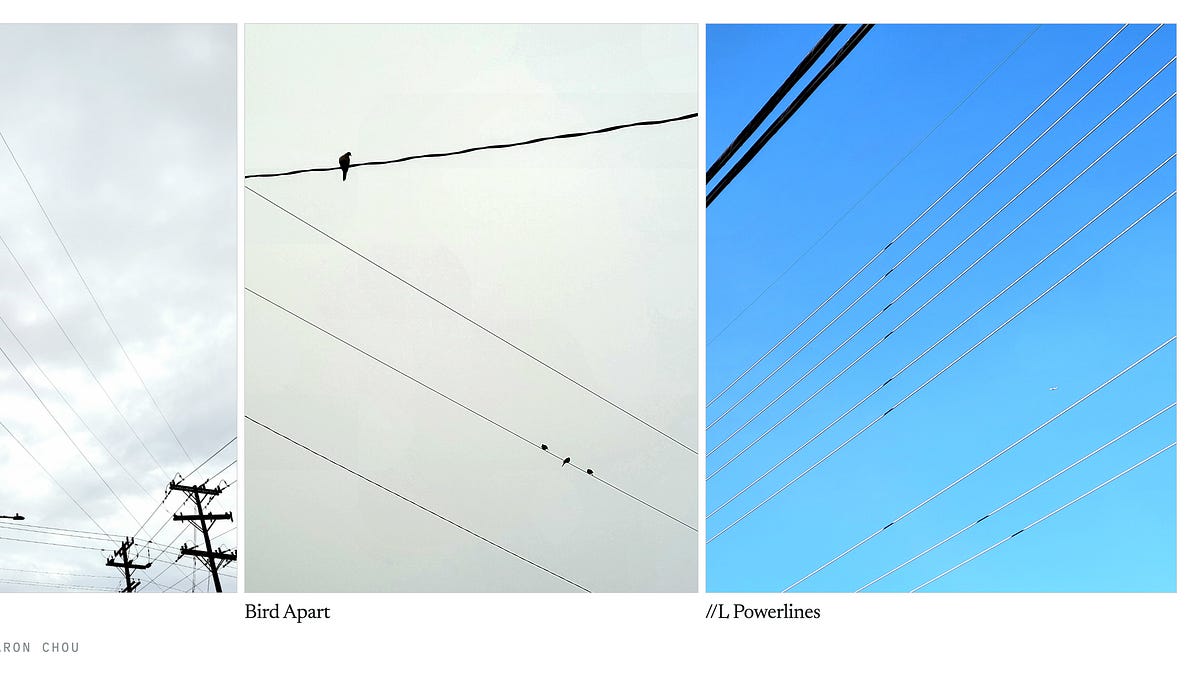
Tom Perriello, a Yale educated former diplomat is humming in agreement when a potential constituent recites conspiratorial lies that she has been told about transmission line "radiation messing up the crops and livestock". People all over Twitter are posting pictures of power lines and transmission lines being ugly. Yet, when people go over to Japan, power lines and transmission lines are considered part of Japan’s aesthetics of mundane luxury and is constantly used in media, especially anime and manga. Why is that? How can we make the aesthetics argument? That seems a bit boring and a step back. So, what if we shouldn’t and learn to appreciate aesthetics on our own terms? This isn’t a Japan-only thing, as you can easily find a ton of photography and art about power lines all over social media if you care to take a look. Sharon Chou is the one who takes the pictures you see above, for example.
Kobayashi Kiyochika printed a view of Mt. Fuji in 1880, from within the Hakone mountains. Off to the left, drawn just as carefully as the mountain itself, is a telegraph pole.
In 1880, the telegraph pole was the newest feature in the Japanese landscape, and printmakers played a central role in creating the hype. Already the medium had taken up the railway, the gaslight, the brick streets. Dozens of kaika-e, enlightenment prints, the woodblock images that sold the modern city back to its own residents, placed the telegraph pole front and centre, upright, the wires disappearing neatly off the page.
Free subscriptions help spread my writing around; paid subscriptions make it possible for me to keep doing what I’m doing. Likes, restacks and social media shares are a sort of combination of those two, and are free. I appreciate all three, in any order.
In 2021, the Nerima Art Museum in Tokyo pulled together about 130 of them from the 1850s to the present day, under the banner Densen Kaiga, or roughly, ‘Electric Wire Paintings’. Yosuke Kato was the curator. The exhibition made it clear that the wire had never once disappeared from Japanese picture-making, and that its function within those pictures continued to change.
The earliest example pre-dated the poles themselves. In 1854, Perry gave a demonstration of a telegraph set at Yokohama, and a Matsushiro-domain retainer named Osuke Hibata, stationed there as a guard and good with a brush, sketched the apparatus and its wire. The sheet is held by the Postal Museum. It’s the first wire anyone in Japan ever bothered to draw.
Japan wasn’t the only place to represent the wire as a promise. In December 1920, the GOELRO commission presented its electrification plans to the Eighth Congress of Soviets, and Lenin stood before a map of the country speckled with lightbulbs, one for each generating station not yet built. The pylon and bare bulb were staples of Soviet posters for the next 70 years.
M. Pisarevsky. We will finish the seven-year plan of USSR’s electrification ahead of time. USSR, 1959
From the beginning, the pole had an element of the mundane about it, and, by the time the electric power pole reached Japanese painting, about 20 years after the telegraph pole, any elation had been drained from it. Yet they persist in the frame.
They appear on works by Ryusei Kishida, as the lines’ shadows posed against the red soil of new land-clearings, so that both read as Tokyo expanding westward.