// NATURE NEWS — SPAZIO & SCIENZA
The death of Jason Arday must prompt deep reflection
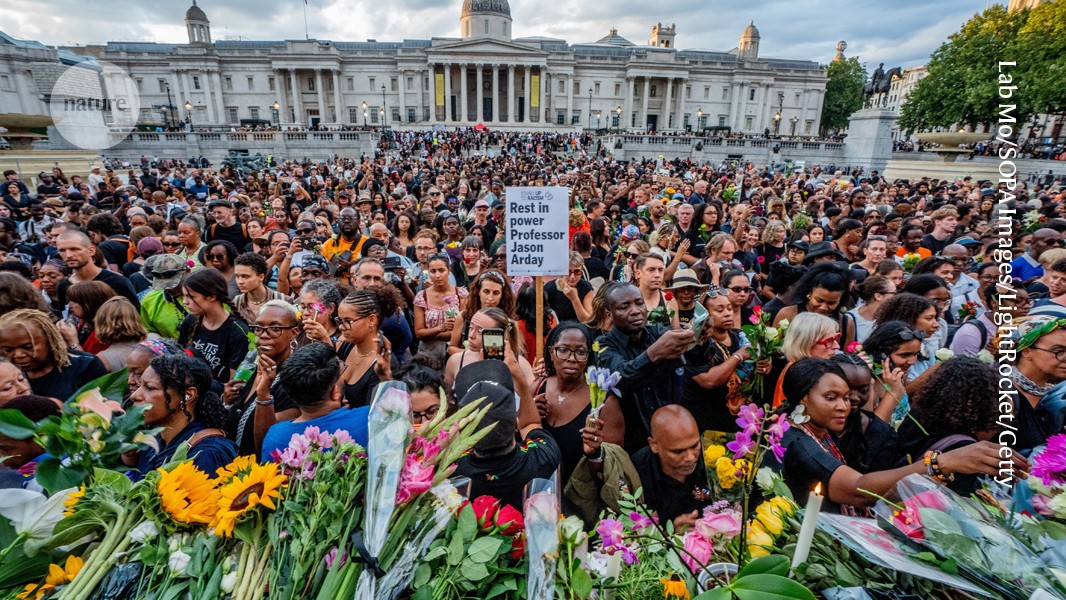
People gathered in London’s Trafalgar Square for a vigil in memory of sociologist Jason Arday on 17 August.Credit: Lab Mo/SOPA Images/LightRocket/Getty
“The years since my appointment have also been marked by an unrelenting level of public scrutiny and personal attack. While criticism is an inevitable part of academic life, what I have experienced has gone far beyond scholarly disagreement.”
These were the words of Jason Arday when he resigned as professor of sociology of education at the University of Cambridge, UK, on 5 August, amid claims of research misconduct. He explained that he had “reached the limits of what any person should reasonably be expected to endure”.
Nine days later, Arday died after relentless media coverage of his professional and personal life. It is an enormous tragedy for his family, friends, students and colleagues. It is also a catastrophe for the research community. The death of an autistic Black scholar who inspired a generation is shocking. The persistent media attention, the racism that pervaded much of that coverage and the plagiarism allegations against Arday, and the University of Cambridge’s handling of his case all raise difficult questions. These are concerns not only for the institutions involved, but for everyone in higher education and the media.
In this Editorial, we focus on two issues in what is a complex and evolving situation. One is how academic institutions should treat investigations into research misconduct amid unrelenting media attention. Investigations need to be carried out according to transparent processes with appropriate confidentiality for those involved, including whistle-blowers, whose testimony is often central to the outcome. These processes exist to ensure that all concerned are treated fairly and protected from harm, but were they followed? The other, related issue is how the media should ensure fairness when reporting on research misconduct and how it can do so without causing harm.
Arday’s fate is distressing, and especially so for Black scholars and those from other communities that are under-represented in academic research, many members of which report feeling vulnerable and unsupported at this time. There is systemic racism in academia. It is an unwelcoming place for many who enter it through hardship and struggle, as Arday’s story illustrates. It is not acceptable that these barriers persist. On top of this, scholars from Black and other under-represented communities fear that the intensity of attention Arday faced could one day be focused on them. The question many are asking is: ‘Could I be next?’
Science must overcome its racist legacy: Nature’s guest editors speak
In February 2023, when the University of Cambridge appointed Arday, it issued a statement that included a description of him as the youngest Black professor in its history, news that became a global media event. In his memoir, Great and Unfortunate Things, published last week, Arday wrote: “I was thrust into the public eye in a way that someone can’t really prepare for or predict. If I’m being honest, it’s something I’m still getting used to.” He also began to report incidents of racism and hate speech directed at him after his arrival at Cambridge.
Last year, allegations emerged that Arday’s PhD thesis on peer mentoring among student teachers, as well as some of his other published research, contained examples of plagiarism. Liverpool John Moores University, the UK institution that awarded the PhD, investigated the allegations and concluded that the PhD stands. But the scrutiny and criticism from inside and outside academia continued, and extended to how Arday conducted aspects of his personal life.
Arday was invited to give the keynote address at the British Sociological Association’s annual conference in April, which marked 75 years of the organization. In his talk, entitled ‘Wanted dead or alive: the playbook’, he described how some researchers were investigating Black academics’ p