// ARS TECHNICA — MONDO
Trump’s 100% tariff on drones will be disaster for the US, critics warn
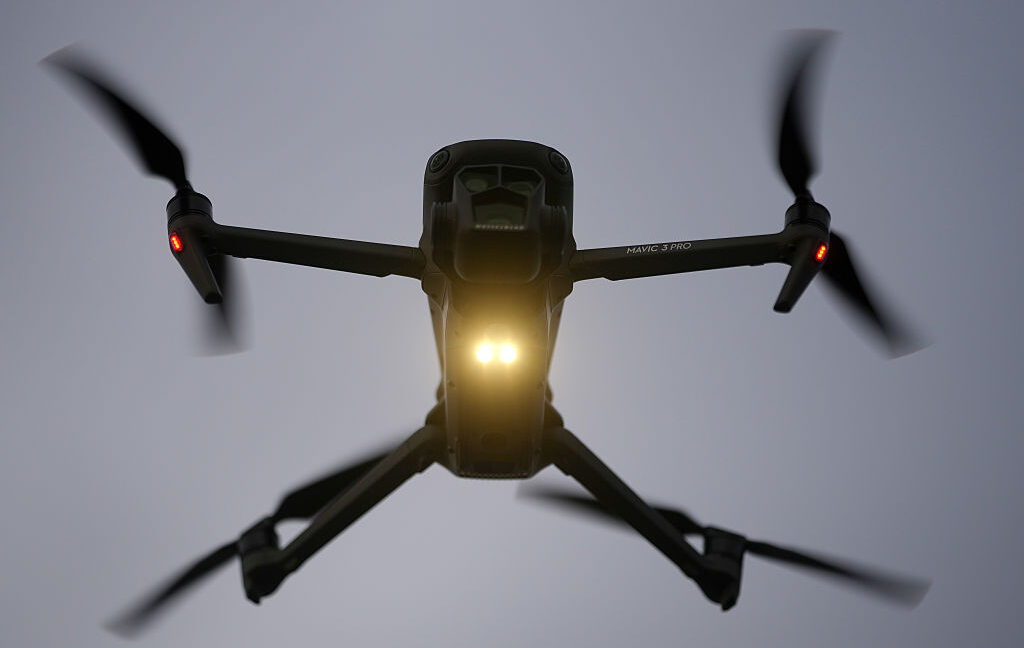
Americans fear there are no cheap alternatives as tariffs suddenly hit drones.
On Thursday, the Trump administration imposed a 100 percent tariff on foreign-made drones, alarming critics who warn that high tariffs would harm public safety and devastate thousands of US businesses.
Guidance posted by US Customs and Border Protection says that starting Thursday, a 100 percent tariff will apply to imported drones that use thermal imaging or weigh more than 55 pounds.
Additionally, a 25 percent tariff has been placed on smaller drones, and drones from US allies were hit with smaller but not inconsequential tariffs. There’s now a 10 percent levy on British-made drones and 15 percent levies on drones from the European Union, Japan, Liechtenstein, South Korea, Switzerland, and Taiwan. “Nonsensitive” drones without thermal imaging and their components will carry a 25 percent tariff, starting on February 9, 2027.
While announcing the tariffs, President Donald Trump said that taxing foreign-made drones will strengthen US national security by decreasing reliance on Chinese drones and increasing reliance on domestic drones.
But critics say Trump’s tactics seem short-sighted, citing estimates that “a single Chinese company—Shenzhen-based DJI—manufactures more than 70 percent of the world’s commercial drones,” The New York Times reported.
They fear that Trump’s tariffs will do “more harm than good,” the Times reported, since these drones are considered “essential” for US law enforcement and public safety officials. Thermal drones are regularly used to find missing people, track spreading wildfires, support police and rescue operations in environments with unknown risks, and serve a range of other routine public safety uses. A chief of a large unit comprising police officers and firefighters in the Cleveland area, Scott Mlakar, told the Times that Trump’s tariffs would spike drone costs so much that they would likely “put thermal drones out of reach for communities that needed them the most.”
Beyond the immediate increase in the cost of drones, even more drones could soon be restricted in the US. The Federal Communications Commission is considering whether to reclassify a range of common drone technologies as “military grade,” a move that many commenters warned would further restrict access to countless drones that serve no military purpose and pose no threat to national security.
Industry experts have warned that the reclassification would amount to a “retroactive ban on drones used by thousands of American businesses and public safety officials,” the Times reported. If passed, it would be an “industry-killing ban,” an aerial photographer, Vic Moss, told the Times. And one official coordinating a city’s drone program, David Hood, urgently alerted the FCC in a comment that the plan to recategorize any drone with Light Detection and Ranging (LiDAR) sensors as military-grade would be particularly disastrous for society.
“LiDAR is a safety and navigation technology, not a military capability,” Hood wrote. His city relies on LiDAR-equipped aircraft to help avoid crashes. That “civilian use—collision avoidance—is a safety function, not a combat function,” Hood wrote.