// HACKER NEWS — CYBERSECURITY
The Raspberry Pi Interactive Timeline · 2006–2026
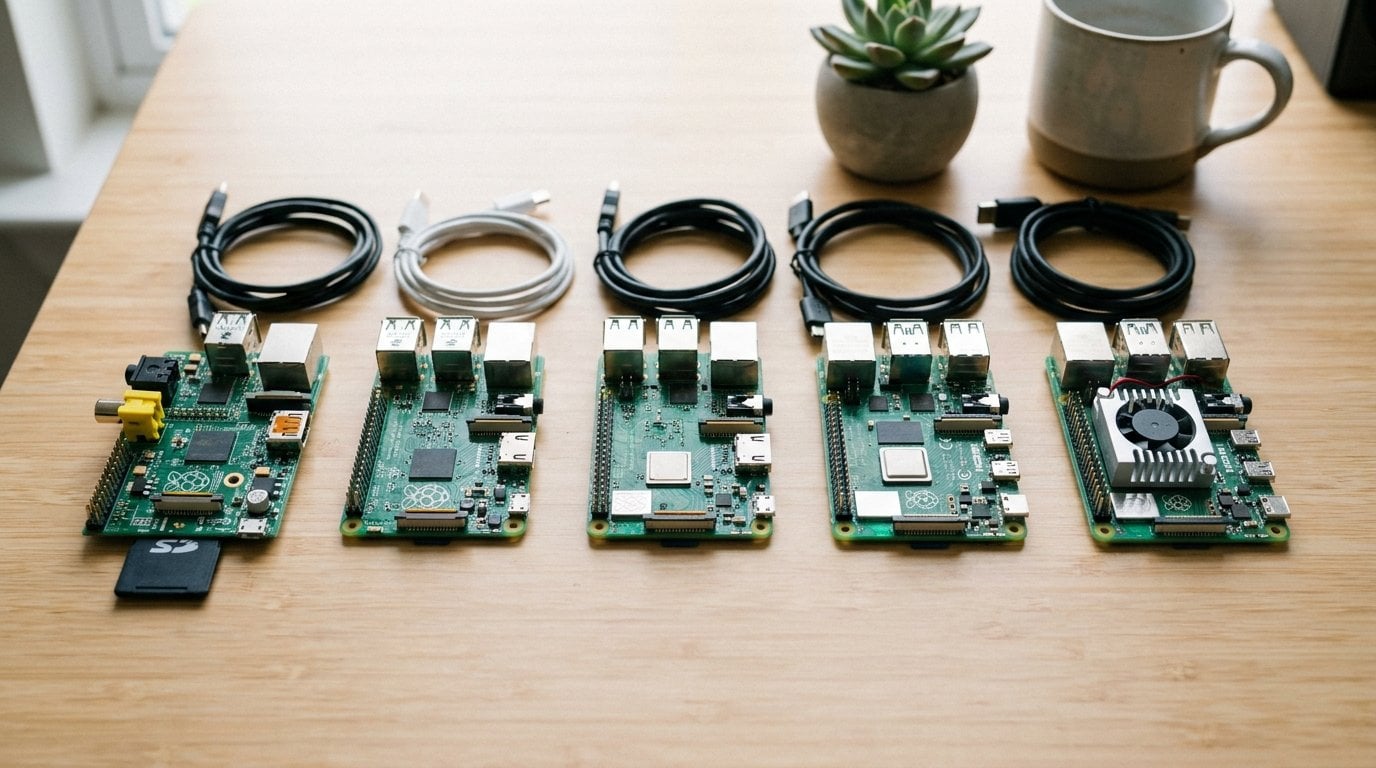
From university prototype to the best-selling British computer: every milestone in hardware, software and company history — I’ve been documenting them here on the blog since 2014. Filter by category, expand the events, and share any entry via direct link.
From a university prototype tackling falling computer science applications to a $35 computer that crashes servers.
At the University of Cambridge, Eben Upton notices that fewer and fewer young people are applying to study computer science — and that the applicants lack the hands-on tinkering experience of the home-computer generation. The first Atmel-based prototypes are built: still a long way from the later Pi, but the mission is already set — a computer so cheap that every kid can experiment with one.
Together with allies from academia and industry — including Broadcom colleagues and Cambridge lecturers — Eben Upton founds the Raspberry Pi Foundation. In May 2009 it is registered as a charity (UK charity no. 1129409). Its stated goal: promoting computer science education for young people.
The first 25 final beta boards are manufactured. In early 2012 the Foundation auctions ten of them off on eBay in a well-publicised campaign — individual boards fetch four-figure sums and fund the final polish before launch. The auctions give the upcoming $35 computer its first taste of international fame.
On leap day 2012, the first Raspberry Pi goes on sale. The rush for the $35 computer with its 700 MHz ARM chip and 256 MB of RAM takes down the servers of both distributors, Farnell and RS Components, within minutes — the Foundation itself has to switch its website to a static page. The plan had been a small production run for British school kids; it turned into the beginning of the best-selling British computer of all time.
Raspbian — a Debian build optimised for the Pi’s hardware, started as a community project by Mike Thompson and Peter Green — becomes the officially recommended system. It marks the start of the Debian lineage that the Pi’s operating system follows to this day.
Manufacturing moves from China to the Sony factory in Pencoed, Wales — and most Raspberry Pis still roll off the line there today. For an electronics product in this price class, bringing production back to Europe was unheard of in 2012.
At no extra cost, the Foundation doubles the Model B’s memory from 256 to 512 MB. It is the first example of a pattern that stays with the Pi for years: more performance for the same price.
Camera, Compute Module, Pi 2 and 3 — and a $5 computer at the newsstand.