// ARS TECHNICA — HARDWARE & GADGET
Trump White House just tossed a grenade into international space relations
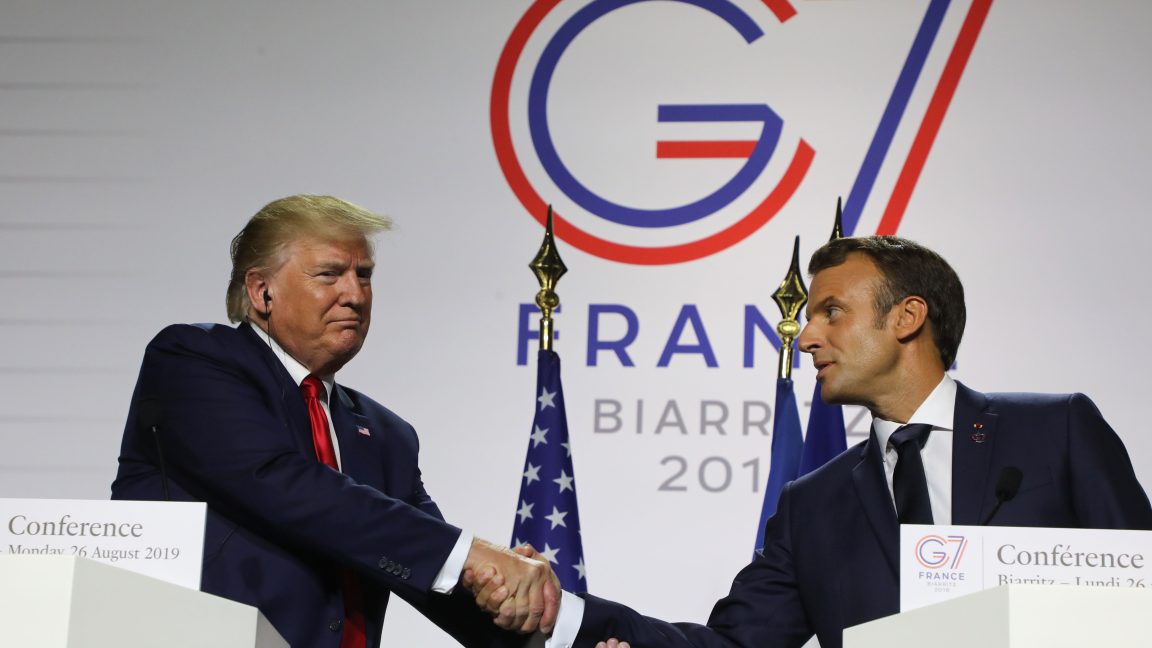
“Let me be clear: America is not only welcome—we want you there.”
The normally genteel world of international space policy turned ugly this week as several prominent US space companies—including SpaceX, Blue Origin, Stoke Space, K2, and Starcloud—pulled out of a high-profile French space summit organized by the country’s president, Emmanuel Macron.
Politico first reported the diplomatic turmoil, saying that the White House “pressured” US space companies to skip Macron’s space summit in Paris next week. Since then, the companies have largely pulled out of the meeting without commenting publicly, though some US representation remains on the two-day program.
Multiple sources confirmed to Ars that an official with the White House Office of Science and Technology Policy, or OSTP, led the call with US space companies late last week. The call was convened in response to queries from US industry about the French meeting, which is not part of the traditional circuit of international space conferences.
Macron announced his plans for the meeting during a June 2025 speech on the importance of space to defense and Europe’s need to remain competitive in the domain. He said France would hold a “Space Summit” at the beginning of 2026 to consolidate French and European strategy in space and “mobilize our public and private partners from around the world.” Later, Macron announced that some of France’s most visible space officials, including astronaut Thomas Pesquet and entrepreneur Hélène Huby, would serve as special envoys.
The meeting subsequently slipped from the spring to the fall, and in the meantime, US companies received invites to attend. As is customary in such situations involving geopolitics, the government relations officials with these companies reached out to the White House OSTP with questions about the nature of the summit.
The White House officials were growing concerned that this was not a normal space industry trade show or conference but would instead include some policy prescriptions around contentious issues such as sharing of spectrum. US officials believed that at the end of the summit, European space officials may move to adopt some policies that were not necessarily beneficial to US companies.
This led to the teleconference with the OSTP and some US space companies late last week, during which the government relations officials were advised that the US firms should not necessarily expect to be treated fairly and might be pressured to endorse policy positions that misrepresent their preferences. The companies were not told they must pull out by the Trump White House but were instead advised that attending might not be in their best interests.
After news broke of this call with US space companies, France’s cabinet-level space minister, Philippe Baptiste, still urged the Americans to attend. “Let me be clear: America is not only welcome—we want you there,” he said on X. “This summit brings all major space powers to the table—science, exploration, security, telecom, SSA, and everything that matters.”
For the US space companies, it was a relatively easy choice to pull out. For many of these firms, the US government is one of the most important customers, if not the most important, and it’s bad business to ignore the customer’s wishes. But they also look to Europe as an important source of revenue. As Europe looks to build up its communications and defense capabilities in space, it would be expected to buy a lot of satellite buses, star trackers, and other services from the vibrant US commercial space industry. Now, those cross-Atlantic relationships will become more painful, and Europe will likely incentivize buying anything but US space products.