// ENGADGET — MOBILE & WEB
Sony A7R VI review: A huge speed boost makes this a nearly perfect high-resolution camera
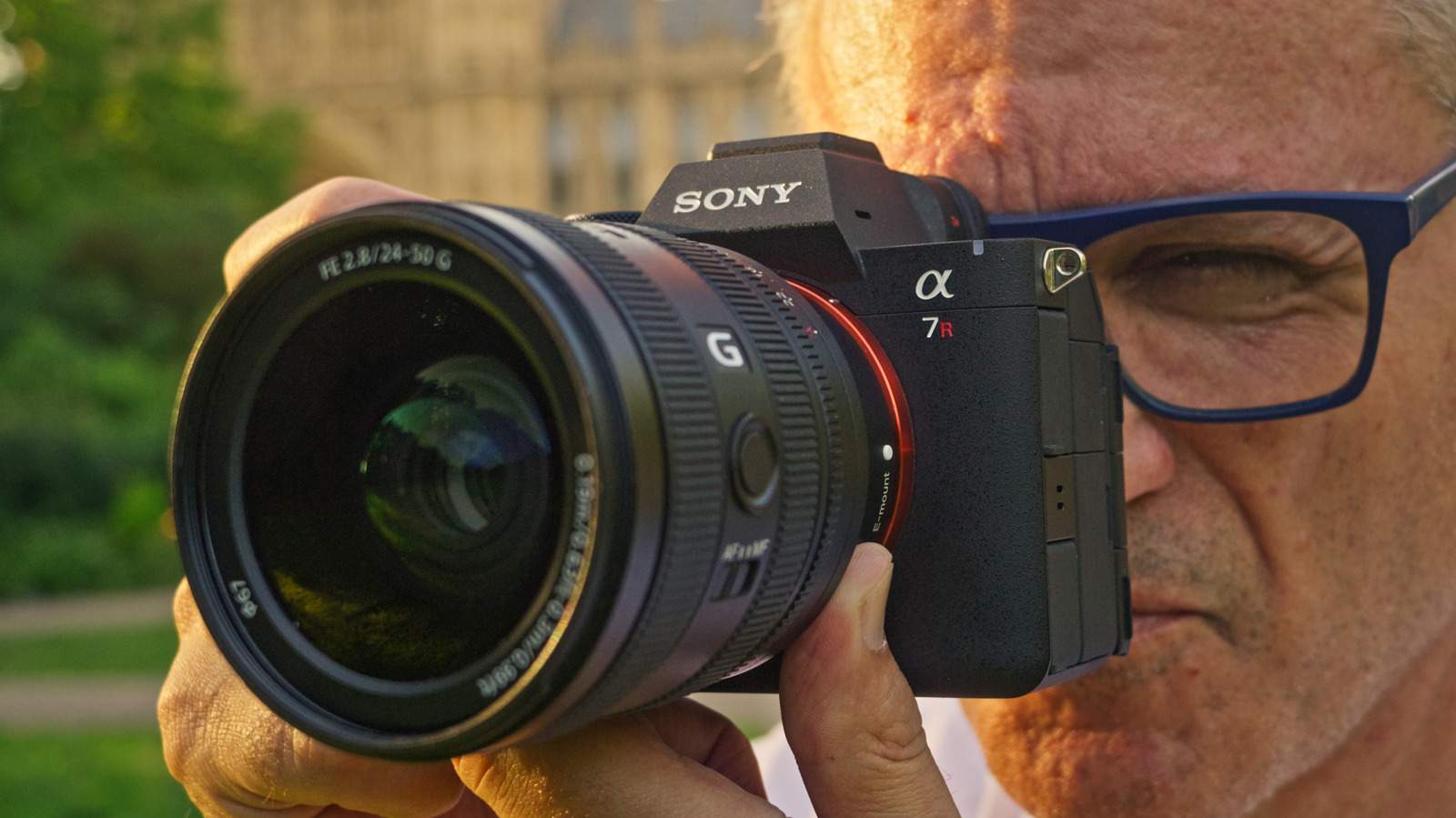
From events to wildlife photography, it can handle nearly anything.
With its full-frame A7 mirrorless cameras, Sony has always offered buyers a choice: You can have speed (A7 or A7S) or resolution (A7R), but not both. The A7R VI is now here to flip that script. With an all-new, stacked 67-megapixel sensor, it can shoot at a rapid 30 fps while still delivering more detail than any other full-frame camera.
The new sensor and new processor offer other benefits as well. The A7R VI is Sony's first camera with dual gain processing to boost dynamic range. It also promises faster autofocus, updated video capabilities and improved shake reduction.
There are a few "buts" though. At $4,500, the A7R VI is $600 more than the A7R V was at launch. And Sony doesn't offer RAW video on the new model, putting it at a disadvantage to rivals like the Nikon Z8. Still, with its blend of speed and image detail, the A7R VI is one impressive camera.
The A7R VI's new 67MP sensor is different from previous Sony stacked sensors, as it's designed for image quality as much as speed. With an 18 millisecond sensor readout time, it's 5.6 times faster than the A7R V, though still much slower than Sony's 4-millisecond speed monster, the A1 II.
With a new Bionz XR2 processor as well, the A7R VI can shoot bursts at up to 30 fps in electronic shutter mode with no blackout and using continuous autofocus — three times faster than before. Shooting speeds with the mechanical shutter remain at 10 fps, so it's just as fast as the 33MP A7 V, but has double the resolution. Beware, however, that the enormous RAW and JPEG photos will rapidly fill up your memory cards.
Autofocus has improved too. While shooting birds at London's Greenwich sanctuary, I captured 30 fps bursts with only a few out of focus shots. And while taking street photos, I could lift my camera and fire, knowing the A7R VI would nail focus. The A7R VI's AF only lagged occasionally when I shot back-to-back bursts and filled the buffer.
The A7R VI supports eye, face, head and body detection for humans and can now handle smaller sizes in frame for animal, bird, vehicle and insect detection. The difference seemed small to me for real-world shooting, but it's a nice improvement considering how much you can blow up a subject that looks very small when you're taking the picture.
Despite the extra performance, the A7R VI still isn't quite a sports camera. It's not as snappy as the A1 II, and rolling shutter still haunts it in some situations, particularly during fast pans. Sony also boosted in-body stabilization from 7.5 to 8.5 stops with supported lenses, matching Canon's R5 II and the Panasonic S1R II. The extra stop helped me create nice blur effects at shutter speeds as low as a second , while keeping the primary subject sharp (cars and people).
Some cameras with stacked sensors have compromised image quality — take Nikon's Z6 III for instance. Not the A7R VI, though. Sony installed special processors on the sensor so the camera can fuse high and low ISO outputs in real time (dual gain processing) to boost image quality and speed.