// ENGADGET — HARDWARE & GADGET
Not all tech survives solar storms, here's what's most at risk
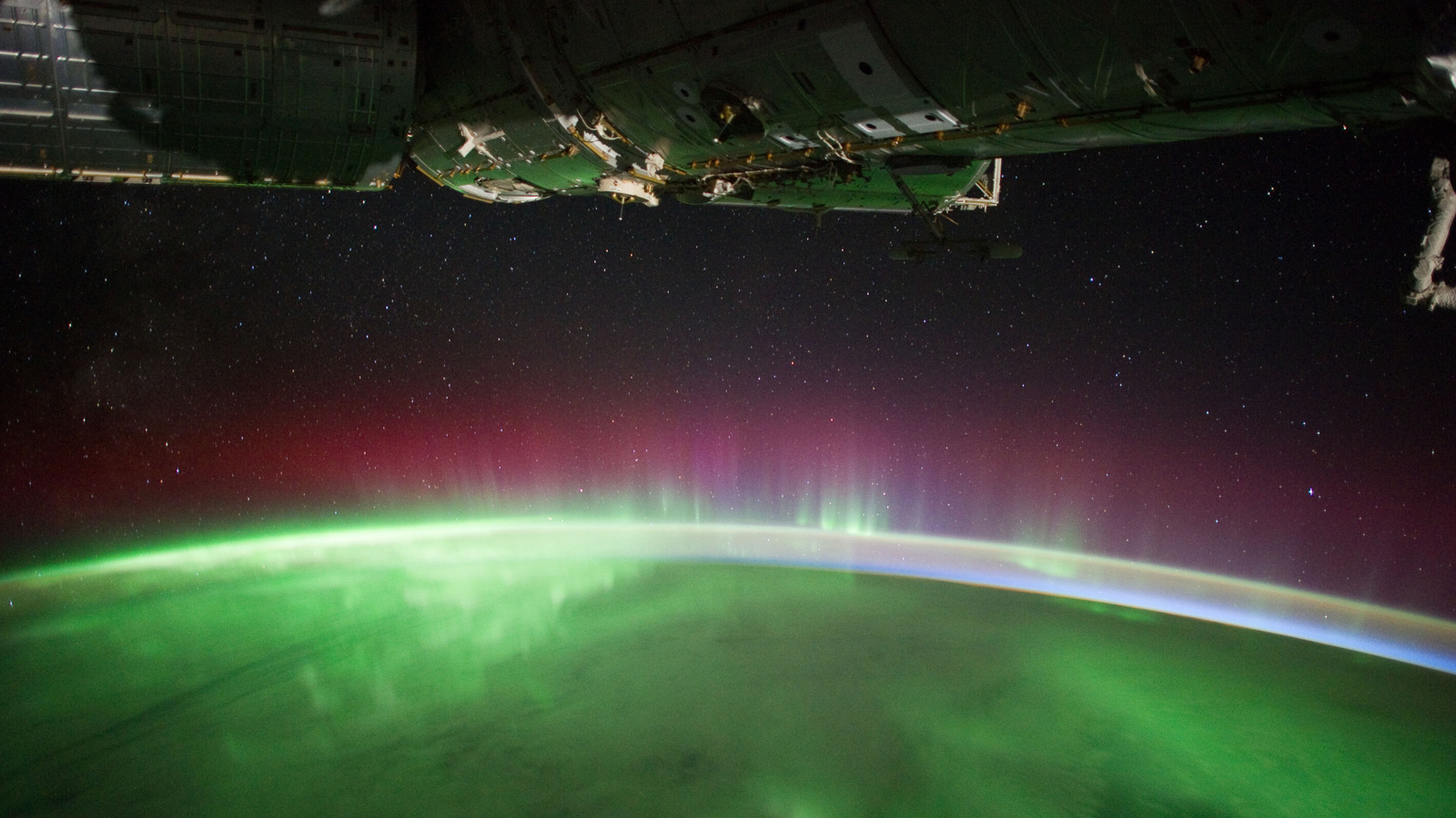
The northern lights could mean lights out for the infrastructure we rely on.
In 1989, the Canadian region of Quebec experienced something that likely shocked many of its residents: the Sun knocked out its power grid. Caused by a geomagnetic storm, the resulting blackout made six million people lose power for nine hours. Known as 'the day the sun brought darkness,' the blackout is emblematic of both the potential effects of solar activity on modern technologies and our relative unpreparedness for a major solar storm.
Solar storms are caused by magnetic reconnection, a process in which the Sun's rotation forces its magnetic fields to twist and knot. As it undergoes its 11 year cycle, the pressure from these fields mounts. Eventually, these magnetic fields break and rejoin, whereby energy and plasma explode from the Sun's surface into the solar system. Although invisible to the naked eye, solar storms can have a profound effect on Earth's magnetic fields. And while the phenomenon is responsible for the aurora borealis, it can also wreak havoc on our technological infrastructure.
These eruptions cause three types of solar storms. Solar flares are intense explosions of light and radiation. Capable of producing energy equal to a billion hydrogen bombs, solar flares travel at the speed of light, hitting the Earth's atmosphere in just eight minutes. Radiation storms, meanwhile, are eruptions of charged particles that blast through the solar system, reaching Earth in just half an hour. The largest, coronal mass ejections, or CMEs, are massive clouds of magnetized plasma. Each of these solar events can disturb the Earth's magnetic field to cause geomagnetic storms that threaten power grids, disrupt communications systems and even down global internet infrastructure.
Before diving into how solar storms affect technology, you first have to understand the geomagnetic basics. Once a solar storm reaches the protective magnetic region of the Earth's atmosphere, known as the magnetosphere, its charged particles temporarily change the atomic and magnetic makeup of the Earth's atmosphere, disturbing its magnetic fields, currents and plasma.
Like the solar events themselves, these disturbances can be divided into three broad categories. Coronal mass ejections, for example, can cause geomagnetic storms which send geomagnetically induced currents (GICs) through the Earth's magnetic field lines toward the southern poles, where they can surpass the Earth's atmospheric defenses and disrupt technological systems. Intense solar winds can also generate geomagnetic storms. Similarly, radiation storms send highly charged proton particles down these magnetic field lines, forcing radiation into the lower levels of Earth's atmosphere. Solar flares, for their part, can cause a phenomenon known as radio blackouts, through a process called ionization, in which magnetically charged particles blast through the atmosphere, dislodging electrons from atmospheric molecules and thereby changing the trajectory of radio frequencies.
The National Oceanic and Atmospheric Administration grades all three of these solar storms on a scale from one (minor) to five (extreme). Although solar activity is common, the vast majority of solar storms are recorded on the lower ends of the spectrum. For instance, while minor events may occur almost 3,000 times during an 11 year cycle, we're likely to see less than five extreme solar storms over that period. However, even the largest storms on record pale in comparison to their historical predecessors. But we'll get there. For now, let's focus on what technologies are at risk.
As evidenced by the geomagnetic event that caused the infamous Quebec blackout, strong solar storms can have a major effect on the world's power grids. When geomagnetically induced currents hit electrical infrastructure, they can cause blackouts by overheating transformers, relays and sensors. Expensive and difficult to manufacture, replacing a critical mass