// SPACE.COM — SPAZIO & SCIENZA
NASA's canceled Artemis hardware contracts reached $5.9 billion, audit finds
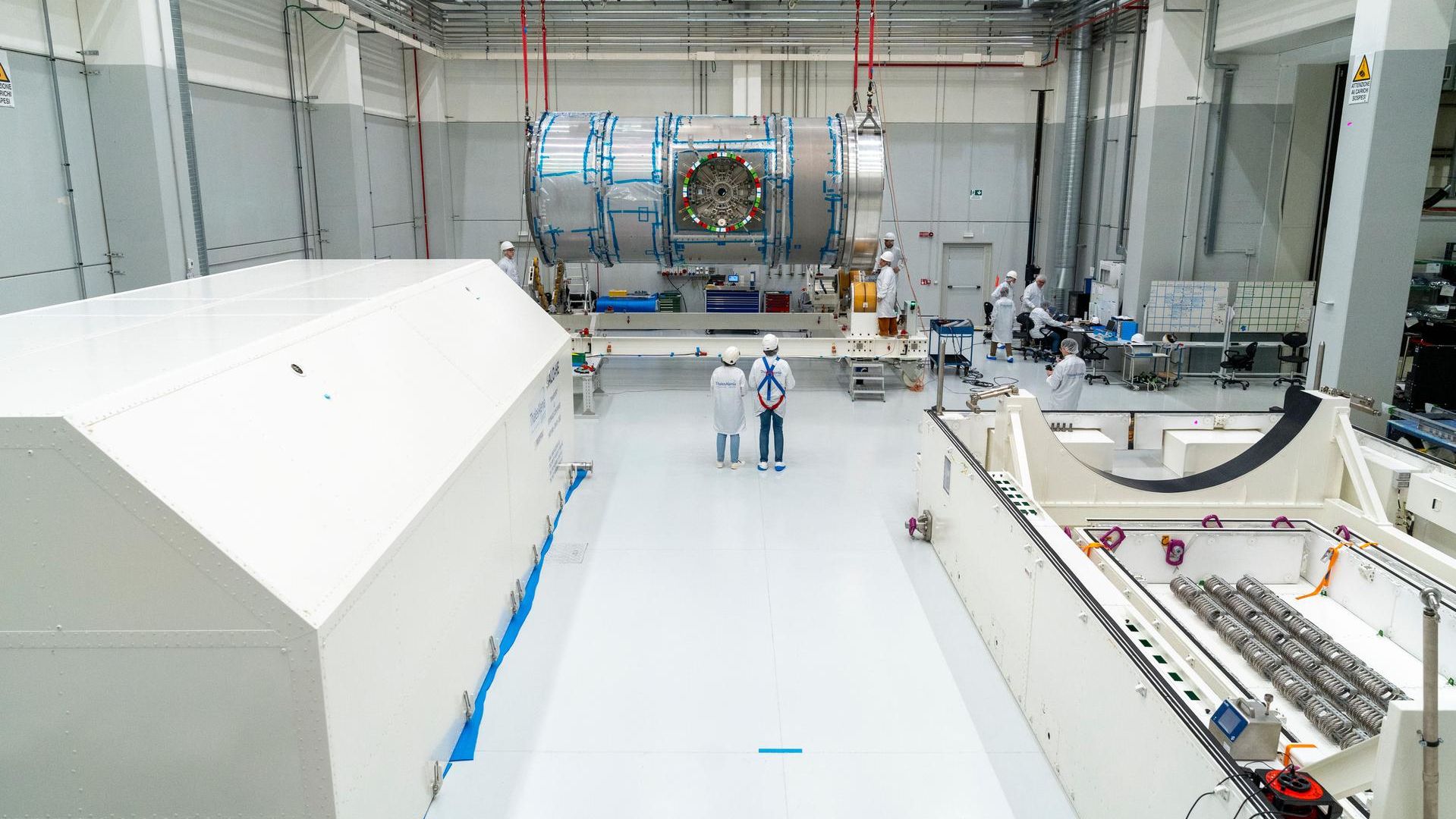
NASA was on track to pay nearly half a billion dollars for a stage adapter. A stage adapter should not cost half a billion dollars.
When you purchase through links on our site, we may earn an affiliate commission. Here’s how it works.
A new memo from NASA's Office of Inspector General has revealed how major pieces of Artemis program hardware became costly components of lunar missions that no longer align with the agency's new plans to return astronauts to the moon and have since been canceled.
NASA announced a major shakeup to its Artemis plans earlier this year at its "Ignition Day" event, restructuring its mission goals in order to streamline the return of astronauts to the lunar surface and simplify the architecture needed to get them there. Most notably, the program's first crewed moon landing was shifted from Artemis 3 to Artemis 4, and upgraded variations of NASA's Space Launch System (SLS) rocket were abandoned for a single uniform design. The Gateway space station planned for lunar orbit was also canceled in favor of a stronger focus on establishing a base on the moon's surface.
The switch-up left behind a trail of expensive hardware, including SLS's upgraded Exploration Upper Stage (EUS) and the adapter meant to fit it to the SLS rocket, a larger launch tower, and Gateway's Habitation and Logistics Outpost (HALO) module. Now, an interim Office of Inspector General (OIG) memo released June 24 offers a striking snapshot of just what NASA is walking away from. It calculates that NASA's final investment into the canceled hardware, which was originally contracted at a combined $2.9 billion, reached $5.9 billion by the time work was ceased, and concludes that, had NASA continued its support, costs and timelines would have continued to grow.
The report outlines rising costs and developmental delays for each of the aforementioned pieces of hardware, and shows how some Artemis systems were years late, billions of dollars over their original estimates and facing major technical problems. NASA is currently targeting 2028 for the program's first lunar landing on Artemis 4. Had the agency not restructured its mission plans, NASA's goal of landing astronauts on the moon before the end of the decade would have very likely been unobtainable.
Under the old Artemis plan, the Boeing-built EUS was intended for bigger, future versions of SLS, and would have increased the rocket's capabilities to send Orion and heavier cargo to the moon by 40%. Boeing is also responsible for developing and assembling the SLS core stage, and was selected to design and manufacture EUS in February 2017. EUS was added to Boeing's existing SLS contract, and folded into the work order to the tune of $962 million, with a delivery date set for March 2021.
In March 2026, after NASA announced its new Artemis plans, Boeing still had not delivered EUS, nor could it specify when it expected to do so and was issued a stop work order. By that time, the EUS allocations in Boeing's contract had risen to nearly $2 billion, with the company estimating that the number would rise to $3.7 billion by the project's completion. According to the OIG report's findings, Boeing wouldn't have been able to deliver the first flight-ready EUS to NASA until the end of 2028 — 7.5 years after its original due date.
Part of the continued EUS delays were a result of NASA's reprioritization of Boeing's efforts in 2018 to expedite completion of the SLS core stage, according to the OIG. The memo also cites the evolving design of Artemis missions, supply chain shortages and development issues that eroded the agency's confidence in Boeing. "NASA noted significant weaknesses related to EUS production efficiency, including unrealistic production schedules and the lack of a clear plan for improvement," the memo states.
Another scrapped component of the now-canceled SLS variants — and, perhaps, one of the most jaw-dropping, given the component's size and apparent simplicity — is the Universal