// ARS TECHNICA — MOBILE & WEB
Feedbacks upon feedbacks: Rock weathering and the climate
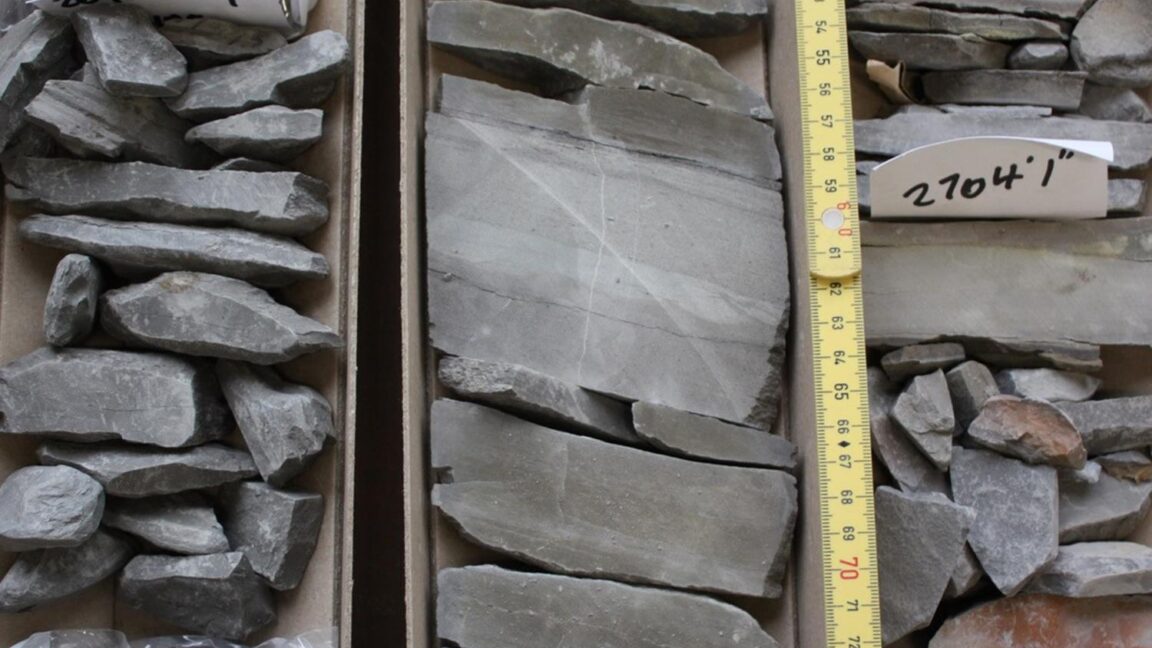
Rock weathering may release or draw down carbon dioxide—it depends on the rock.
Since the early 1980s, Earth scientists have understood that erosion and weathering of rock slowly removes CO2 from the atmosphere, regulating Earth’s climate on geological timescales. But recent studies have shown that erosion can also emit CO2 by oxidizing organic carbon contained in eroding sediments. It hasn’t been clear how this competition between removal by rock weathering and emission by organic carbon weathering ends up affecting Earth’s climate.
A new study in the journal Nature Communications uses the geological past to test how these competing effects added up. Doctor Madeleine Stow of the University of Oxford, with colleagues from across the UK and France, examined a volcanically triggered episode of global warming that happened in the early part of the Jurassic period, 183 million years ago, known as the “Toarcian Ocean Anoxic Event.”
They found that eroding organic carbon amplified climate warming at the time, suggesting that the same process may apply to modern climate change. But the extent to which the past is prologue is uncertain.
The Toarcian warming event is one of a dozen or so periods of climate change in the geological past that were triggered by enormous volcanic phenomena known as large igneous provinces. Several are associated with mass extinctions, including the Great Dying at the end of the Permian period, which was caused by the Siberian Traps Large Igneous Province. The Toarcian event was triggered by massive volcanic eruptions across South Africa and Antarctica, which were joined together at the time. The resulting 6° to 7° C of global warming shuffled the makeup of plant and dinosaur species on land and caused a mass extinction of corals and other marine species.
“This event had been well studied before. We understand its drivers, we understand how it caused mass extinctions, and it’s driven by this Large Igneous Province release,” explained University of Oxford professor Bob Hilton, a coauthor and principal investigator in the study.
Organic carbon in rocks ranges from visible debris from fossil leaves and wood to molecular remains of plankton, algae, and microbes. In past global warming events, like the Toarcian, so much organic matter was buried at sea that the resulting shales are black with organic carbon. Later, after plate tectonics raises such sediments to the land surface, they can be eroded, and the organic carbon within them can be weathered into CO2.
To measure how much organic carbon was weathered on land during the Toarcian, Stow and colleagues turned to isotopes of the element rhenium extracted from rocks deposited on the seabed at the time. Rhenium works as a tracer of organic carbon oxidation because it binds chemically with organic matter in seabed sediments.
When organic carbon is weathered on eroding land, it’s released to the atmosphere as CO2 gas. But the rhenium that was bound to the organic carbon gets washed through rivers into the ocean, where it is incorporated into new seabed sediments. There, it acts as a tracer of the organic carbon that was oxidized from the older sediments.
The intensity of organic carbon oxidation changes the ratio of the isotope rhenium 187 to rhenium 185. This makes the ratio of these two isotopes in sediments a measure of the organic carbon weathering at the time.