// HACKER NEWS — CYBERSECURITY
Scientists Create a New Form of Ice at More Than 2000°C
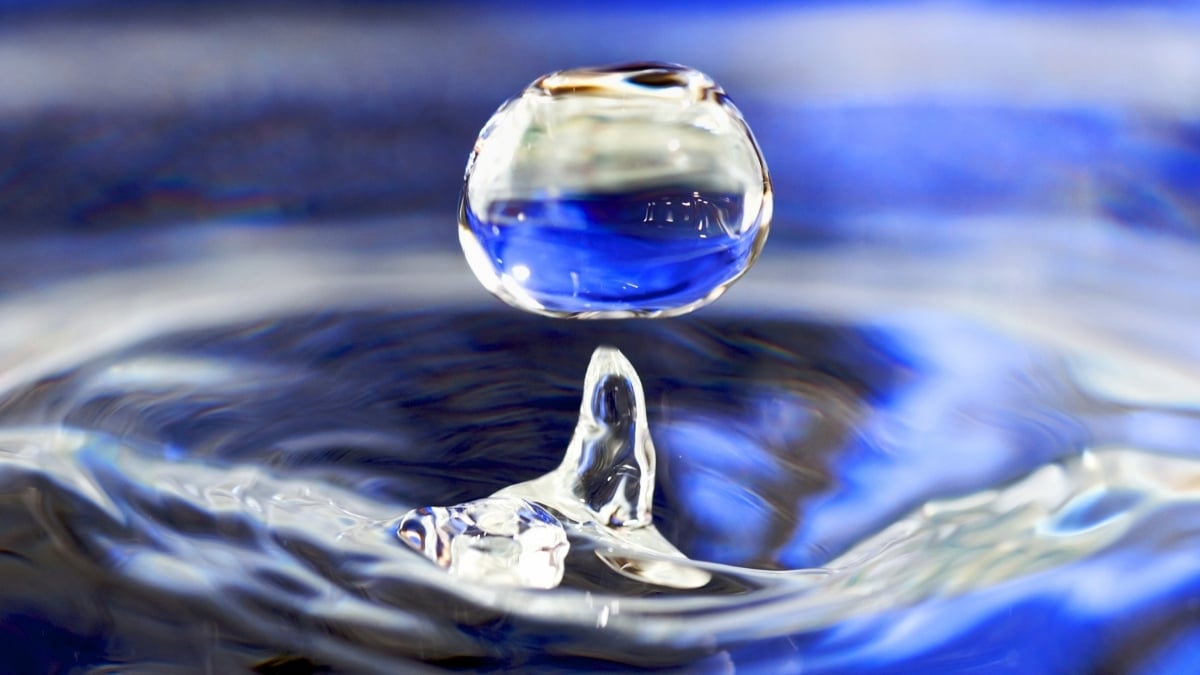
Water is one of the most commonplace, essential substances in the human world.
We literally can't function without its properties as a near-universal solvent. It falls from the sky. We bathe in it, drink it, and immerse ourselves in it for fun.
But if just considered as a liquid, water is extremely weird, behaving in ways completely at odds with other liquids. It becomes less dense when it freezes. Its surface tension is bizarrely high. So is its boiling point. And, based on its molecular weight, it should be a gas at room temperature.
And that's all at normal, ambient Earth conditions.
Tweak the pressure and the temperature a few notches, and water's outlandish behavior gets even more out of hand.
Scientists have now demonstrated one of the weirdest forms of ice yet – under preposterous pressures up to 2.3 million atmospheres, and tremendous temperatures up to 2,630 kelvins (2,357 degrees Celsius, or 4,274 degrees Fahrenheit).
At those temperatures, you'd normally expect water to emphatically be a gas – even partially sundered into its constituent oxygen and hydrogen atoms. But something interesting happens at the astronomical pressures found deep inside planets.
When water transitions from a liquid to a gas, or vapor, it expands. Under crushing pressures of millions of atmospheres, this expansion is stymied. Instead, water can remain extraordinarily dense, taking on exotic forms unlike any ice we encounter at Earth's surface.
One of these is superionic ice – a deeply odd state of matter that's neither entirely solid nor entirely liquid. Its oxygen atoms remain fixed in a rigid crystal lattice, as they would in a solid. But the hydrogen nuclei are mobile, diffusing through that lattice more like particles in a liquid.
At slightly different sets of conditions, the arrangement of the oxygen atoms shifts into different configurations known as phases. There are some twenty-something known phases of water ice, a few of which become superionic under extreme conditions. Scientists are always looking for more.