// ARS TECHNICA — MOBILE & WEB
Why did this journal retract two 1940s papers by Max Planck?
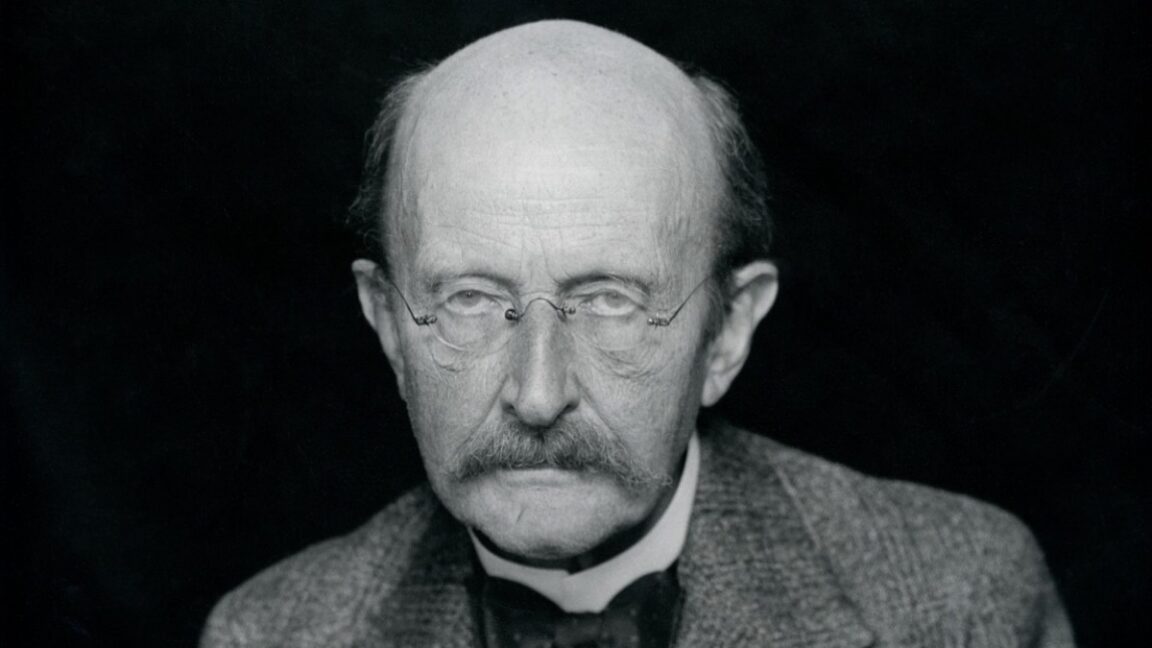
Clicking on the links now reveals blank pages and empty PDFs. “Intellectually, it’s not acceptable.”
German physicist Max Planck was one of the pioneers of quantum mechanics in the early 20th century, earning the 1918 Nobel Prize in Physics for his discovery of quanta. There has never been a whisper of scandal about the man’s integrity or his scientific work. So a pair of science historians were puzzled when they discovered that a scientific journal had inexplicably retracted two of Planck’s papers from the 1940s.
The journal in question is Naturwissenschaften, now known as The Science of Nature. The journal typically adds a large RETRACTED notice across digital papers that have been retracted, leaving them available for download. But it has removed the two Planck papers entirely, leaving just a blank page (and empty PDFs) with a brief note saying the articles had been “withdrawn due to article violation.”
Physics historian Yves Gingras of the University of Quebec in Montreal was browsing the blog Retraction Watch’s list of Nobel Prize winners who have had scientific papers retracted, just out of curiosity. Gingras was shocked to see Planck’s name on the list, and enlisted fellow historian Mahdi Khelfaoui, of the University of Quebec at Trois-Rivieres, to investigate why the two papers had been retracted. They outlined their findings in a preprint posted to the physics arXiv.
The journal’s current editor-in-chief, Suzanne Scarlata of the Worcester Polytechnic Institute, told Science reporter Sam Kean that she had not known the papers had been retracted prior to Kean contacting her for comment. “That’s crazy,” she said. “I don’t understand why they were flagged. I think it just happened with their algorithm. It’s a mistake they should probably rectify.” (Kean claims Springer Nature is still selling the empty PDFs for $39.95 a pop, but I had no trouble downloading both empty files for free, for what it’s worth.)
Gingras and Khelfaoui suspected that the retractions occurred due to the journal publisher’s “misunderstanding, or ignorance, of past publication practices.” The specific reason for the retractions was copyright violation, so there was nothing wrong with the actual papers from a scientific standpoint. (Both are “philosophical reflections on the nature of scientific knowledge.”) They were able to retrieve metadata showing that the DOI records for both papers had been created in April 2005, coinciding with the large-scale switch to electronic publishing that occurred across most journals. Over time, those journals also integrated historical studies into their searchable online archives.
Gingras and Khelfaoui suspect the retraction decision was made around this time. “All this clearly suggests that some lawyer at Springer was overshadowing the process and considered these papers as problematic forms of ‘duplicate publications,’” they wrote. The first retracted paper (“Meaning and Limits of Exact Science”), was published in 1942, based on a lecture Planck delivered in Berlin the prior year. It was also published as a booklet, in another journal, and included in an anthology of Planck’s essays and lectures.
The second retracted paper (“Natural Science and the Real External World”) appeared in 1940. It had not been published or reprinted elsewhere. But a scientist named Aloys Muller published a critique of Planck’s 1931 essay on positivism that year, to which Planck responded in the same journal using the same title just a few months later. Gingras and Khelfaoui suspect the retraction was the result of a “cataloguing ambiguity” since there were two separate papers by different authors in the same journal with identical titles. This would have confused any algorithmic tool used to catch instances of duplication or “self-plagiarism,” for example.
The real issue is whether publishers of scientific journals should retroactively apply contemporary standards regarding duplicate publication or self-plagiarism to historical