// KOTAKU — GAMING
Hands-On With Marvel Tokon: Gorgeous Animations And Some Unusual Mechanics
Arc SystemsEvo 2026Fighting GameHands-OnMarvel Tōkon: Fighting Souls
I’m not going to pretend that I’m a good fighting game player. But, I will admit that if there’s some sort of cool crossover with a fighting game, I’m down to try. After all, I love Dragon Ball FighterZ and Super Smash Brothers, as nostalgia has a chokehold on me. I grew up watching Dragon Ball Z on Toonami, and I spent hours in FighterZ just reliving my favorite moments from the show. As a Game Boy kid, I almost exclusively played Pokémon, and Pikachu was my first-ever Super Smash Bros. main.
Now it’s Marvel Tokon: Fighting Souls’ turn to grab me by my nostalgia and hold me hostage. I loved the Marvel and X-Men cartoons on Fox when I was growing up, and I was super excited when it was announced. I wasn’t the best FighterZ player, and I’m certainly not going to be the best Marvel Tokon one either, but it looks like it’s shaping up to be one of the most approachable fighting games out there.
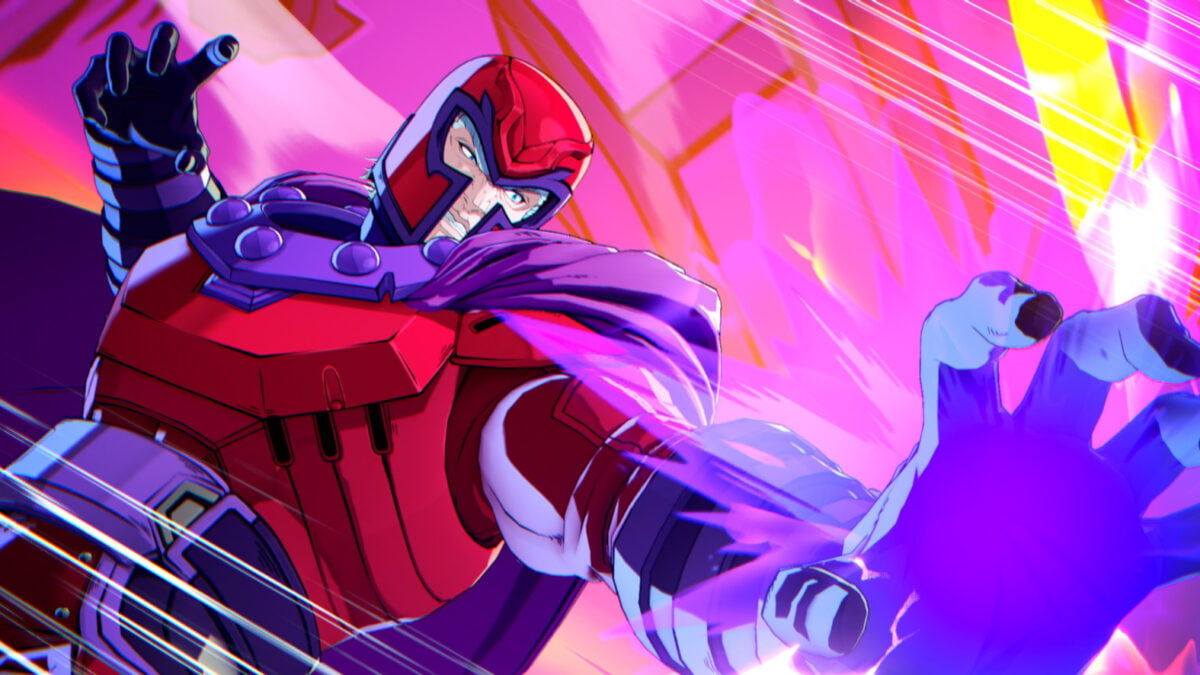
I spent 30 minutes playing Magneto, the star of the EVO 2026 Marvel Tokon demo, as well as trying out Sony’s new upcoming FlexStrike fight stick. At the selection screen, Magneto looks quite faithful to what fans expect. He dons his signature red and purple color scheme, with lightning surrounding him, because, well, magnetism! As an alternate color costume, he swaps his defaults with a black and grey palette instead, making him look more menacing.
In battle, Magneto feels much like a zoner character. His signature attack lets him leave a ball of charged debris in the middle of the field, letting him control the pace in a match. He can also pull from the debris to make his other attacks more powerful. He’s quite the technical character that can really feel rewarding if you learn how to play him correctly.
I also played a majority of my matches against an Arc System Works dev on the newly revealed New York (Night) stage. I loved how it paid homage to various aspects of the city, including the Helicarrier in the background. Also, you can spot She-Hulk in the background. One of the gameplay mechanics that make Marvel Tokon stand out compared to other fighting games are its wall breaks. This is where you knock an opponent so hard that they go flying into another part of the stage, resulting in a short cutscene.
While this isn’t new to fighting games at all, wall breaks are a crucial part of the actual gameplay. Each stage is made up of three to five “screens” which are areas with distinct backgrounds, and matches start in the very middle screen. See, each team can have up to four different characters, but you actually don’t have access to all of them at once, just the first two. You have your first fighter that you pick at the select screen, then the other three can be swapped out or used as assists.
When you break the wall, you essentially “build” your team, and now have access to more of your roster. And when you reach the far ends of the stages and there’s no more wall to break, characters will just bounce right off the edge of the stage. That counts as a wall break too, so no worries. I really like this mechanic because even though my primary goal is to deplete my opponent’s HP completely to win the round, having to “build” out the rest of my team offers a sort of mini goal that I can work towards, adding more strategic depth to Marvel Tokon.
Some of Marvel Tokon’s mechanics have been polarizing, particularly the shared HP pool. Each individual character on a team doesn’t have their own HP bars. Say, for example, your Wolverine is low on health. You tag him out with Captain America, but the HP bar stays the same. It can take a while to get used to, especially coming from another fighting game like Marvel vs. Capcom where each character has their own HP bar. But I think a shared HP pool fits as having to beat four different characters to win a match can really drag out its pacing.
However, this is balanced out by the fact that if you wall break and gain access to