// NATURE NEWS — SPAZIO & SCIENZA
Landmark map of human brain’s gene activity holds clues to Alzheimer’s disease and more
Amanda Heidt is a freelance writer and editor in Moab, Utah.
Search author on:
PubMed
Google Scholar
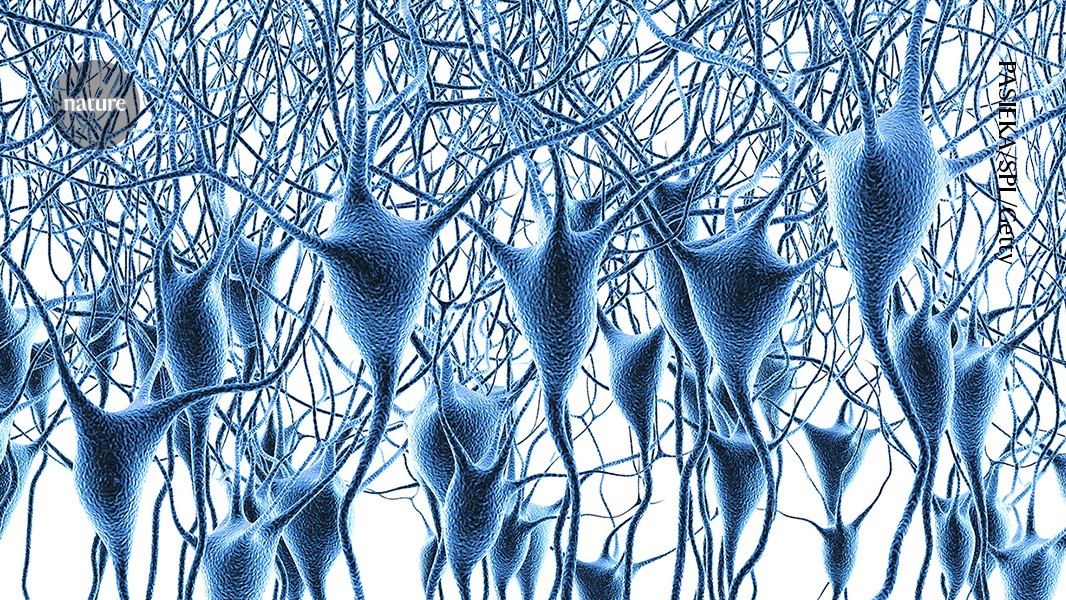
A detailed brain map describes gene activity in neurons (artist’s illustration) as well as immune and vascular cells in the prefrontal cortex.Credit: PASIEKA/SPL/Getty
Researchers have produced the largest map to date of the human prefrontal cortex1, a brain area that supports planning, decision-making and behavioural and emotional regulation. The landmark map draws on sequencing data from more than six million individual cells from almost 1,500 people to inform the study of neurodegenerative and psychiatric diseases in unprecedented detail.
The research was published today in a collection of eight studies, including three papers in Nature1,2,3.
“The scale of this project and the amount of work required to assemble it are genuinely impressive,” says Zhichao Miao, a computational biologist at the Guangzhou National Laboratory in China who was not involved in the work. “Single-cell studies of the human brain have traditionally been limited to relatively small numbers of individuals. Pushing us into a population-scale setting changes the kinds of questions we can ask.”
Panos Roussos, the director of the Center for Disease Neurogenomics at the Icahn School of Medicine at Mount Sinai in New York City and a co-author on all nine papers, says that the work is the culmination of a massive effort that first began in 2019. The PsychAD Consortium, an NIH-funded partnership between several US institutions, was established with the goal of connecting genetic variation, ageing and disease to changes in specific brain cells.
The group focused on the prefrontal cortex, Roussos says, because of its crucial role in working memory and ‘executive function’ — high-level processes that direct planning, focusing and multitasking. Disruptions to a specific subregion called the dorsolateral prefrontal cortex, Roussos adds, are implicated in several psychiatric disorders and types of dementia.
Biggest brain map ever details huge number of neurons and their activity
To build their maps, the team studied tissue from nearly 1,500 people whose brains were donated to science after their deaths. The donors ranged from infants to an individual aged 108, had diverse ancestries and included both neurotypical controls and people diagnosed with one of eight brain disorders: Alzheimer’s disease; dementia with Lewy bodies; Parkinson’s disease; vascular dementia; tauopathy; frontotemporal dementia; schizophrenia; or bipolar disorder.