// ITS FOSS — LINUX & OPEN SOURCE
openKylin 3.0 Release Makes it a "AI first" Linux Desktop
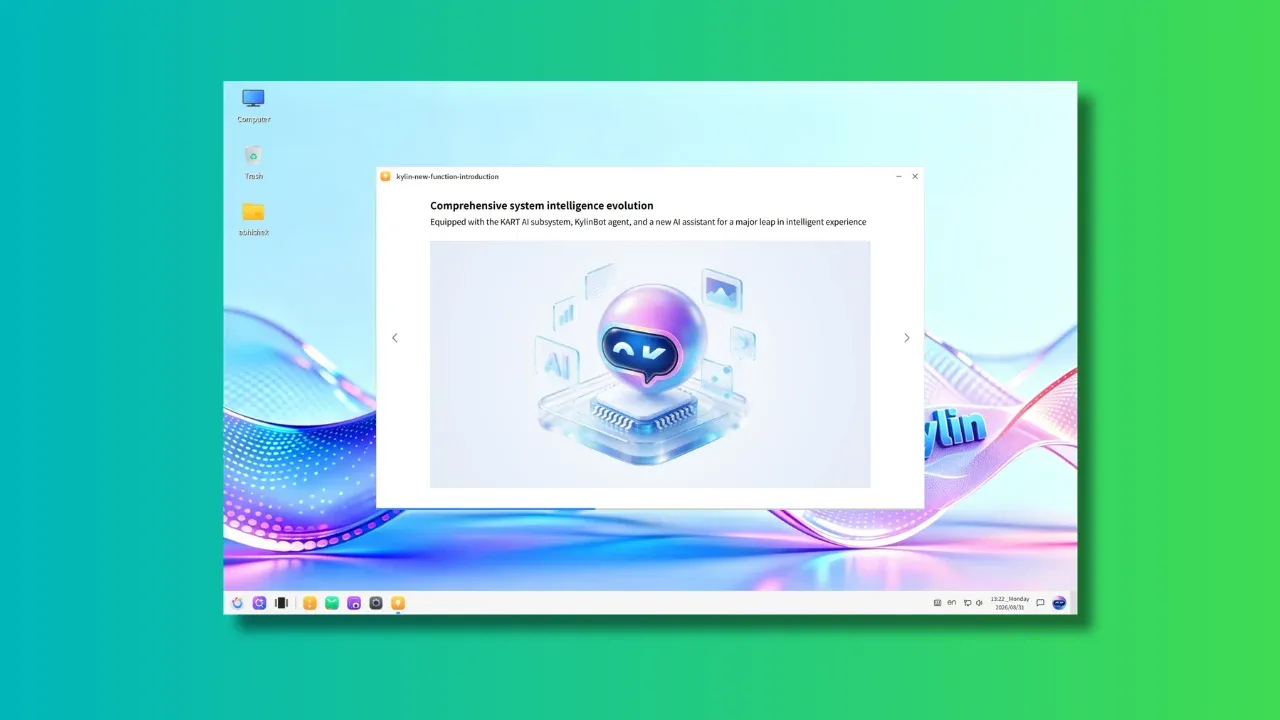
openKylin is China's homegrown, open source operating system which is developed by a consortium of companies, research institutes, and individual contributors.
We have covered openKylin in the past but that was more than two years ago. There is a new major release in the form of openKylin 3.0 that brings Linux kernel 7.0, UKUI (desktop environment) 4.24 and deeply integrated AI at the core.
Among the most highlighted changes in the new release is the built-in, all-new KylinBot AI agent framework, along with Xiao K, the AI assistant built on top of it.
Xiao K is basically the graphical interface similar to Hermes Desktop and most other AI tools of this sort. The underlying KylineBot AI agent framework integrates it with the system.
And then it comes with several pre-built system skills like:
This way, you can ask the agent in Xiao K to switch off the bluetooth or switch to a different network, change the input keyboard layout and more. You don't need to go through the command line or click through the system settings. The agent does the job for you.
Seems like overkill, right? But it makes more sense if you use the voice input. People these days use Siri hands-off for calling to specific contacts. So, if you could just talk to your computer and ask it to connect to your bluetooth headphone, why not?
Remember that Ubuntu 26.10 is also working on AI integration. Omarch 4.0 got a sudden surge in popularity for AI (and its looks). So, even if you dislike AI, there is a demand for it. And sooner or later, most desktop operating systems will have built-in AI assistants like this. openKylin is just a few steps ahead of its peers.
There are more skills that can be found on openKylin's repo here. It is in Chinese language and I do hope they start offering these features in English as well to cater a larger global audience.
Like Hermes, OpenClaw and other AI tools, Xiao K doesn't stay to your desktop only. You can communicate with it from messaging tools like WeChat, Feishu, DingTalk etc. Telegram and Discord support is planned.