// ARS TECHNICA — MOBILE & WEB
Robots make combat airdrops, clear mines as Ukraine defeats Russian pincer
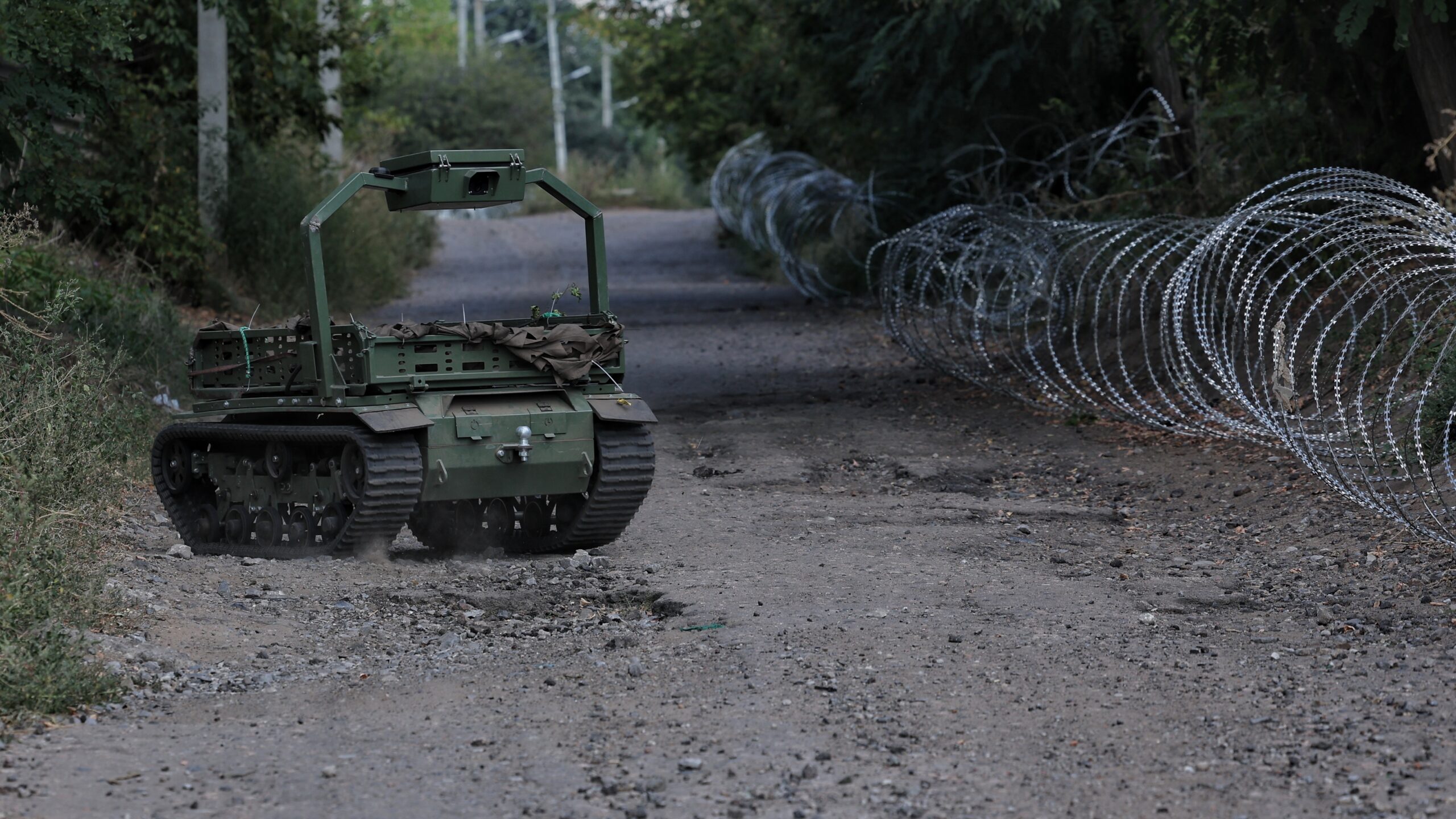
Ukraine’s Operation Vivaldi has erased Russian gains with the help of robots.
Ukraine’s military robots are dropping from heavy drones in airborne assaults behind Russian lines as other robots clear mines ahead of advancing Ukrainian infantry. The wheeled ground robots are supporting Ukraine’s Operation Vivaldi counterattack that has crushed a Russian military pincer movement and liberated dozens of square miles of occupied Ukrainian territory so far.
The Ukrainian Third Army Corps revealed a “world-first” airborne assault involving robots and drones that took place within Russian-held territory on September 21, 2026, according to the Ukrainian government media platform United24. Heavy bomber drones air-dropped explosive ground robots more than six miles behind Russian frontlines, helping the robots bypass tough terrain and enemy defenses to attack supply lines in the rear.
This is not the first time that Ukraine has used heavy drones to deliver robots closer to their intended targets. But the incident is reportedly the most ambitious robotic airborne assault to date.
Several days later, the Ukrainian defense media outlet Militarnyi reported that the Third Army Corps had separately used more ground robots to safely clear antipersonnel mines from more than 18 miles of routes, paving the way for Ukrainian infantry assaults. The same task would have typically required two sapper companies—but in this case, the robots took care of it all on their own without putting human lives at risk.
Such remote-controlled robots and their human operators already take care of about 60 percent of mines in the Third Army Corps’ area of operations, according to Militarnyi and follow-up coverage by United24.
The Ukrainian military has been significantly ramping up the use of ground robots to compensate for its manpower disadvantage against the Russian military. With the persistent threat of drone attacks near the front lines, robots are taking on increasingly risky duties such as doing supply runs or evacuating wounded soldiers.
Ukraine’s military robots are also taking on combat duties such as defending against Russian attacks with machine guns or making explosive kamikaze assaults on Russian positions.
The latest battlefield uses of such robots have helped the Ukrainian military’s Operation Vivald reclaim up to 96 square miles of territory. Operation Vivaldi has also defeated Russian forces that were the northern part of a pincer movement attempting to encircle Ukraine’s “Fortress Belt” cities in eastern Ukraine, according to the Institute for the Study of War (ISW), a think bank based in Washington, DC.
Since launching in May 2026, the Ukrainian Third Army Corps operation has practiced strict operational security that has kept successful advances under wraps for a long time. That has helped mislead Russian leaders, whose operational awareness is also hindered by what the ISW described as a “pervasive culture of lying within the Russian military” about the real battlefield situation when things aren’t going well for Russia.