// HACKER NEWS — CYBERSECURITY
California is chasing wealth that has feet
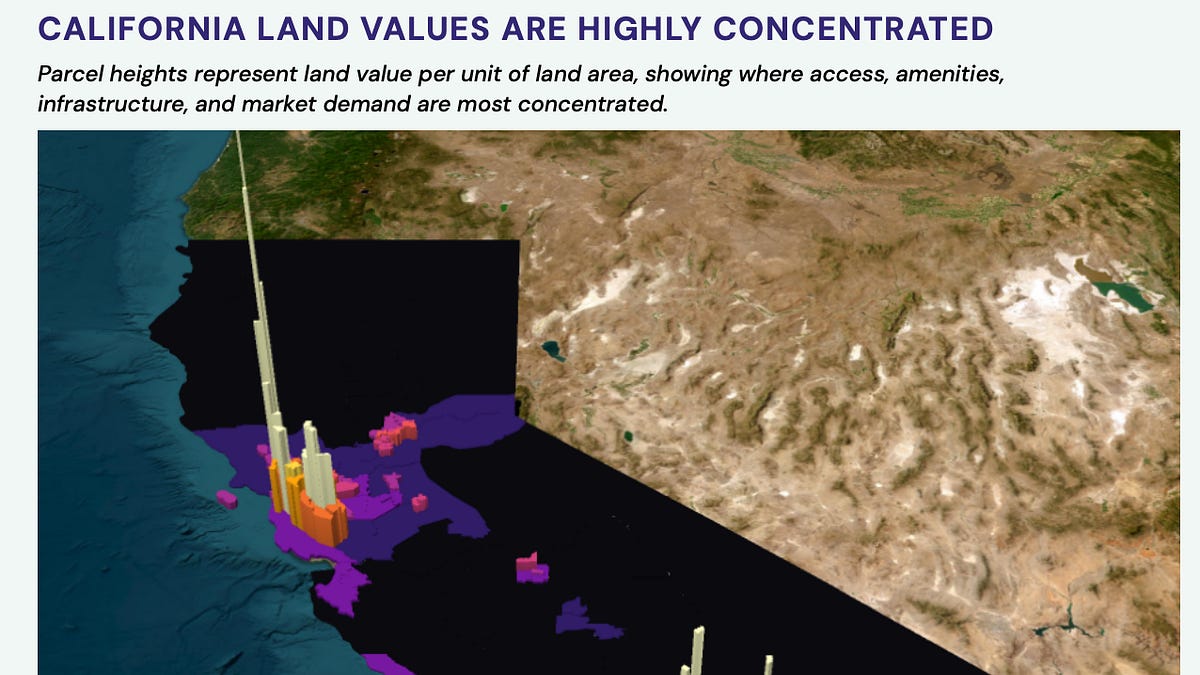
The Center for Land Economics full report can be found here; our op-ed on the same argument ran in the San Francisco Chronicle yesterday.
Last week California certified a Billionaire Wealth Tax for the November ballot: a 5 percent one-time levy on the state’s billionaires, paid out over five years, to raise about $20 billion a year for health care, food aid, and schools after federal cuts. We understand the impulse. The state has a revenue hole, and billionaires can afford to help fill it.
Support more work like this by subscribing. Consider being a paid subscriber.
But the tax will fail at the thing it’s for, and it will fail for a simple reason: billionaires, unlike land, have feet.
We just spent months building the empirical case, calculating the aggregate of California’s land values, in a new report from the Center for Land Economics. The short version: land is one of the biggest pools of wealth there is, California has more of it than almost anything else, and it cannot leave the state.
We estimated the total value of California’s land, summing it up parcel by parcel: about $8.14 trillion. We checked that figure two more ways — against federal housing-finance data and against time-trended sales — and all three methods land in the same range. It is, as far as we know, the first credible bottom-up estimate of what California’s land is actually worth.
That number is roughly eight times the billionaire wealth the state can still realistically tax. Los Angeles County’s land alone is worth more than the entire billionaire base the wealth tax is chasing. The Bay Area’s is close behind.
And land is the rare tax base that just sits there. A billionaire can move to Austin. While their portfolio can move in an afternoon, their land cannot.
The wealth tax’s own math assumes a $2 trillion base, which is a nearly 2x overestimate due to wealth flight.
Six California billionaires — Larry Page, Sergey Brin, Peter Thiel, Don Hankey, Travis Kalanick, and Steven Spielberg, worth roughly $540 billion combined — had already moved their tax residency out of state before the measure’s January 1, 2026 cutoff. Mark Zuckerberg (about $220 billion) followed in early 2026 and will almost certainly fight the retroactive reach in court. Add a roughly $200 billion overestimate that other economists have flagged in the proposal’s own model, and nearly half the assumed base is gone.