// NATURE NEWS — SPAZIO & SCIENZA
China now leads the world in trials for next-gen CAR-T therapies
Rachel Fieldhouse is a reporter for Nature in Sydney, Australia.
Search author on:
PubMed
Google Scholar
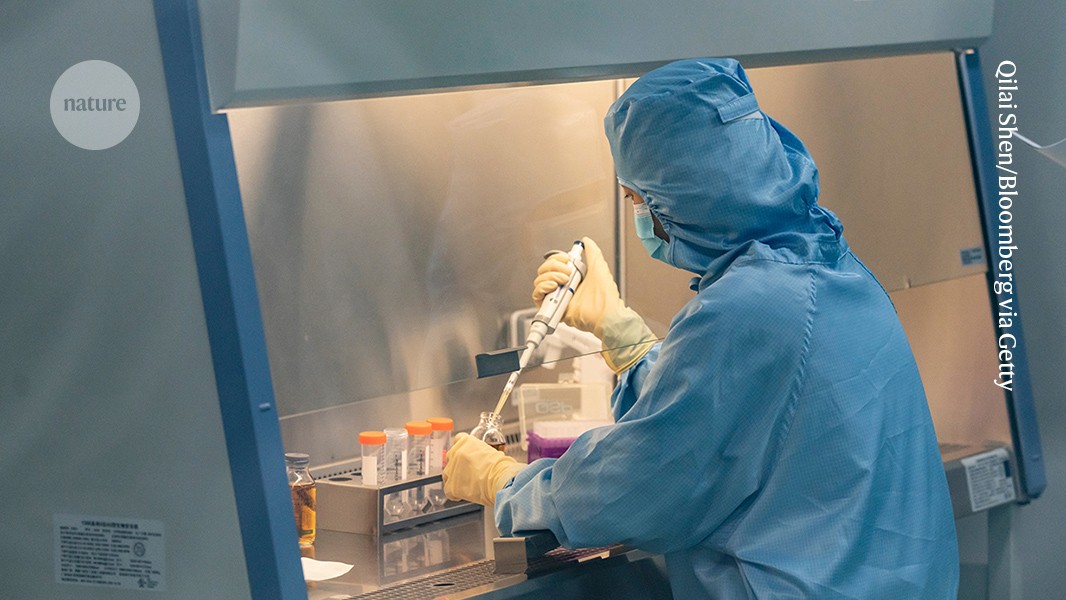
CAR-T cell therapies developed in China are quickly moving to trials in patients. Credit: Qilai Shen/Bloomberg via Getty
China has become a hotspot for developing and trialling innovative therapies that could transform the treatment of cancer and autoimmune diseases. The combination of the country’s large population, fast-track regulatory pathways and resources have helped it to dominate therapies that produce disease-fighting immune cells inside the body, say researchers.
In vivo CAR-T-cell therapies instruct the body to alter immune cells so that they attack cancerous cells or, in the case of autoimmune diseases, wipe out cells that attack healthy tissue. In vivo therapies are appealing because they are cheaper and easier to develop than are ex vivo CAR-T-cell therapies, in which immune cells are collected from a person’s blood, edited in a laboratory and then reintroduced to the body. These are already being used to treat blood cancers.
Immune therapy engineered inside the body eases multiple sclerosis
In an analysis published last month, John Wu, at Boston Consulting Group in Massachusetts, and his colleagues reported1 that most of the foundational, preclinical work in the field has been done by groups in the United States and Germany, but “China has been a fast mover to the clinic”. Of the 140 in vivo CAR-T-cell drugs being tested in animals and people globally, 82% are being developed by groups in China.
China’s progress in developing these therapies has been building for at least the past five years, says Emily Blyth, a physician and cellular therapy researcher at The Westmead Institute for Medical Research in Sydney, Australia. “There’s a huge volume of work, a lot of it supported by the Chinese government,” Blyth says. There is growing interest from international groups to collaborate with China on these therapies, she adds.
Early trial results seem promising. The first in-human trial of in vivo CAR-T-cell therapy for an autoimmune disease reported results in September last year. Five people with treatment-resistant lupus showed improved symptoms just three months after treatment, with no serious side effects. Earlier this month, researchers in China reported that symptoms for 16 people with autoimmune diseases improved after in vivo CAR-T-cell therapy.
The benefits will almost certainly extend beyond China. This month, the US Food and Drug Administration approved the first China-developed in vivo CAR-T-cell therapy for testing in clinical trials. The therapy is for blood cancers. “Successful clinical development in China could also accelerate innovation, reduce treatment costs and generate valuable clinical evidence that benefits patients worldwide,” says Xiaoyuan Chen, a chemist at Shandong Cancer Hospital and Institute in Jinan City, China, who is developing an in vivo CAR-T-cell therapy for cancer and fibrosis.