// NASA BREAKING NEWS — SPAZIO & SCIENZA
NASA, Boeing Share Update on Commercial Starliner Development Plans
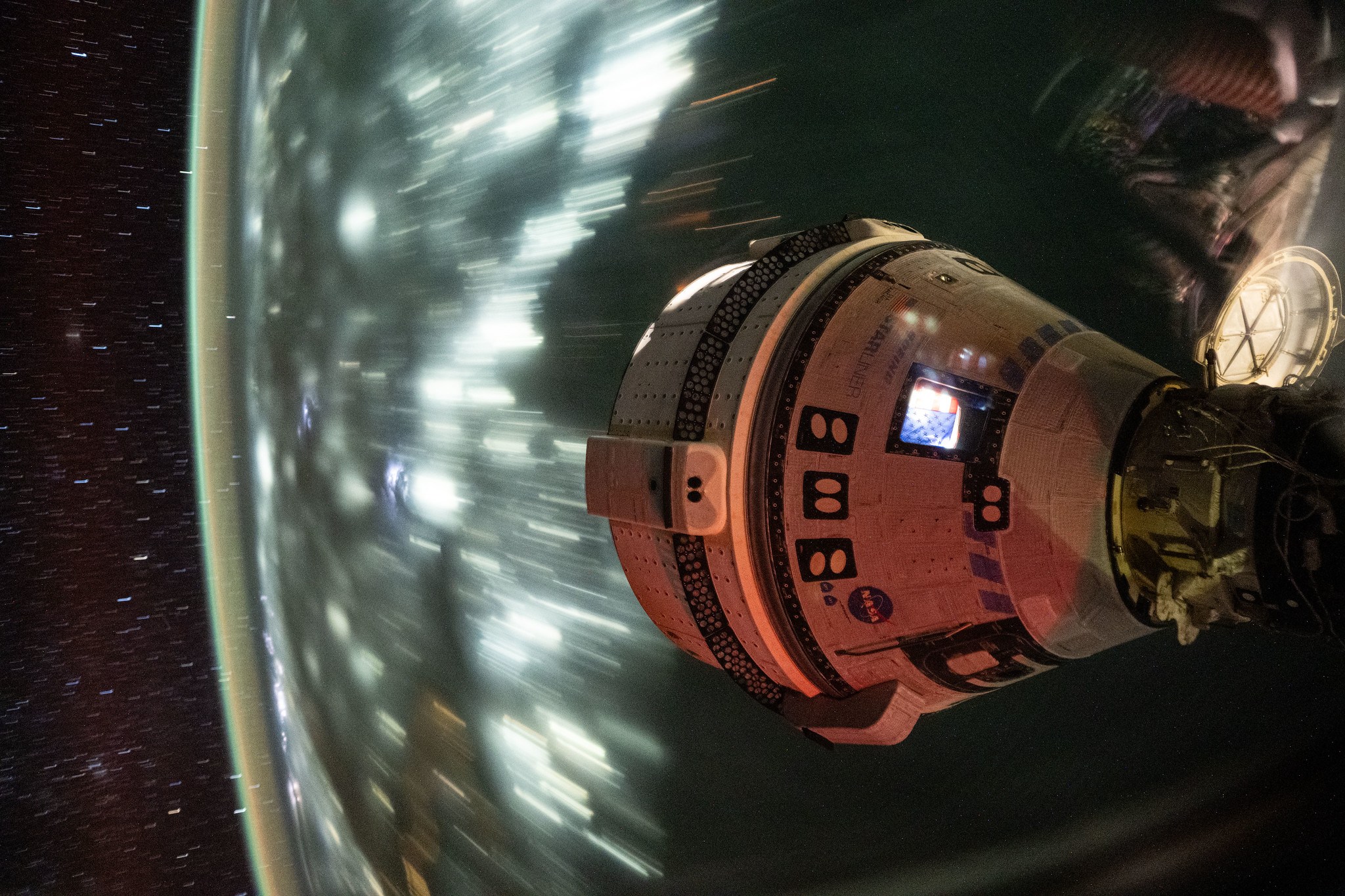
On Monday, NASA and Boeing provided an update on the company’s Starliner spacecraft, including adding additional crew missions and certifying a new rocket for crew transportation to low Earth orbit.
“We are living through the most exciting era of space exploration since Apollo,” said NASA Administrator Jared Isaacman. “As this domain continues to open, there will be growing demand for launch vehicles, transfer stages, landers, and, of course, spacecraft that carry astronauts. NASA has been committed to having multiple crew transportation options since the beginning of the Commercial Crew Program. We have worked closely with Boeing to address the issues identified on previous Starliner flights, and we intend to see this vehicle return to flight in support of the International Space Station and future commercial destinations.”
The agency intends to exercise options for a fifth and sixth flight to and from the space station using Starliner, and will work with Boeing and United Launch Alliance to certify the Vulcan rocket for use after the Atlas V rocket’s final flight.
“We are starting with an uncrewed Starliner-1 mission to the International Space Station to validate the improvements made to the spacecraft and gather the flight data we need,” said Isaacman. “From there, we will use what we learn, continue implementing the corrective actions identified by our Program Investigation Team, and complete the testing and certification required for crewed flight. Our current plan is to return astronauts on Starliner-2 by 2028.”
NASA’s commercial crew efforts aim to preserve a U.S. crew transportation capability for ensuring continued access to space. The work is challenging, however, it is essential for responsibly concluding space station operations, transitioning to commercial space stations, and expanding commercial access.
In February, NASA released findings from the agency’s Program Investigation Team outlining the programmatic and technical issues resulting in an uncrewed return of the Starliner during its first crewed flight in 2024. In total, the investigation identified 61 recommendations to NASA to ensure that future missions meet the high standards required for human spaceflight.
The report specifically identified issues with Starliner’s service module reaction control thrusters operating outside of their engineering qualification, which resulted in the loss of control experienced during its Crew Flight Test. Through significant ground testing and analysis, NASA and Boeing learned the service module thruster performance issues resulted from a combination of factors, including the thermal environment and features inherent in its design.
Based on the findings, Boeing has made thermal modifications to the spacecraft’s service module which NASA will evaluate for improved performance on Starliner-1. NASA and Boeing also have jointly decided to implement an additional thruster valve design modification in support of spacecraft certification and future crewed flights.
The uncrewed Starliner-1 has the potential to fly in December of this year or January 2027. It will serve as an engineering evaluation mission to verify improved thermal environments, obtain necessary performance data for system qualification, and identify residual risk ahead of crewed missions.
“Starliner’s next flight is a critical step on the path to achieving full system certification and ensuring a sustained human presence in low Earth orbit,” said Dana Weigel, manager of NASA’s Low Earth Orbit Program. “With the safety of our space station crew and the public as our highest priority, we will test Starliner’s propulsion system through targeted demonstration objectives and disciplined operational controls. These steps are essential to validating Starliner’s thermal performance which is a key element for the certification.”