// TOM'S HARDWARE US — HARDWARE & GADGET
‘This is how AI should be used’ — OpenAI head of hardware breaks down the AI-assisted design of its Jalapeño ASIC
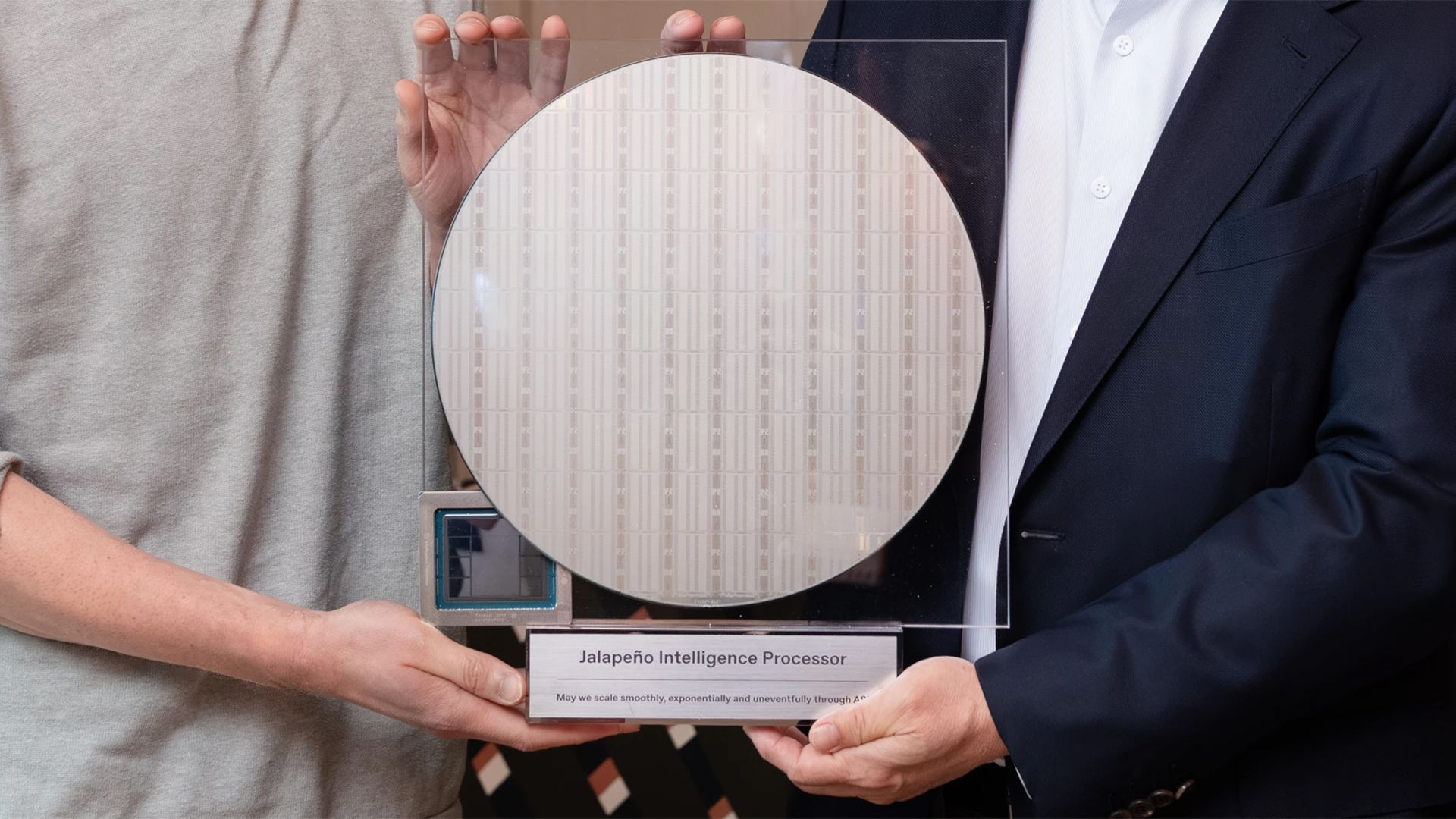
OpenAI cut typical development timelines in half, and the industry has already come knocking to understand how.
When you purchase through links on our site, we may earn an affiliate commission. Here’s how it works.
OpenAI’s Jalapeño ASIC is a seismic shift for the industry, not because of its efficiency or performance, but because of how it was designed. The company was clear from the jump that AI played a big role in the design process of Jalapeño, not only for the hardware itself, but also in the co-design with OpenAI’s software stack, allowing the ASIC to go from initial register-transfer level (RTL) to tapeout in a matter of just nine months. From concept to reveal, the timeline was less than two years. Richard Ho, head of hardware at OpenAI, says the timeline “established a new baseline,” and that the industry is already knocking on OpenAI’s door to learn how the company pulled it off.
“The way I like to think about it is, we’ve established a new baseline. In the old baseline, you’re talking 18 months to two years, roughly. Often that’s even with some existing IP or some more legacy architecture design,” Ho told Tom’s Hardware Premium in an interview. “We’re starting from scratch here. We had nothing. There’s not a line of code here to refer to. What we’ve established is that there’s a new baseline that you can do with a very talented team with the help of AI. Now, does it get shorter? It depends on what you’re trying to do.”
AI usage in chip design is nothing new, predating the era of LLMs entirely. The largest Electronic Design Automation (EDA) companies, Cadence and Synopsys, have a portfolio of AI-assisted chip design tools that have been around for several years. The models OpenAI used were its own internal models, however, and it leveraged both existing EDA tools and its new AI-assisted engineering workflow.
The engineering team used OpenAI’s agentic coding platform, Codex, for the Jalapeño design. “But we think that every engineering team in chip design should be able to use this as a new baseline, because it’s a proof point that the models that are in use — the AI models for us is mostly Codex, Sol, the one before Sol, and now we’re moving on to Astra. These are super capable. Even from when we started that work, back in November 2025, to when we taped out, the models improved enormously. Even from that moment to when we started doing the kernel optimization in May, when the chips were first coming online, we ourselves were shocked at how much better Codex was and what it could do,” Ho said.
Although AI was used during the entire development process, not only for design itself but also in writing and optimizing kernels, Ho continually reiterated the importance of talented engineers guiding those systems. The development story of Jalapeño is one of the few clear examples of AI bolstering a team of human workers, not displacing them.
Ho described the development cycle as a “good model” of how engineering teams should operate in the AI era. “This is how AI should be used. We didn’t replace our engineers; they just became super productive. With a smaller team of really good engineers with a lot of this AI stuff, you could do things faster and better than you could otherwise. I think that’s a good model of how engineering should be approached in the AI age.”
Although OpenAI managed to get working silicon much faster than a traditional development cycle, it wasn’t free of issues. For starters, OpenAI’s B0 stepping of Jalapeño reportedly delivers up to a 25% improvement in performance per watt over the original A0 stepping. That’s closer to a generational improvement than stepping optimization, suggesting that, at least for a brand new hardware team, there may have been design oversights with the original stepping. Attributing that to AI or humans is anyone’s guess.
Get Tom's Hardware's best news and in-depth reviews, straight to your inbox.