// NATURE NEWS — SPAZIO & SCIENZA
Is exposomics the key to making personalized medicine a reality?
Virginia Gewin is a freelance reporter in Portland, Oregon.
Search author on:
PubMed
Google Scholar
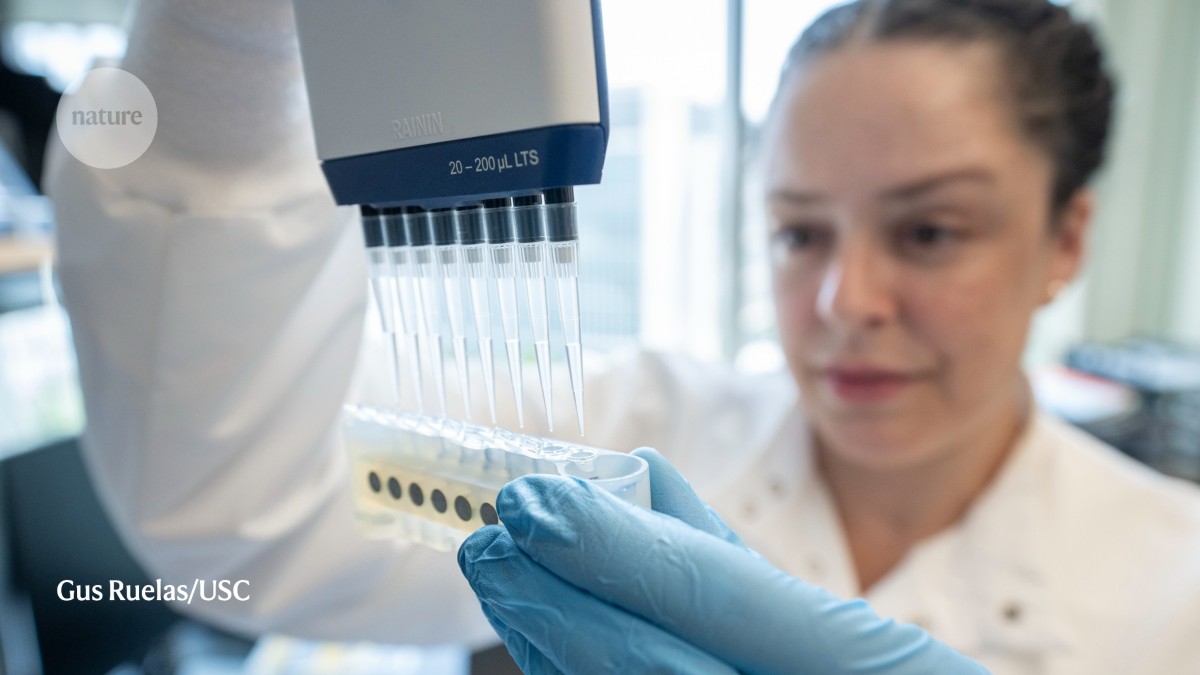
Researcher Ana Maretti Garcia collects transcriptomics data from clusters of cells exposed to ‘forever chemicals’.Credit: Gus Ruelas/USC
The year is 2050. During routine medical visits, patients provide blood and urine samples, their postal code and a description of their lifestyle and habits. The samples are analysed to detect nutrients and pharmaceuticals that the person has consumed, the bacterial and viral infections they have had and any chemicals they have encountered. Their location reveals key details about air pollution, noise and chemical exposure. By combining this information with the individual’s genome details, clinicians will be able to swiftly tally unique disease risks — as well as the actions or treatments that can best slow, or even quell, disease progression.
That’s the future that exposome researchers are working to create.
The exposome is the sum of environmental exposures and lifestyle factors that, in concert with genetics, shape the risk of a person developing many common conditions, including cancer, heart failure, diabetes and dementia. The term was coined in 2005 by Christopher Wild, a now-retired cancer epidemiologist at the International Agency for Research on Cancer in Lyon, France. He described a “desperate need to develop methods with the same precision for an individual’s environmental exposure as we have for the individual’s genome”1.
Environmental exposures are responsible for between 70% and 90% of the risk of developing chronic disease2. “Genetics load the gun, but the environment pulls the trigger,” said Francis Collins, former director of the US National Institutes of Health (NIH) in Bethesda, Maryland. Exposures can turn certain genes on or off, and these epigenetic changes can result in disease. For example, tobacco smoke can silence tumour-suppressor genes, increasing the risk of cancer.
Each individual’s exposure and genetic profile shapes their unique disease risks, and researchers say it is time to fill in the missing details. “If one does not address lifestyle factors, diet, medications, environmental exposures and other factors, care is not personalized,” says Gary Miller, director of the Center for Innovative Exposomics at Columbia University in New York City.
Exposomics research, however, is no small task. Any rigorous endeavour must offer a comprehensive assessment of as many non-genetic disease factors as possible. And understanding these will require researchers to collect and collate data from various sources, including biobanks and long-term cohort studies; surveys of diet, medications and physical activity; and environmental data sets such as geospatial models of air pollution.
Some exposures can be measured using biomarkers including sugars, proteins or chemical-breakdown products in the blood or urine that link biological changes to environmental triggers. “The signatures of past exposures stay in the body,” says Miller. Persistent organic pollutants, for example, leave a signature in fatty compounds called lipids in the blood. Smoking adds chemical tags, or epigenetic markers, to DNA, and these persist even if someone has not smoked for 30 years.