// NATURE NEWS — SPAZIO & SCIENZA
The 'missed disease' that affects 190 million: endometriosis drug shows early promise
Search author on:
PubMed
Google Scholar
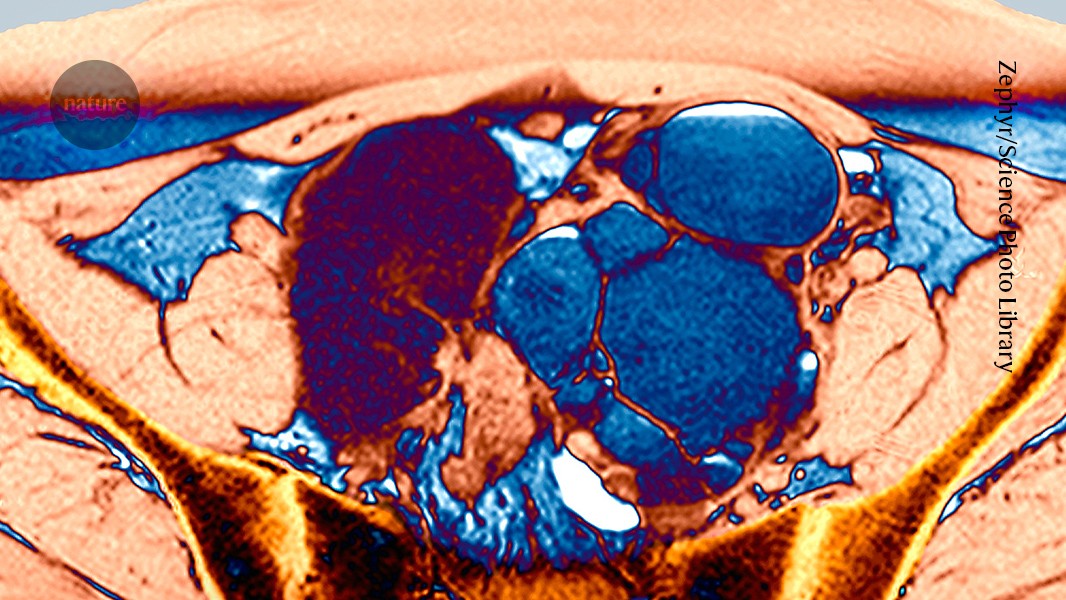
Endometriosis, a condition in which uterine cells form lesions outside of the uterus, has been termed the ‘missed disease’ owing to its unknown cause, delays in diagnosis and disparities in treatment.Credit: Zephyr/Science Photo Library
A new treatment for endometriosis — a painful, chronic condition that around 190 million people live with — might be on the horizon.
The disease is caused by cells of the inner lining of the uterus growing in parts of the body where they don’t belong. The resulting lesions are typically treated with surgery, hormone therapy or a combination of the two. These options come with various complications, however, and are often ineffective in the long term.
Could endometriosis be caused by bacteria? Study offers fresh clues
Now researchers have tweaked niclosamide, a drug used to treat parasitic infections such as tapeworms, to target cells implicated in the disease, and tested it in mice. The study is published in Advanced Healthcare Materials1.
If replicated in people, the results could provide a “breakthrough” in endometriosis treatment, says co-author Kanako Hayashi, a reproductive biologist at Washington State University in Pullman.
The study is a “beautiful first step” towards non-surgical, non-hormone-based therapies, says Elise Courtois, a molecular biologist at the Jackson Laboratory in Farmington, Connecticut.
Endometriosis can affect all those born with a uterus, and is most commonly diagnosed in girls and women between puberty and menopause.
People with the condition often experience severe abdominal and pelvic pain, that typically worsens during menstruation, as well as problems with fertility. The condition is underdiagnosed and undertreated, in part because it can be definitively diagnosed only with surgery to identify lesions outside the uterus. Other factors include the normalization of menstrual pain and the historical gender gap in health care.