// NATURE NEWS — SPAZIO & SCIENZA
Prozac use for childhood depression skewed by single flawed medical trial
Richard Van Noorden is a features editor at Nature in London.
Search author on:
PubMed
Google Scholar
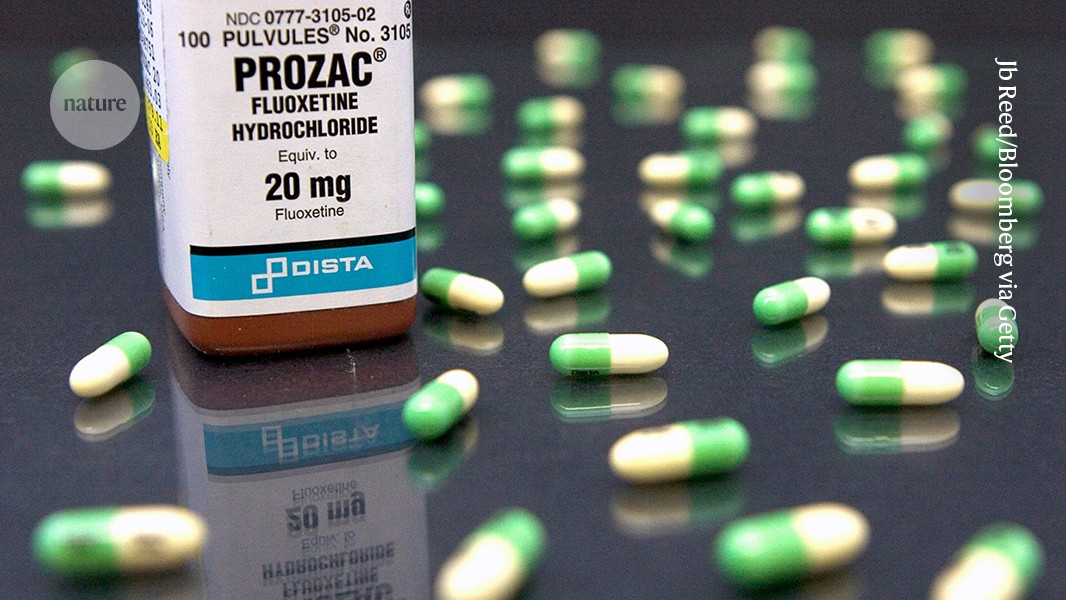
The medication fluoxetine, sold under the brand name Prozac, is recommended as a treatment for depression in children and adolescents in several clinical guidelines.Credit: Jb Reed/Bloomberg via Getty
A single clinical trial of 40 children in Iran, published in 2006, might have wrongly swayed medical evidence in favour of using Prozac (fluoxetine) to treat depression in children and adolescents, a group of researchers say. They’re now calling that trial’s findings into question and suggest that, in their opinion, Prozac’s recommendation in paediatric clinical guidelines isn’t sufficiently supported by the evidence — although they stop short of calling for clinicians to stop prescribing Prozac for depression in children.
Instead, “guideline committees should review their recommendations, acknowledge the evidence we have clarified and go through their process of weighing up whether use can still be justified”, says Richard Lyus, a consultant child and adolescent psychiatrist in Cambridge, UK, and a co-author of the study, which was published this month in Cochrane Evidence Synthesis and Methods1.
The finding shows how a single ‘zombie’ trial — that is, one with data so flawed as to be untrustworthy — can corrupt the evidence base for a front-line medical treatment, says Florian Naudet, a psychiatrist at the University of Rennes in France, and another co-author of the study.
Scientists have repeatedly warned that flawed studies are affecting the results of systematic reviews in medicine and other fields, but it’s rare to find such a clear example, Naudet says.
The researchers who conducted the controversial trial did not respond to repeated e-mail enquiries from Naudet’s team and did not contact him or his colleagues when they posted a preprint on the server medRxiv describing their analysis in September last year; nor did they respond to Nature’s request for comment.
Prozac is one of the most frequently prescribed antidepressants in children. Many national prescribing guidelines recommend the drug on the basis of a 2016 meta-analysis published in The Lancet2, which found that Prozac is better than placebo for treating depression in children and adolescents. A 2020 meta-analysis in The Lancet Psychiatry supported those findings3. But in 2021, a meta-analysis published in Cochrane Database of Systematic Reviews4 found that Prozac had only a ‘small and unimportant’ advantage over placebo, and that it was probably no better than other antidepressants.
Giant study finds untrustworthy trials pollute gold-standard medical reviews