// SPACE.COM — SPAZIO & SCIENZA
Astronomers discover a potentially habitable planet just 25 light-years away. 'This one is exciting'
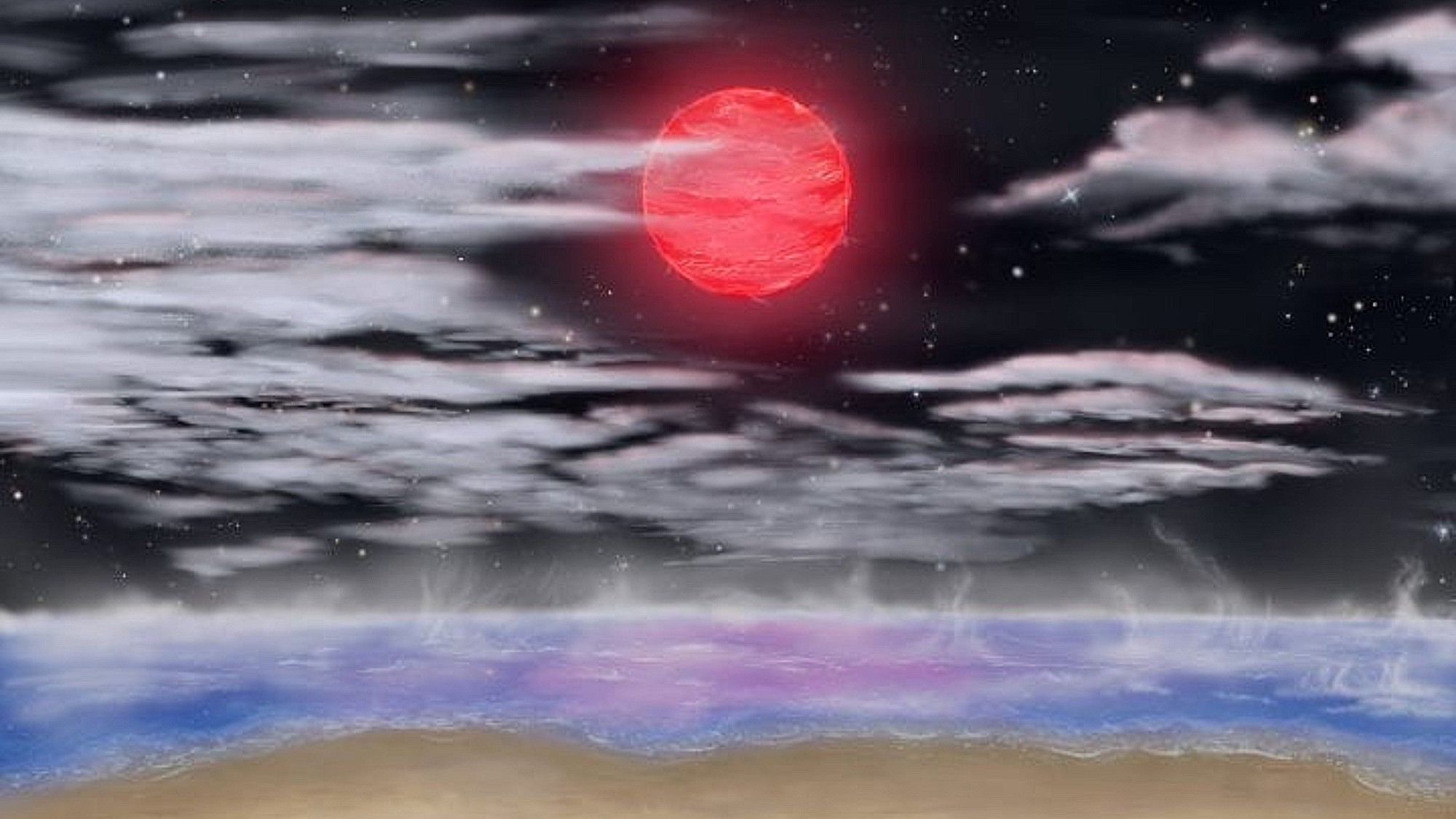
The planet, designated GJ 3378b, orbits the faint red dwarf star in the constellation of Camelopardalis, the Giraffe.
When you purchase through links on our site, we may earn an affiliate commission. Here’s how it works.
A potentially habitable rocky world has been found in the habitable zone around a red dwarf just 25 light-years from us.
However, faced with a hostile wind of radiation from its host star, it remains unclear whether this new exoplanet supports an atmosphere, or the possibility of life. Nevertheless, astronomers are celebrating the discovery.
"This one's exciting," said Paul Robertson of the University of California, Irvine, in a statement. "It's one of our closest cosmic neighbors. Twenty-five light years sounds like a long way, but the Milky Way is about 100,000 light years across, so in that respect it's our next-door neighbor."
The planet, designated GJ 3378b, orbits the faint red dwarf star in the constellation of Camelopardalis, the Giraffe. It was discovered in 2024 by French astronomers using the Canada–France–Hawaii Telescope in Mauna Kea, but American astronomers have revised those initial findings, revealing that the planet is possibly more like Earth than we realized.
All we know for sure is the mass and the orbit of GJ 3378b. We do not yet know whether it is like Earth or not – it could have land and sea and clouds and life, or it could be airless and cratered.
The planet is not seen to transit, or pass in front of its star, blocking its light from our vantage point. Instead, GJ 3378b was detected by the effects of its gravity tugging on its parent star. This causes the star to wobble around the center of mass that it shares with the planet, a wobbling that is betrayed by a Doppler shift in the star's light that can be measured by its spectra, the wavelengths of light that it emits.
When it was discovered in 2024, its mass was measured to be 5.26 times the mass of Earth, putting it in mini-Neptune territory of being a larger, mostly gaseous world. However, by taking a second look at the planet using two different telescopes, Robertson's team was able to show that the planet's true mass is 2.3 times the mass of Earth. This means that it is closer to being a rocky super-Earth instead.
Furthermore, the same observations found that GJ 3378b's orbital period is 21 days, not the 25 days that had originally been measured. This means that the planet is closer to the star than had been thought, sitting comfortably within the habitable zone where temperatures will be suitable for liquid water on the surface of a planet with an atmosphere. So from that point of view, the chance of GJ 3378b being habitable, if not inhabited, seems fair.