// TOM'S HARDWARE US — HARDWARE & GADGET
AMD attempts to get ahead of expected RTX Spark launch with Gorgon Halo benchmarks
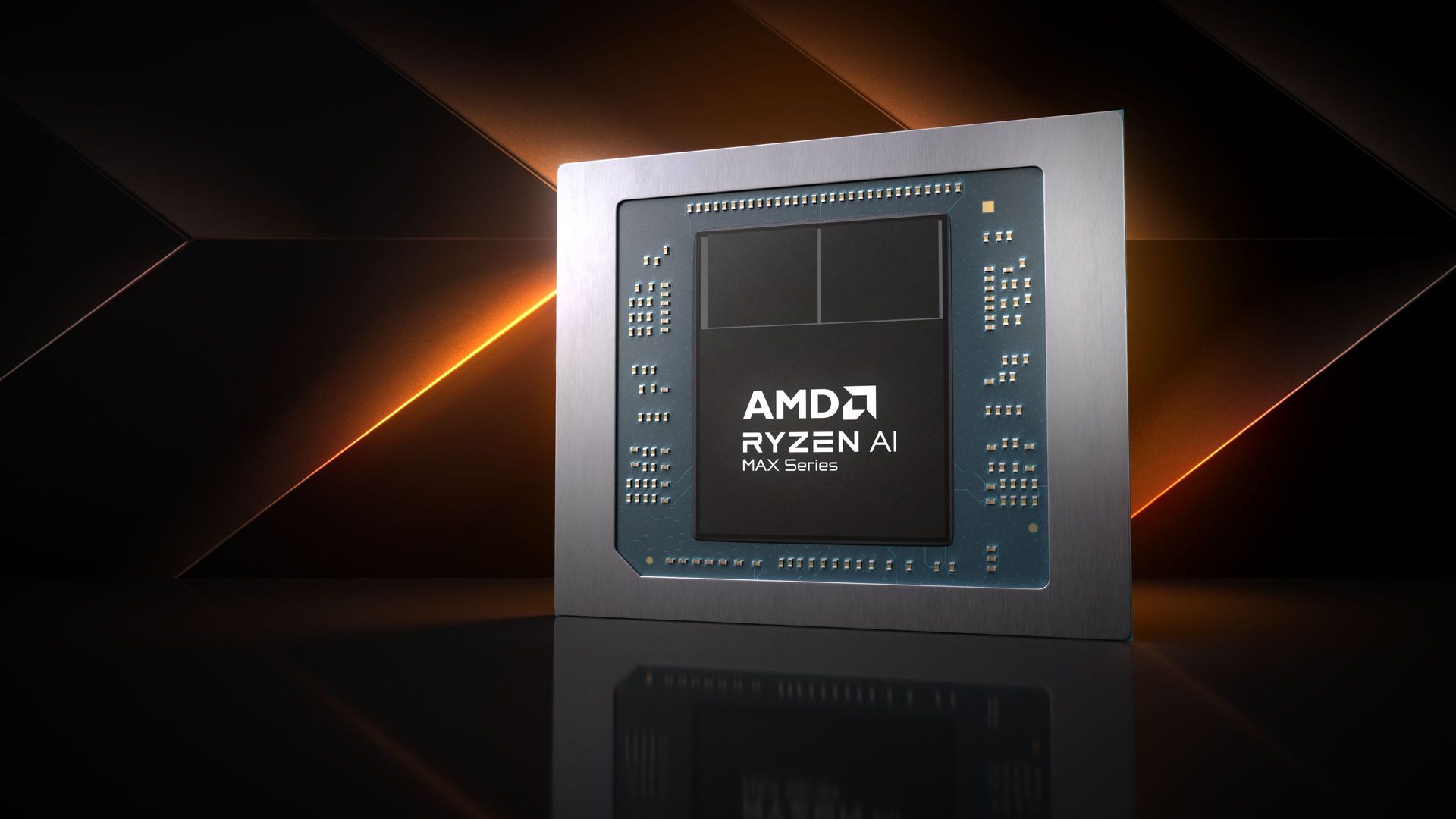
AMD would like to remind you that it makes a big SoC for agentic PCs, too.
When you purchase through links on our site, we may earn an affiliate commission. Here’s how it works.
Nvidia is expected to launch RTX Spark devices later this week, following a not-so-subtle tease at the end of last week (and the chip’s announced fall release). Ahead of Microsoft’s event on Wednesday, October 7 (where the launch is expected) AMD has shared some benchmarks for its new Gorgon Halo chips — the range that will directly compete with RTX Spark devices. The extra insight comes a matter of days after the first Gorgon Halo devices launched, some of which cost upwards of $7,099.
Short of a few questionable Geekbench leaks, we haven’t seen any performance results for the RTX Spark yet, so AMD isn’t using it as a comparison point. Rather, it’s comparing the Ryzen AI Max+ Pro 495 to Intel’s Core Ultra X9 388H. These chips aren’t in the same class of device, though AMD would argue that it’s comparing its top-of-stack part to Intel’s top-of-stack part.
AMD used ComfyUI to measure generative AI performance. AMD averaged multiple runs of various models, comparing total throughput to Intel’s competition. AMD used its top-spec 192GB configuration of the Ryzen AI Max+ Pro 495 and compared it to the Core Ultra X9 388H in a system with 64GB of memory (Panther Lake supports up to 128GB).
The performance advantage ranges from 1.1x up to 32.2x, though the end point is a clear outlier. We searched for Yuve on Hugging Face and didn’t find any results. It’s possible this delta comes down to an optimization issue, or that it’s simply too big to run on the Panther Lake machine.
We don’t have gaming or general application performance, but we don’t expect a major swing compared to last-gen Strix Halo chips. Gorgon Halo is largely a refresh of that range.
Gorgon Halo isn’t getting into the ring with Panther Lake, however. It’s going mainly against the RTX Spark, and to a lesser extent, Apple’s larger M-series SoCs. This category of agentic PCs, as AMD calls it, is seemingly expanding, though it’s still far smaller than some of the hype around the RTX Spark would have you believe. AMD bragged in a prebriefing with the press about shipping “10s of millions” of AI PCs (read: laptops) before clarifying that it had slipped “over half a million” agentic PCs. Presumably, those are numbers for Strix/Gorgon Halo devices.
The matchup between Gorgon Halo and the RTX Spark has, up to this point, focused mainly on memory capacity. RTX Spark devices top out at 128GB of unified memory, same as the GB10 in the DGX Spark (the two chips are nearly identical). AMD, on the other hand, supports up to 192GB with Gorgon Halo. Higher capacity means running larger models locally, though at a lower performance level.
Get Tom's Hardware's best news and in-depth reviews, straight to your inbox.