// TOM'S HARDWARE US — HARDWARE & GADGET
AMD's EPYC Verano AI host CPU will reportedly use a special SB1 socket
When you purchase through links on our site, we may earn an affiliate commission. Here’s how it works.
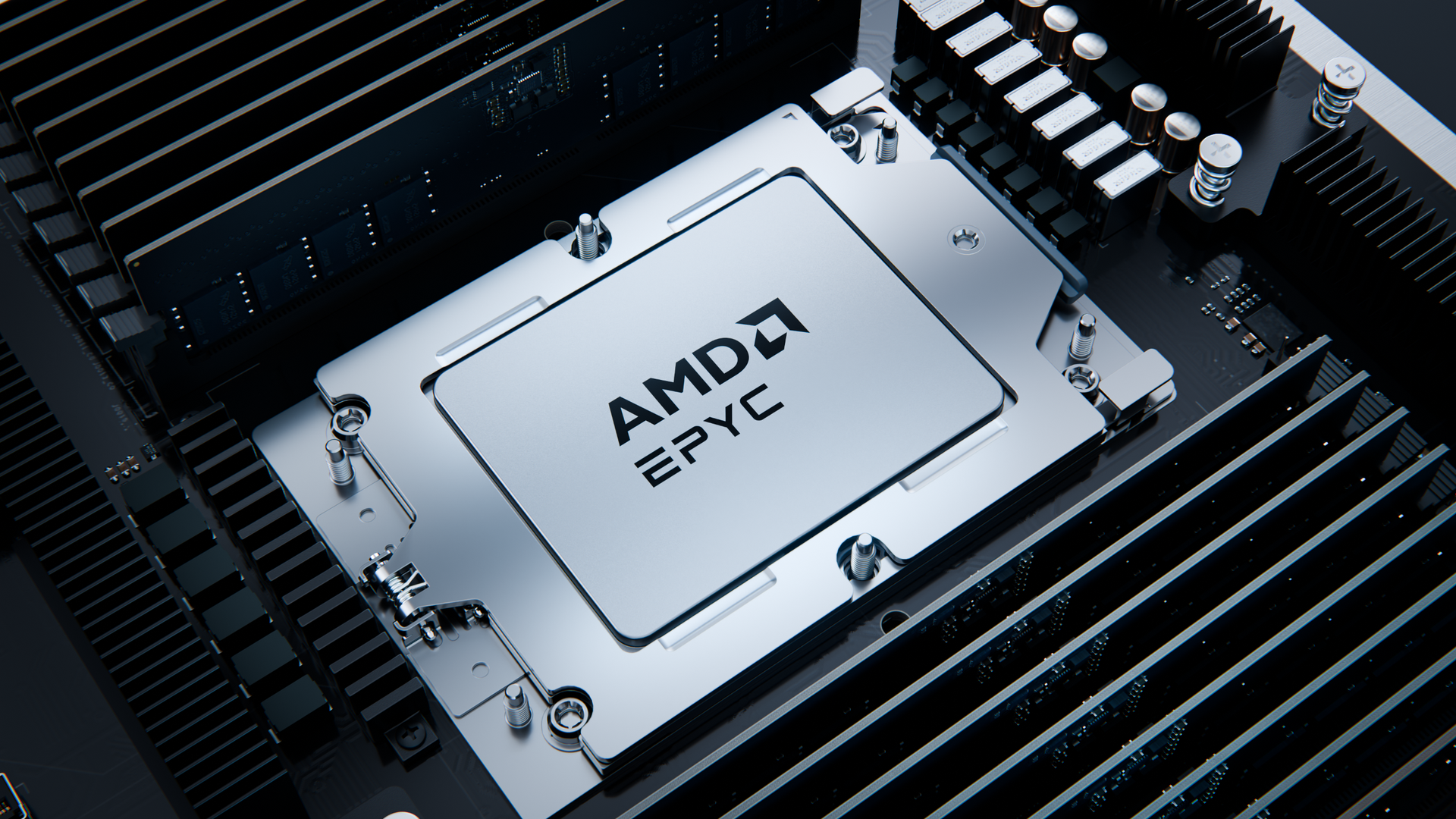
AMD's upcoming EPYC 9006-series 'Verano' CPUs that are specifically designed for AI servers will use an all-new SB1 socket and will require different cooling systems than other processors in the lineup, according to a listing at Dynatron, a leading maker of server coolers, discovered by InstLatX64. The new SB1 socket will be smaller than SP7 and SP8 sockets for other Zen 6-based EPYC CPUs and will therefore have different power and cooling needs.
AMD's Verano is quite different from conventional EPYC processors. The CPU will feature up to 72 Zen 6 cores operating at up to 5 GHz and a massive 24-channel LPDDR5X memory subsystem that uses replaceable SOCAMM2 modules. AMD positions Verano as a host processor for AI servers, where CPUs primarily orchestrate workloads running on AI accelerators rather than provide maximum general-purpose performance themselves. Such specialization could explain why AMD developed SB1 instead of using SP7, which accommodates up to 256-core EPYC 'Venice' processors, or SP8, designed for models with up to 128 cores. Meanwhile, AMD has not disclosed SB1's specifications, dimensions, or capabilities just yet.
In fact, given Verano's highly specialized role as a host processor for AI accelerators, AMD may not need to offer a broad range of Verano SKUs typical of its general-purpose EPYC families. If Verano is deployed in systems with a predetermined number of Instinct accelerators, AMD could offer just one or a small number of CPU configurations to ensure a consistent ratio of CPU cores, memory bandwidth, and host-to-accelerator connectivity per GPU and simplify power, cooling, and system qualification, something that Nvidia does with its Grace and Vera processors.
If AMD decided to take a page from Nvidia's book, this explains why it intends to use a dedicated SB1 socket instead of using existing ones. Rather than supporting a broad range of CPU configurations compatible with SP7 and SP8 sockets and systems, SB1 could be optimized for one or a few CPU SKUs, their 24-channel LPDDR5X memory subsystem, and a particular system topology. Note that AMD has not announced how many Verano SKUs it plans to offer, so consider our thoughts speculation for now.
Dynatron's preliminary SB1-4U-Active cooler provides the first indication of what cooling Verano will require. The 4U unit measures 128.05 × 106.6 × 130.7 mm and uses an aluminum fin stack combined with a vapor chamber and heat pipes. The unit is equipped with a double-ball-bearing fan that operates at up to 6,000 RPM and delivers up to 91.7 CFM of airflow, which makes it a quite powerful device.
It is noteworthy that these specifications are virtually identical to those of Dynatron's J26 4U cooler for AMD's much larger SP7 CPUs, to the degree that even the dimensions are similar. This may either indicate that Dynatron reused the J26 design for SB1, or simply copied and pasted J26's specifications onto the SB1-4U-Active cooler's product page to use them as placeholders until the actual cooler is finalized.
For now, Dynatron does not specify the cooler's maximum supported processor power, so its listing cannot currently be used to determine Verano's TDP with confidence. Nevertheless, a large vapor-chamber-based 4U active cooler suggests that Verano will be a server processor with a rather high power consumption despite having considerably fewer cores than the higher-end EPYC 'Venice' CPUs for general-purpose workloads.
Get Tom's Hardware's best news and in-depth reviews, straight to your inbox.
AMD plans to launch Verano in the second half of 2027.