// NATURE NEWS — SPAZIO & SCIENZA
Plague scare: what scientists know — and what Russia won’t say
Search author on:
PubMed
Google Scholar
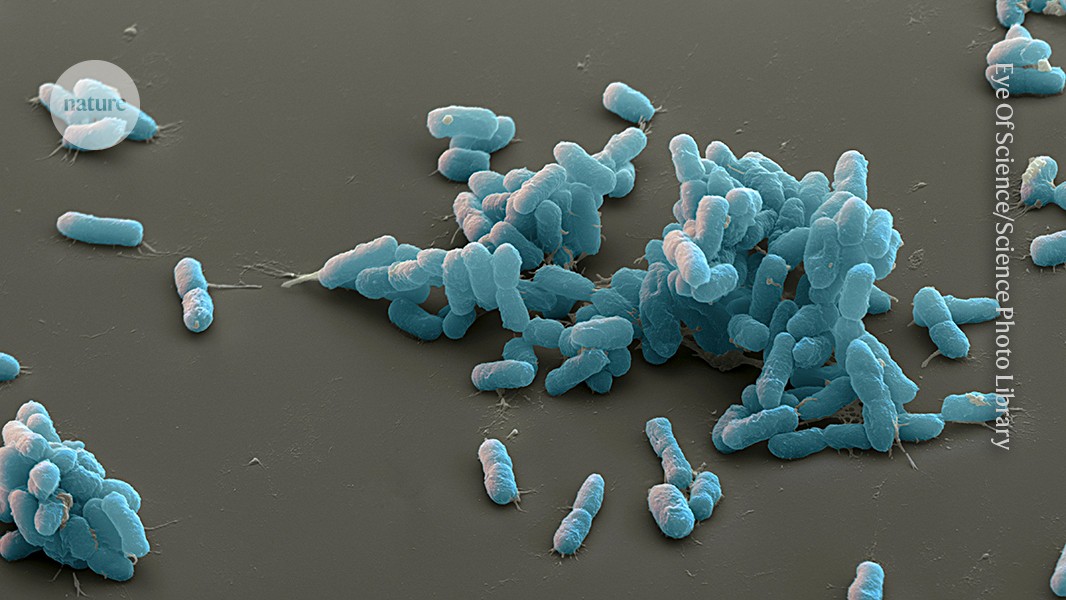
The plague bacterium Yersinia pestis (shown here in an electron microscope image) circulates naturally in some parts of the world in wild rodents.Credit: Eye Of Science/Science Photo Library
The death of a 28-year-old researcher at a Siberian laboratory, possibly from pneumonic plague, has triggered international alarm over whether the incident could spark a wider outbreak. Biosecurity specialists have been assuring the public that this is highly unlikely. Their concern about the incident is the lack of transparency around it.
Although news sources have reported that about 200 people at the lab might have been exposed to the researcher and quarantined, Russia’s public-health regulator has insisted that there was “no emergency” at the Anti-Plague Research Institute in Irkutsk, and that the researcher died from pneumonia of “unknown” origin.
Black Death bacterium has become less lethal after genetic tweak
The Russian government’s sparing disclosures combined with unverified rumours of a lab accident have fuelled demands by the World Health Organization (WHO) and the US government for epidemiological data. Only on 7 October — five days after the researcher’s death — did Russian officials reveal that the researcher had been vaccinated against the plague, and that “thousands of tests” revealed that neither she nor others who might have been exposed had tested positive for dangerous pathogens.
Russia has dismissed the concerns over secrecy, with Kremlin officials telling news outlet CNN that it has kept the WHO informed “in accordance with established practice”.
Although the risk of a wider epidemic is minimal — the Yersinia pestis bacterium that causes the disease is treatable with antibiotics — the incident exposes vulnerabilities in global biosurveillance, says Gregory Koblentz, a biosecurity-policy specialist at George Mason University near Washington DC, who studies lab safety.
Nature spoke with Koblentz about why pandemic fears are misplaced and the dangers of government secrecy when responding to this type of incident.
Gregory Koblentz studies laboratory safety at George Mason University near Washington DC.Credit: Rod Lamkey/Abaca Press/Shutterstock