// ARS TECHNICA — MODA & SOCIETÀ
F1 in Singapore: There's a new fastest car now
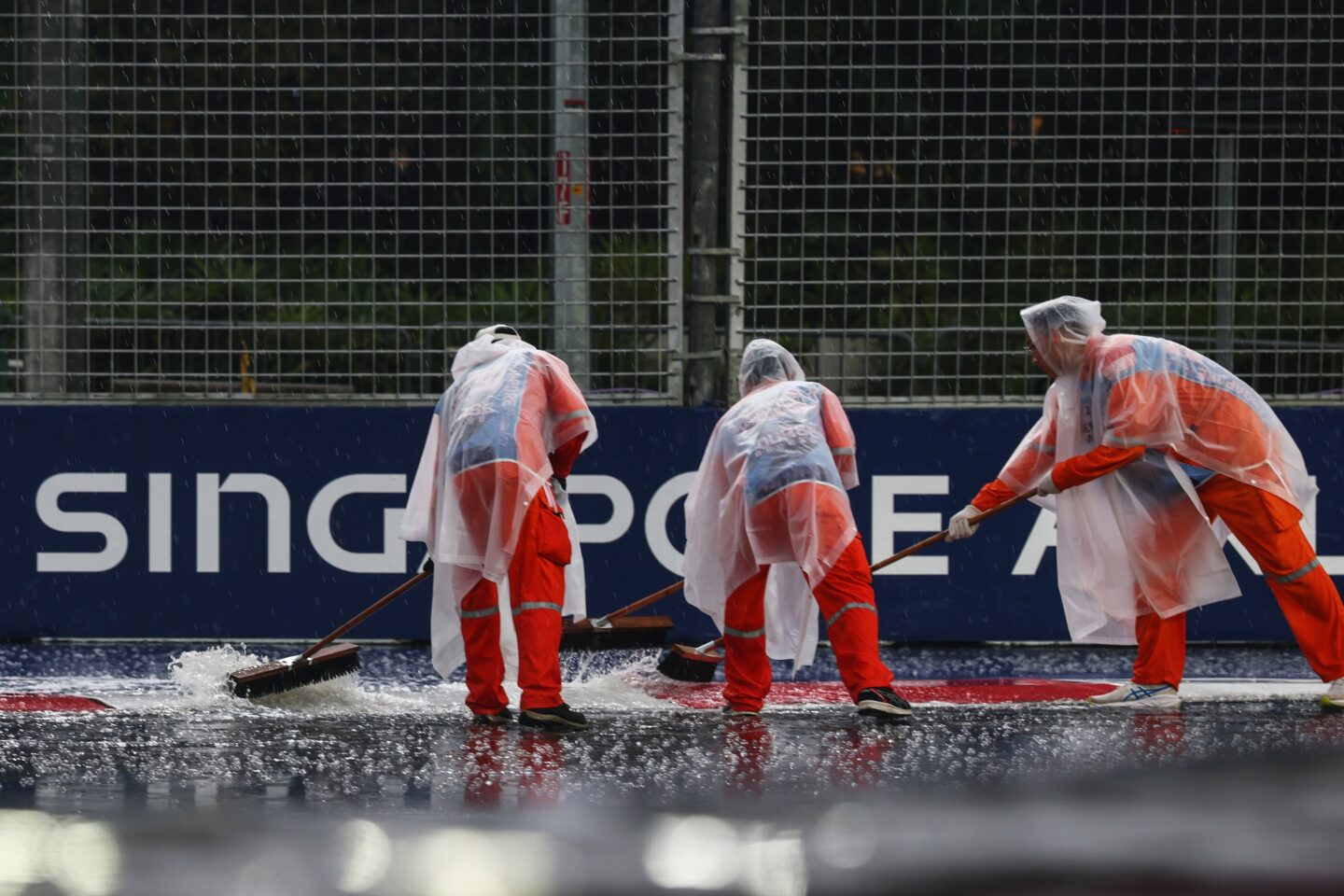
Also, F1’s final sprint saw our first real wet racing of the year.
Formula 1’s lengthy 2026 season is entering its final stretch. The sport took to the floodlit streets of Singapore on Sunday night, but Saturday saw action, too; this Grand Prix weekend was also the final of six sprints this year. The night race might be one of modern F1’s greatest spectacles. From overhead shots, the track becomes a bright, illuminated ribbon among the looming darkness of the city-state’s overpasses and skyscrapers. At ground level, the cars shower glittering sparks from their titanium skid blocks as the drivers flirt with how close they can get to the walls. As tracks go, the 90-degree turns and concrete barrier-lined streets were a world away from the abrasive tarmac and ample runoff of Malaysia last time out. But the tropical heat and humidity were a constant given both locations’ proximity to the equator.
In Malaysia (which was still technically the Bahrain GP), a pre-race downpour disrupted things mightily. On Saturday morning in Singapore, shortly before the start of the sprint, it seemed history was about to rhyme when the skies opened. With standing water in places on the track, the sprint was delayed by 30 minutes. The sprint format, where a short extra race replaces a practice session a day before the main event, is unloved by the drivers and teams. For one thing there’s little prestige in winning Saturday’s sprint. And with qualifying just a few hours later, risk-taking is discouraged lest one wreck the car and ruin Sunday’s race a day early.
And in Singapore, like most street circuits, the proximity of the unyielding barriers that line the track mean there are real, punishing consequences for getting it even a little wrong.
Which is what happened to George Russell. The Mercedes driver went into this season as the title favorite, only to see those hopes evaporated by a combination of car unreliability and a young teammate, Kimi Antonelli, who really does appear to be a generational talent. A win in Azerbaijan in September was a chance for Russell to get back on terms with Antonelli, but he failed to finish in Malaysia, and his sprint didn’t last much longer.
It started well. The track was still far too wet for slick tires, so the entire field lined up on intermediate treaded tires. Russell’s Mercedes made a much better start from second on the grid than polesitter Max Verstappen’s Red Bull, and he stole the lead. A lap later, Russell’s sprint was over, and his car bent and broken after he misjudged the final corner. On a wet race track, any painted sections become very slippery, something that goes double for street circuits. “I went a little bit wide, and then I touched the white line. The No. 1 rule in the rain is don’t touch the white line. It’s a very silly mistake–overly confident. I think it’s my first crash of the year. It’s annoying to happen from that position,” Russell said after the fact.
Verstappen benefited from Russell’s mistake, inheriting the lead. For a while, Lewis Hamilton’s Ferrari appeared to be a threat. But intermediate tires will begin to overheat as the track dries, something that affected Hamilton and the other Ferrari of Charles Leclerc before long. At the end of 20 laps, he crossed the finish line first. Surprisingly, this was Verstappen’s first victory in Singapore. Although, as mentioned, he didn’t exactly see it as such.
“I want to win tomorrow,” Verstappen said after the race. “I don’t see this as a win in terms of actually winning a Grand Prix, you know. So we need to have a good qualifying. It will be very close with a lot of cars, I think, and we just need to try and make sure, of course, we are the best one out of them. But it will be, yeah, hopefully a good battle.”
His Red Bull was recently updated, and in combination with a power unit that has the strongest V6 in the field (if perhaps not the best hybrid system) it may well be the fastest car on the grid, at least in Verstappen’s capabl