// SPACE.COM — SPAZIO & SCIENZA
On this day in space! Oct. 7, 2002: NASA launches space shuttle Atlantis to deliver backbone of the ISS on STS-112 mission
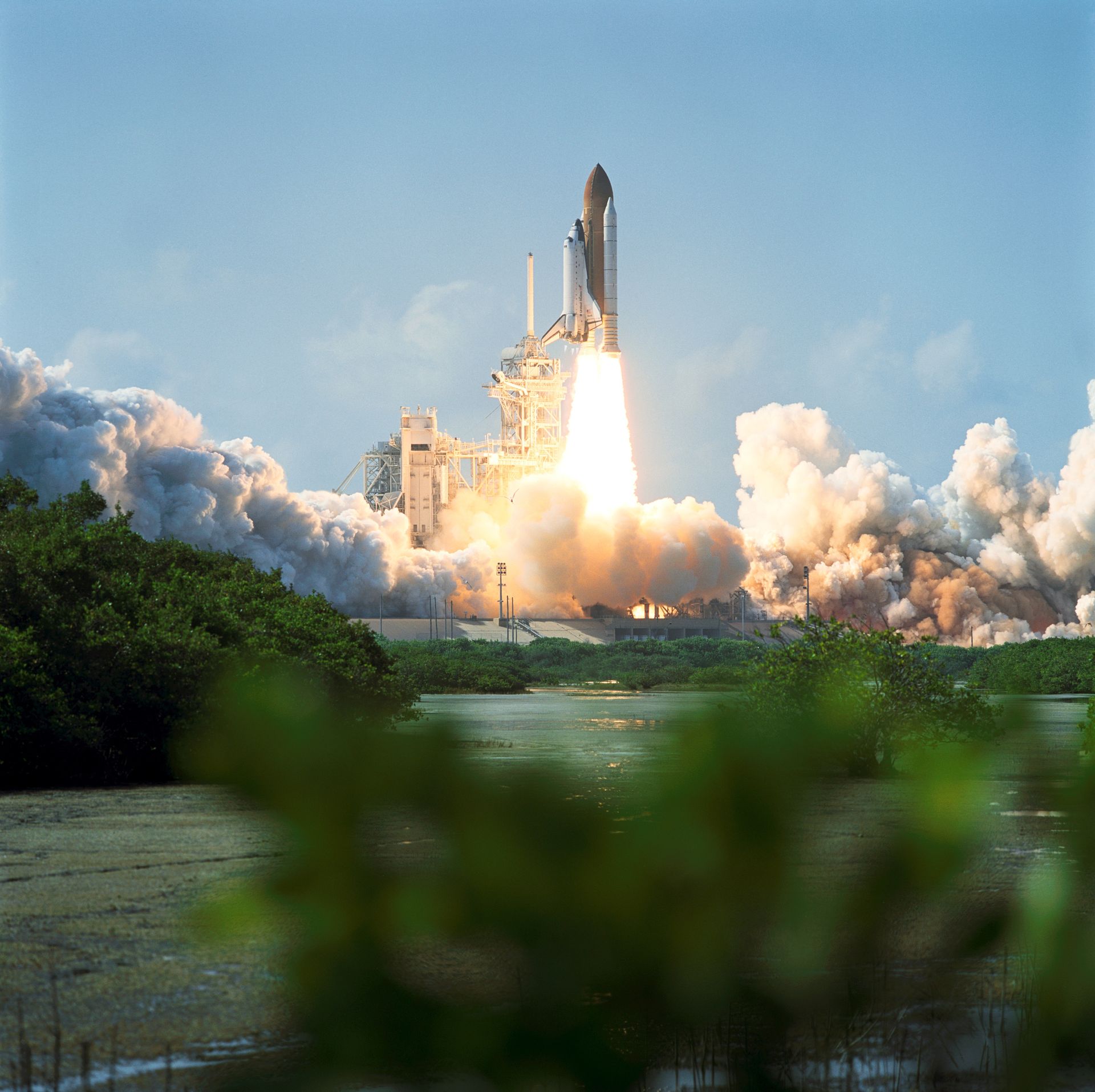
The shuttle Atlantis delivered the S1 truss for the primary backbone of the International Space Station.
When you purchase through links on our site, we may earn an affiliate commission. Here’s how it works.
On Oct. 7, 2002, the space shuttle Atlantis launched from Kennedy Space Center on mission STS-112. This mission brought the Starboard 1 (S1) truss segment to the International Space Station.
The S1 truss is part of the backbone of the space station, and it provides structural support for the thermal control system. During the launch, a chunk of insulating foam broke off of the external tank and hit the bottom of the rocket booster, leaving a huge dent.
Luckily this didn't pose any problems for STS-112, but this was the same thing that caused the Columbia shuttle disaster just three months later. NASA later redesigned the shuttle to prevent this problem.
The 11-day mission of NASA's STS-112 flight aboard the shuttle Atlantis delievered a key component of the International Space Station as well as critical cart for astronauts spacewalking outside the orbiting lab.
The primary goal of STS-112 was to deliver the 28,000-pound S1 truss to the station so it could be attached to the right side of the station's central S0 truss, the core of its 360-foot (110-meter) truss backbone.
The Boeing-built S1 truss contains a large ammonia-cooled radiator used to keep the station from overheating (its twin is on the opposite side's Port 1 truss), and is about 45 feet (13.7 m) It's made mostly out of aluminum and also carries power and cooling lines between truss segments.
NASA astronaut Jeffrey Ashby commanded the STS-112 mission, with Pamela Melroy as pilot. NASA mission specialists Sandy Magnus, David Wolf, Piers Sellers and Russian cosmonaut Fyodor Yurchikhin rounded out the crew.
The astronauts performed three spacewalks on the mission to install the S1 truss, attach the plumbing lines for its radiators and install a so-called CETA cart (short for Crew Equipment Translation Aid) on the truss rail system so future spacewalkers could use it to move gear around.