// SPACE.COM — SPAZIO & SCIENZA
NASA's SkyFall helicopters will 'show us parts of Mars we've never seen before', scientists say
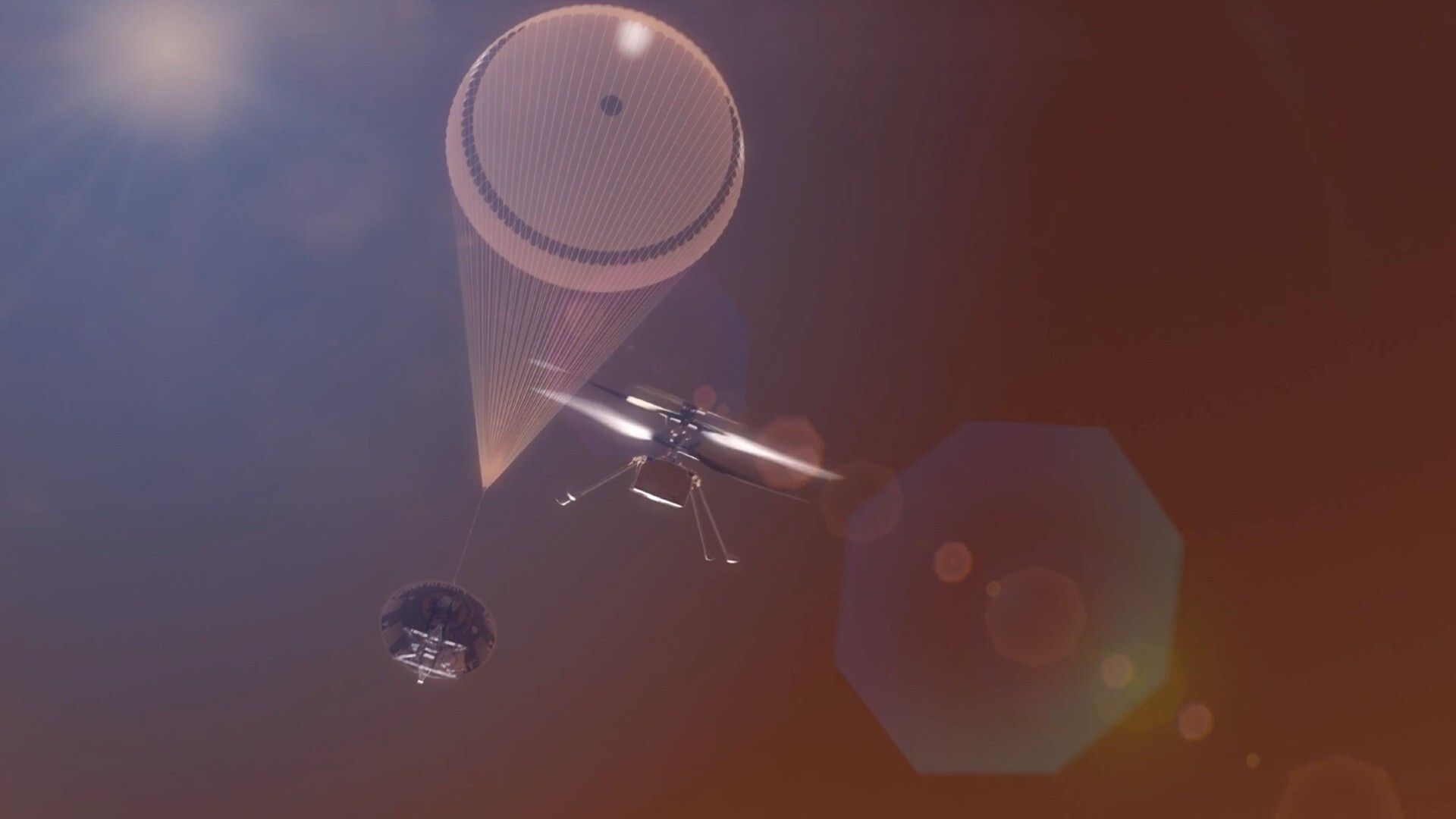
"Just like here on Earth, Mars helicopters can cover distance quickly and can go places that might be impossible to reach by ground."
When you purchase through links on our site, we may earn an affiliate commission. Here’s how it works.
NASA is accelerating the development of three helicopters that will be deployed into the sky above Mars after a voyage aboard NASA's Space Reactor‑1 Freedom spacecraft.
Slated for launch in 2028, SR-1 Freedom is the first fission nuclear-powered interplanetary spacecraft and is assigned the duty of dropping off the SkyFall entry capsule loaded with the trio of aerial vehicles at the Red Planet. SR-1's trajectory will deliver the SkyFall helicopters in Mars' northern hemisphere during the planet's spring season to avoid dust storms.
SkyFall is based on the success of the first aerial craft to float about the Red Planet, Ingenuity, which flew over 70 missions at Jezero Crater before it finally broke a rotor. It was designed to fly five. The SkyFall mission will consist of three identical helicopters to be deployed by an entry vehicle in the atmosphere, let loose at roughly under a mile (3,300 feet or 1,000 meters) above Mars, with each of the craft landing independently.
The SkyFall mission is to conduct investigations that address objectives relevant for science and preparing for human exploration of Mars. Anticipated flights of the vehicles will travel outside of the landing ellipse to regions of interest within a broader exploration zone.
However, there are further science-focused flight paths and regions that have yet to be determined. NASA intends for the SkyFall helicopters to go to multiple regions of scientific interest on Mars.
NASA's Mars Exploration Program, along with the SkyFall project at the Jet Propulsion Laboratory (JPL), will work together to pick those "why and where" paths to navigate.
A first workshop on potential landing sites for the SkyFall mission and adjacent exploration zones of high scientific value is slated for early next year. And as always, sites and zones on Mars for the choppers means satisfying engineering constraints imposed by the project and spacecraft design.
Given the rapid development cadence of the SkyFall mission, decisions are to be fast-paced, but are geared to maximizing science value of the endeavor.