// SPACE.COM — SPAZIO & SCIENZA
Astronomers discover the 1st ever green star, a cosmic zombie just in time for Halloween
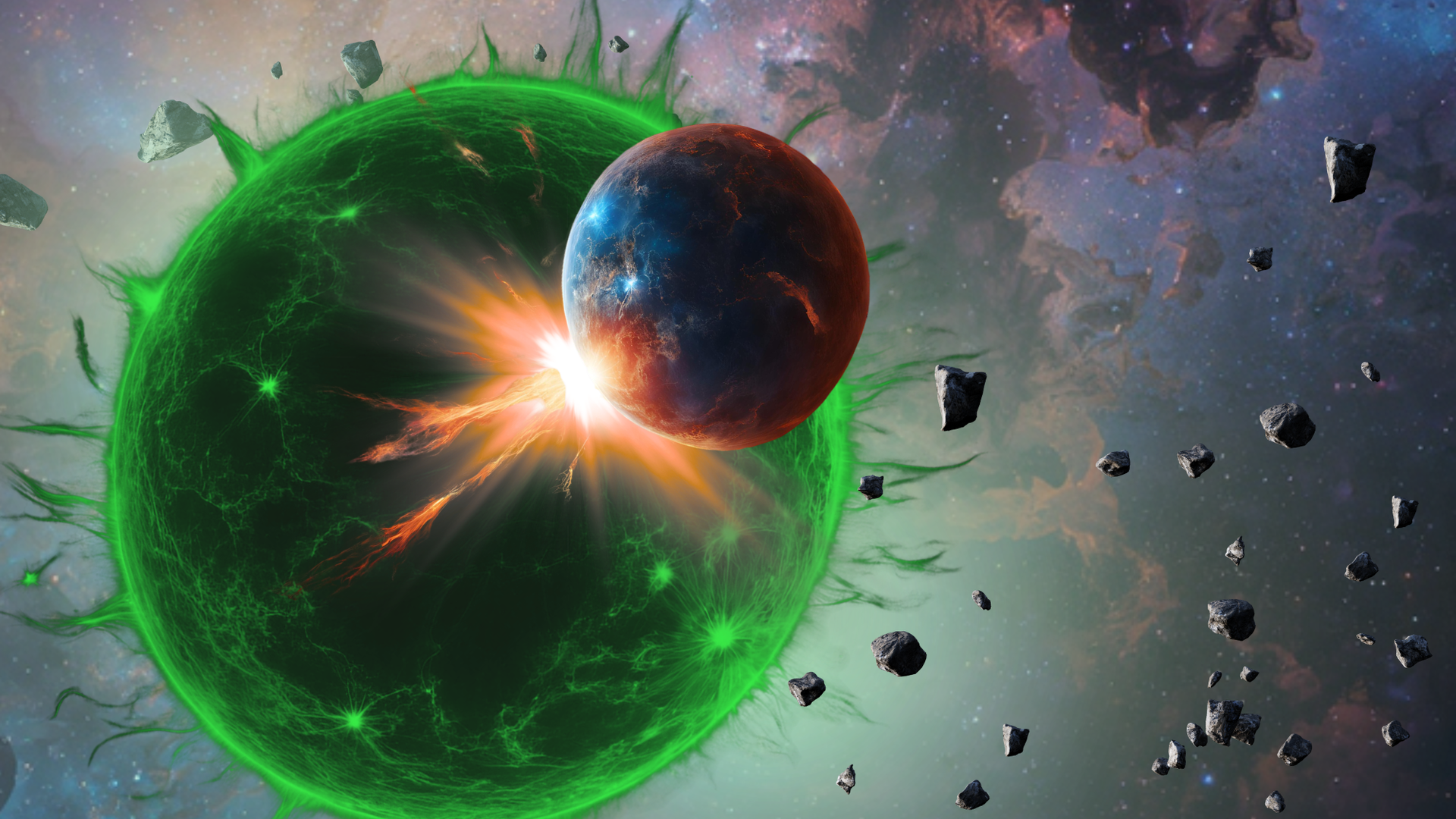
"The traces of sodium in the atmosphere of this white dwarf absorb the orange part of the spectrum, leaving behind a ghostly green glow."
When you purchase through links on our site, we may earn an affiliate commission. Here’s how it works.
How awesome would it be if the sun could take on a spooky green glow for Halloween? It turns out that scientists have discovered that our star may indeed go green, but only billions of years from now after its death — and only if it then starts eating planets like a cosmic zombie.
That's possible because scientists have discovered that white dwarfs, the type of stellar remnants sun-sized stars leave behind when they die, can actually take on a range of colors including green if they snack on their rocky planets like cosmic cannibals.
For stellar scientists, the colors of stars have always been indicative of their temperatures. Cool stars look orange, while stars like the sun look white, and the hottest stars glow pale blue. This is akin to a blacksmith's iron glowing red, then orange, then white-hot as it heats up. Researchers have always assumed that white dwarfs follow the same rule. However, new research suggests that these stellar corpses could glow in a range of colors including green, pink, cyan, yellow, and purple. That means the universe is far more colorful than we suspected.
"Most stars, including most white dwarfs, behave like 'perfect radiators,' so their color is set almost entirely by temperature. But nobody had really looked into what else might be possible for white dwarfs," team leader Mark Hollands of the University of Warwick said in a statement sent to Space.com.
"It turns out these incredibly dense stars caaaaan produce colors nobody expected, and some of them genuinely surprised me."
White dwarfs get their name because when they were discovered, they appeared surprisingly hot and glowed white or pale blue. However, this new research suggests that this slightly bland and uniform appearance is because no white dwarf is close enough for Earthbound astronomers to see their true colors.
The key to the rainbow-like array of colors this team suggests white dwarfs could possess is their density. White dwarfs form when stars with a mass roughly that of the sun run out of fuel and can no longer support themselves against their own gravity, causing their cores to collapse. As a result, the matter that makes up white dwarfs is around the density of water, millions of times denser than the sun's surface, the photosphere.
In these conditions, elements like carbon, calcium, and sodium can interact with the surrounding dense helium plasma and absorb light across a wider range of colors than they would at lower densities. That shifts the colors of white dwarfs away from the white/light blue seen for a perfect radiator of heat.