// NATURE NEWS — SPAZIO & SCIENZA
Memory stays strong in old age when this brain enzyme is active
Asher Mullard is a science journalist based in Ottawa.
Search author on:
PubMed
Google Scholar
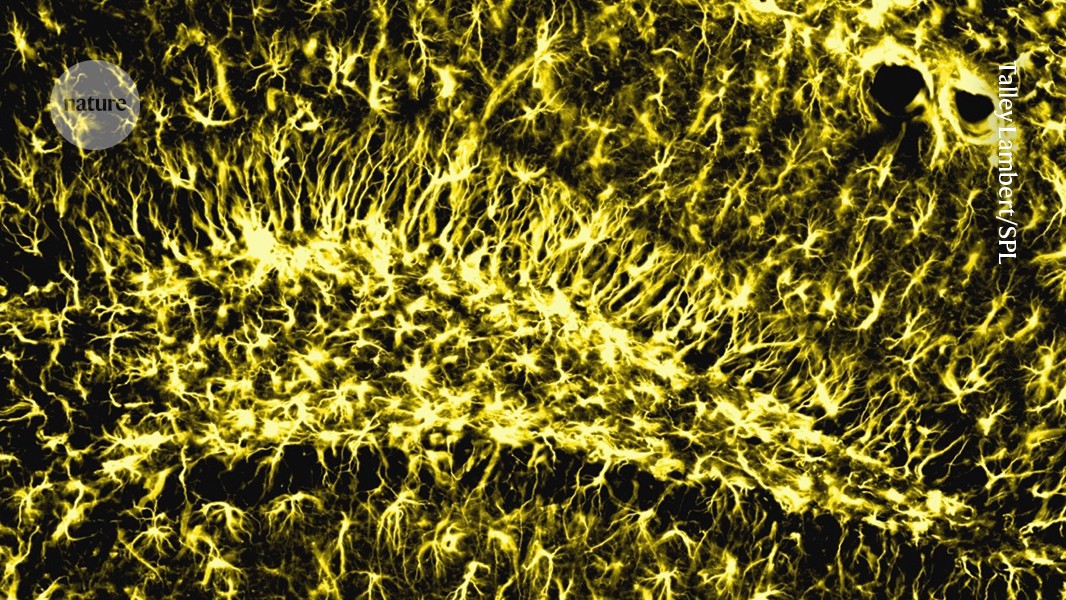
Screening of mouse hippocampus cells (pictured) identified an enzyme whose production rose with age. Credit: Talley Lambert/Science Photo Library
An enzyme found in the brain could help to preserve cognitive resilience with advancing age, according to research in mice, humans and cells1.
Researchers found that high levels of the enzyme are linked to low levels of inflammation in the brains of aged mice. They also showed that the enzyme boosts the growth of neurons in ageing brains. The findings were reported on 15 October in Nature Neuroscience.
The enzyme seems to act “as a compensatory cognitive-resilience mechanism”, says study co-author Amar Sahay, a neuroscientist at Massachusetts General Hospital in Boston.
“This is a fantastic, very thoughtful approach to get at what could be protecting neurons,” says Timothy Hohman, a neuroscientist and geneticist at the Vanderbilt Memory & Alzheimer’s Center in Nashville, Tennessee, who was not involved in the study. “This is a great example of how you can use a model system to get at some of these resilience mechanisms that are super challenging to study in humans.”
The enzyme in question is a phospholipase, which breaks down fatty compounds. The authors homed in on the enzyme after finding that the gene encoding it suddenly became more active when connections between some of the neurons in the brains of mice were disrupted.
How to avoid dementia — what the science really says
To learn more, the scientists genetically altered mice to lack the gene, called Pla2g2f, and looked at what happened as they aged. The researchers saw a surge of inflammation and neuron degradation compared with the brains of unaltered control animals. By contrast, mice that had excess Pla2g2f displayed less inflammation and better-connected neurons in their brains as they got older.