// PC GAMER — GAMING
EVE Online's survival spinoff Frontier is a hardcore space sim you can play on a gamepad that's unlike anything else out there
When you purchase through links on our site, we may earn an affiliate commission. Here’s how it works.
EVE Frontier is a weird game. It's had an uphill battle winning goodwill from EVE Online's infamously dedicated community, running into a refrain of, "Why should I play this crypto spinoff thing?" It's gone through traditionally closed, often unsightly stages of early development in full public view, with players offering feedback along the way.
It has justified its blockchain integration, to my eye, by repeatedly demonstrating a freeform, server-side modding system unlike anything I've seen in an MMO—or really any game—and it's stuck with the controversial tech base well after the early 2020s crypto gaming gold rush ended.
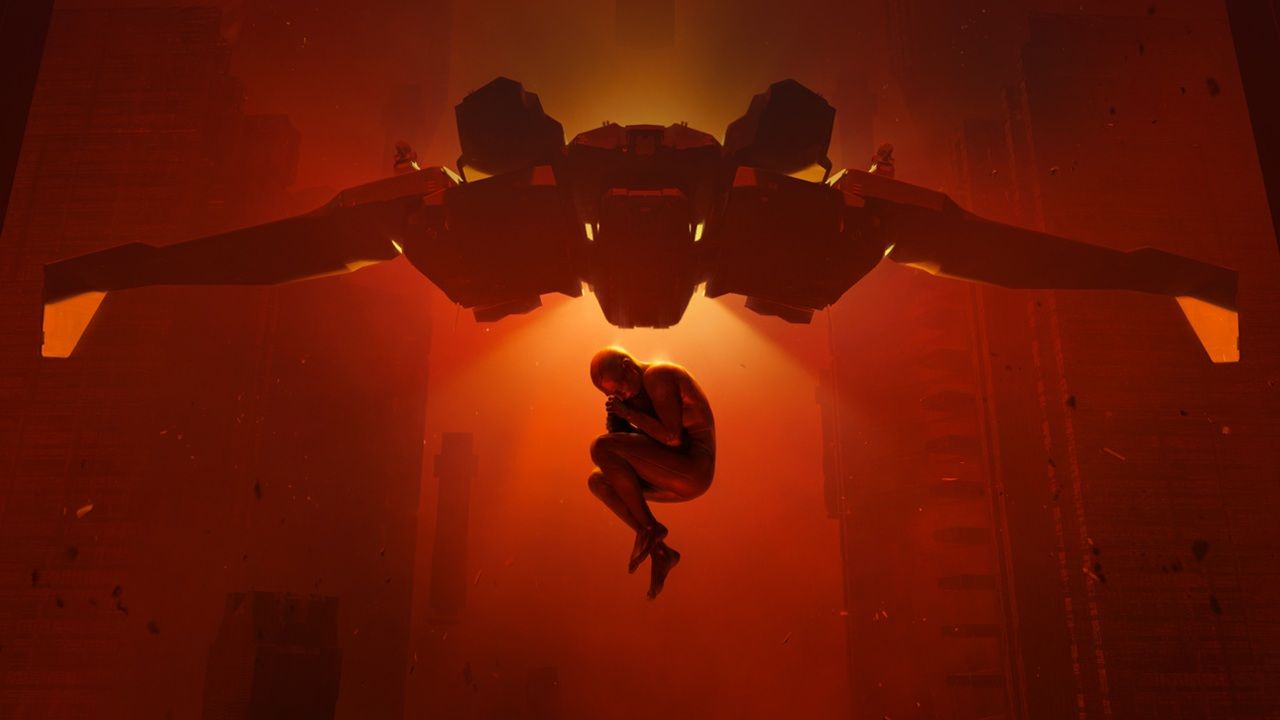
At this year's EVE Fanfest, I spoke to members of the dev team and tried Frontier's new gamepad support for myself. Promises that were once cool but abstract are starting to crystalize into a hardcore space sim I can see myself playing. Frontier is a game that promises to combine the emergent economy of EVE, the sense of exploration in No Man's Sky or Elite, and two things I've never seen before: The aforementioned server-side modding at runtime, and a Rust-like survival experience that trades tree punching and bedrolls for asteroid mining and space stations.
My latest hands-on was night and day from my experience almost exactly a year prior: Frontier was built on the same Carbon engine as EVE Online, and until recently had similarly zoomed-out, mouse, menu, and hotkey-centric gameplay. This was a two-pronged problem, as Frontier needed to differentiate itself from what EVE fans already had and also make itself more approachable for new players.
Even as a lover of crusty old CRPGs with way too many stats and classes, the first build of Frontier I tried was tough to get my arms around. Luckily, it's a problem the dev team was aware of. "Let's go back a year ago. Get into the game, so you think [you'll press] Q or W or something, right? And nothing happens," Frontier product manager Scott McCabe told me. "You're like, 'Okay, so how do I move?' There's a disconnect, so it's about making the thing more natural."
Fenris Creations (formerly CCP) had demo stations set up on the Fanfest show floor, and the Frontier team was offering a combat arena slice of the game, with show goers trying to frag each other on a 10-minute timer. On two runs through, I think I scored three kills total—the record on the floor was four in a single run, to give you an idea of the slow time to kill—and it's shocking how good of a space shooter it was given Frontier's origins as an RTS-scale MMO.
It was slow—not in a bad way, but weighty and chunky like a survival horror game. McCabe stressed that they weren't trying to make a zippy starfighter sim, but rather a big boys-only experience, one where the smallest vessels you could use were corvette-scale.
Keep up to date with the most important stories and the best deals, as picked by the PC Gamer team.
The free-for-all took place among debris and ruins in a moody nebula, and the close-in perspective gave me a new appreciation for Frontier's art direction and sound design. The thrum of your ship and the distant sound of fire being exchanged were substantial but muffled, like being underwater.