// KOTAKU — GAMING
Mina The Hollower Devs Explain The Incredible, Chrono Trigger-Style Twist In The Game’s Grand Finale
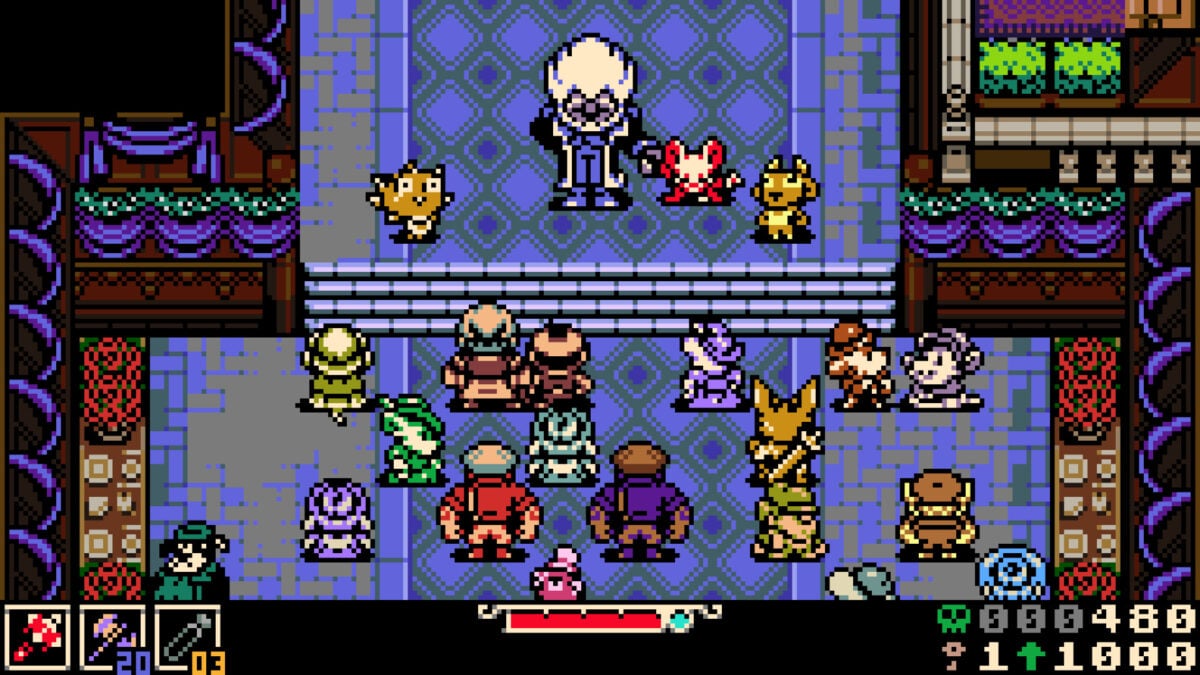
Mina the Hollower has a total of seven main dungeons. The last dungeon is always the last dungeon, but the other six can be tackled in any order, despite the fact that the “intended” sixth dungeon is significantly harder, longer, and more confusing than any of the five prior. And yet, if you know what you’re doing or are incredibly lucky, you can walk right into the winding, deadly, rainbow-soaked Astral Orrery before you’ve even touched the baby-easy Queensbury Crypt.
“Why let players do this?” I asked Yacht Club Games programmer David D’Angelo and designer Alec Faulkner.
“Why would we stop them?” was Faulkner’s cheeky reply.
I spoke to D’Angelo and Faulkner a few weeks ago, just after the release of Mina the Hollower. The first half of our conversation is already published, but for the second half, I specifically wanted to talk about the game’s ending: its final two dungeons, its climactic final scenes, and an incredible twist near the conclusion that calls into question everything you’ve done up to that point.
If you haven’t beaten Mina the Hollower yet and intend to, I’d recommend staying out of this interview until you have, because we’re going full spoilers with it. You’ve been warned.
[Responses have been lightly edited for length and clarity.]
While you can make Astral Orrery the first dungeon you complete in Mina the Hollower, it’s hard to do. Assuming no ridiculous speedrunning tricks (and assuming you’re not playing on New Game+ with modifiers), you can visit Astral Orrery only after exploring three other areas of the game first to find hidden mirrors (there are four, only three are needed to move forward). And of course, you have to actually know the “trick” of the mirrors: that you can simply walk inside them to find the hidden mirror world where Astral Orrery is located. Most players won’t learn the trick until they’ve seen it performed in front of them a few times, blink-and-you-miss it, when walking into a room with a mirror. Or worst-case scenario, after beating all the other dungeons, when the newspaper just tells you to walk into the mirror.
But still. If you can figure it out, and if you want to, you can do it. D’Angelo says that’s the point. That’s what Yacht Club wanted to do with the entire game.
“The ethos of the game from the beginning was we’re going to make an RPG, which is a game where you can control the equipment of the character, the level of the character, you can control where you go, your play style, depending on your weapon,” he says. “So for us, it was, ‘let’s push it to the max in every area we can.’ We want to make sure you can go anywhere at any time. You can find any item any time.
“…When I played Link to the Past or Link’s Awakening growing up or the original Zelda, I would finish the game, and often you immediately went into Master Quest or just played it again. You played it again because you said, ‘oh, I bet I could take the hookshot into the other dungeon. That would be neat, right?’ So we just wanted to encourage that as much as possible.”