// NATURE NEWS — SPAZIO & SCIENZA
Nature’s job-satisfaction survey highlights the changing geography of science
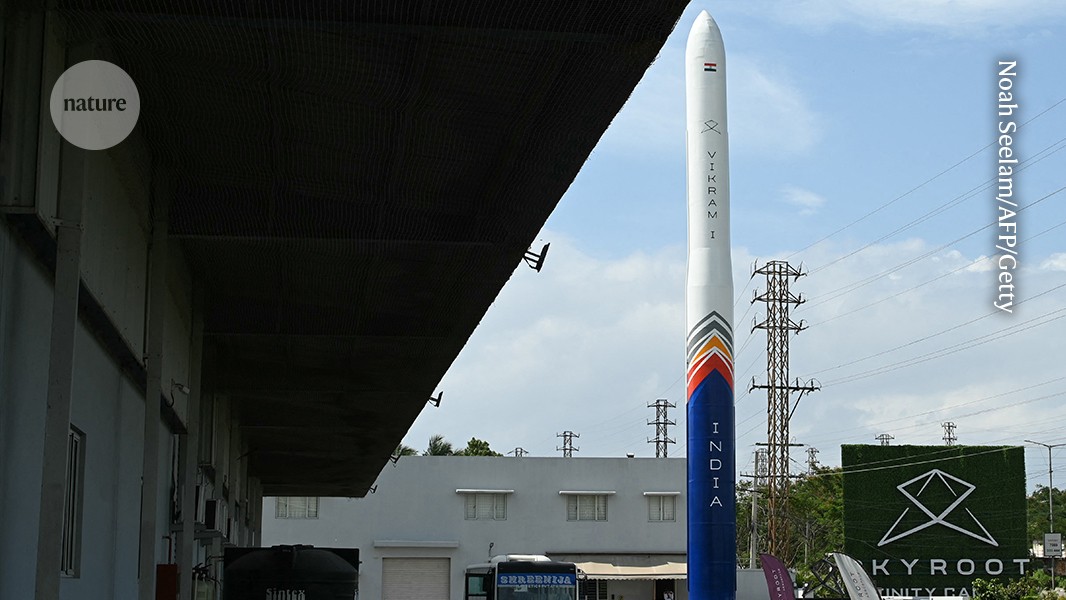
India is investing heavily in space research, both through government funding and private financing, such as that from Skyroot Aerospace (pictured).Credit: Noah Seelam/AFP/Getty
Since 2010, Nature has periodically performed a survey on how researchers around the world perceive their careers. The survey asks whether scientists are satisfied in their jobs and optimistic about the future, and the reasons for their responses. The results of the latest survey of nearly 4,000 scientists — published on 13 October — include some surprises (Nature 658, 825–829; 2026), especially in light of the results obtained in the 2018 and 2021 surveys.
What’s the secret sauce for happy scientists at work? These eight countries offer some clues
Respondents in several leading research-intensive nations, including the United States, Germany and the United Kingdom, provided less optimistic answers about the future of their careers when compared with those asked in previous years, according to the survey, which ran in May and June. And a greater share of this year’s respondents think that their career prospects are worse than those of previous generations were. In 2018 and 2021 — during the COVID-19 pandemic — higher proportions of scientists in these countries responded positively to these questions.
By contrast, respondents are less pessimistic in middle-income countries — notably in China and India, which are becoming attractive destinations for researchers. In this year’s survey, 70% of respondents in India feel optimistic about their prospects. Although the share of respondents in China who feel positive about the future (55%) is close to the global average (52%), it is noticeably higher than those of Germany (38%), the United Kingdom (33%) and the United States (34%). There is, however, one caveat: the responses from India’s scientists pre-date the nationwide student protests in July.
It’s hardly a secret that a fair number of high-income nations are going through upheavals that recent generations have not experienced. The US government is slashing funding for some grant programmes and directing money towards its priorities, creating anxiety and uncertainty about the future of some projects and research areas.
China’s AI research is booming: what it’s like to be on the front line
Scientists in Europe might also be looking at large changes to their grants. European nations are devoting a greater share of public funding to defence, which has led to cuts to other budgets, including science. Several universities are being urged to work on defence research.
When it comes to job satisfaction, however, the results are reversed. Survey respondents in India and China have relatively low levels of job satisfaction compared with those in several high-income countries. Only 51% of China’s scientists reported being satisfied and 59% of India’s. By contrast, 65% of respondents in the United States, 67% in Germany and 63% in United Kingdom are satisfied with their jobs. Scientists in Canada had the highest job satisfaction of the surveyed countries: 70% of respondents there were happy with their work.
Rising numbers of Asian and African PhD students choose to study in China