// NATURE NEWS — SPAZIO & SCIENZA
Global emissions slow — but world hurtles towards 2 °C of warming
Search author on:
PubMed
Google Scholar
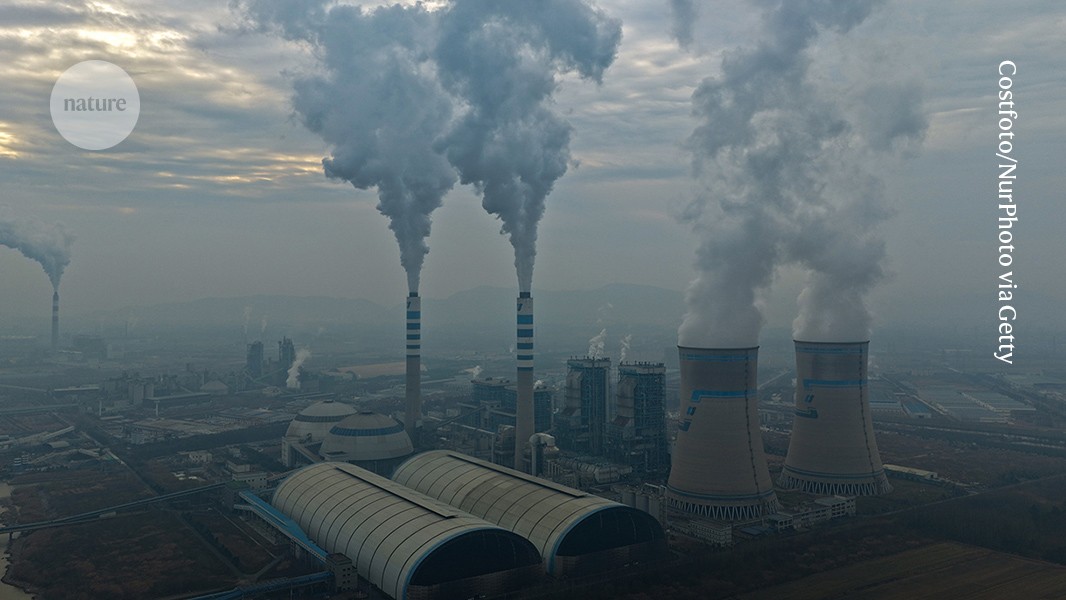
Global greenhouse-gas emissions were flat from 2024 and 2025.Credit: Costfoto/NurPhoto via Getty
Despite a possible plateau in global greenhouse-gas emissions last year, average temperatures are set to hurtle past 2 °C of warming around mid-century barring a major acceleration in emissions cuts, finds the United Nations’ latest report on climate change.
The super El Niño is already wreaking havoc: here’s what’s in store
“The world can no longer avoid overshooting the 1.5 °C limit, and the consequences are already devastating,” said outgoing UN secretary-general António Guterres in a press briefing announcing the report — an annual accounting of progress towards tackling climate change published by the UN Environment Programme (UNEP) on 21 October. Guterres pointed to extended heat waves, massive wildfires and deadly floods that have disrupted much of the world in 2026. He called for faster action from governments to cut emissions by transitioning away from fossil fuels, expanding clean electricity and reversing deforestation.
Under current policies, scientists estimate warming of 2.6 °C to 2.8 °C above pre-industrial levels this century — substantially exceeding the 2 °C upper limit of the 2015 Paris Agreement targets to avoid the most dangerous consequences of climate change. There is also a smaller, 10% chance of warming exceeding 3.4 °C on the current trajectory, which researchers say would be catastrophic. Even under a scenario where countries achieve all existing emissions pledges, the report projects 2.1 °C of warming.
Although the 1.5 °C goal is out of reach — 2026 is projected to be the second year in which temperatures have surpassed that level of warming — the report maintains it might be possible to “overshoot” that target, then bring temperatures back down through rapid decarbonization combined with a massive expansion of carbon dioxide removal.
UNEP’s assessment comes ahead of November’s COP31 climate summit in Antalya, Turkey, where governments will take stock of efforts to mitigate and adapt to climate change. “The emissions gap is now a leadership gap. And the world is running out of time and excuses to close it,” Guterres said.
There is some good news in this year’s report. Initial estimates show that global greenhouse-gas emissions in 2025 were about the same or slightly lower than in 2024. That was mainly due to a decrease in emissions from land use, particularly those from wildfires after unprecedented blazes in 2024.
That would be the first decline seen since the COVID-19 pandemic, and it could represent the start of a plateau or even a peak in emissions (see ‘Have emissions peaked?’). But researchers caution that a single year is not enough to determine if this is a lasting shift.