// SPACE.COM — SPAZIO & SCIENZA
How should we handle alien detection in a world of AI, deepfakes and social media? This committee is writing the rulebook
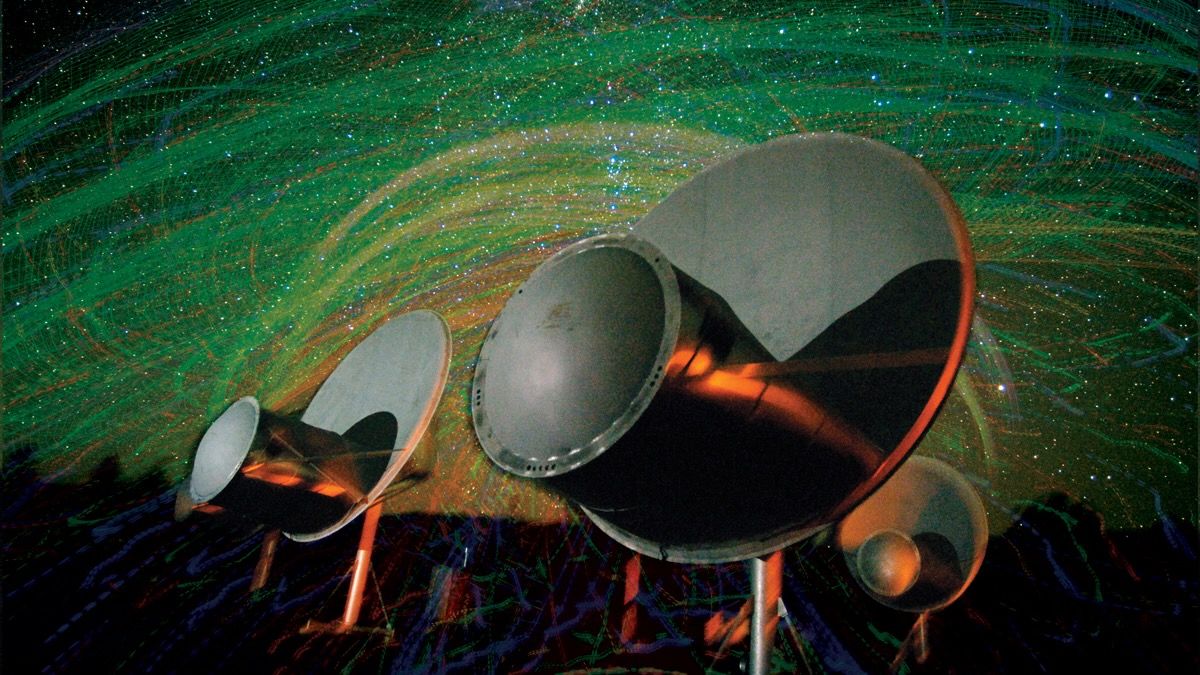
If and when SETI discovers alien life, then a revised Declaration of Principles guarantees that once the discovery has been verified, its disclosure will come soon thereafter.
When you purchase through links on our site, we may earn an affiliate commission. Here’s how it works.
The International Academy of Astronautics (IAA) has ratified protocols advising what an astronomer should do if they discover evidence for extraterrestrial intelligence in our modern global world of social media, AI deep fakes and misinformation.
Referred to as the "Declaration of Principles Concerning the Conduct of the Search for Extraterrestrial Intelligence (SETI)," the post-detection protocols cover everything from handling the evidence, and how the discovery should be communicated to the world to the challenge of what comes after the discovery. In a world where an AI hoax could easily be promulgated across social media, or in which conspiracy theorists would likely attack a real discovery, the protocols are intended to encourage best practice and safeguard astronomers when the media spotlight falls on them.
And despite how this summer's Steven Spielberg blockbuster, "Disclosure Day," presents the discovery of extraterrestrial life as a grand conspiracy to be disclosed, transparency is a top priority in the Declaration of Principles.
"There is no secret file on aliens," Michael Garrett, who is the Sir Bernard Lovell Chair of Astrophysics at the University of Manchester, told Space.com.
Garrett also chairs the IAA's Permanent SETI Committee and is the lead author of the updated Declaration, along with anthropologist Kathryn Denning of York University in Toronto, Arizona law expert Leslie Tennen and science-communication expert Carol Oliver from the University of New South Wales in Sydney.
"If we ever find a credible signal, the public will know; it won’t be hidden away in some government vault," continued Garrett. "The new protocols commit us to openness — every dataset, every line of analysis code, every step of the verification process will be made public once a discovery is confirmed. The challenge is not secrecy but ensuring that we're telling the public something that's true. As Carl Sagan would say, 'extraordinary claims require extraordinary evidence.'"
Given the large-scale astronomical surveys currently in operation, such as the one taking place at the Vera C. Rubin Observatory in Chile, or which are coming online soon, such as the Square Kilometer Array, it is very possible the astronomer who discovers evidence of extraterrestrial intelligence won't actually be a SETI astronomer.
"More than likely it's not going to be a SETI scientist who is going to make this discovery, it's going to be someone who's looking for something else in the astronomical data but who finds some kind of anomaly that doesn't quite add up," said Garrett.