// NATURE NEWS — SPAZIO & SCIENZA
Moderna mRNA vaccine almost halves the risk of skin cancer returning
Search author on:
PubMed
Google Scholar
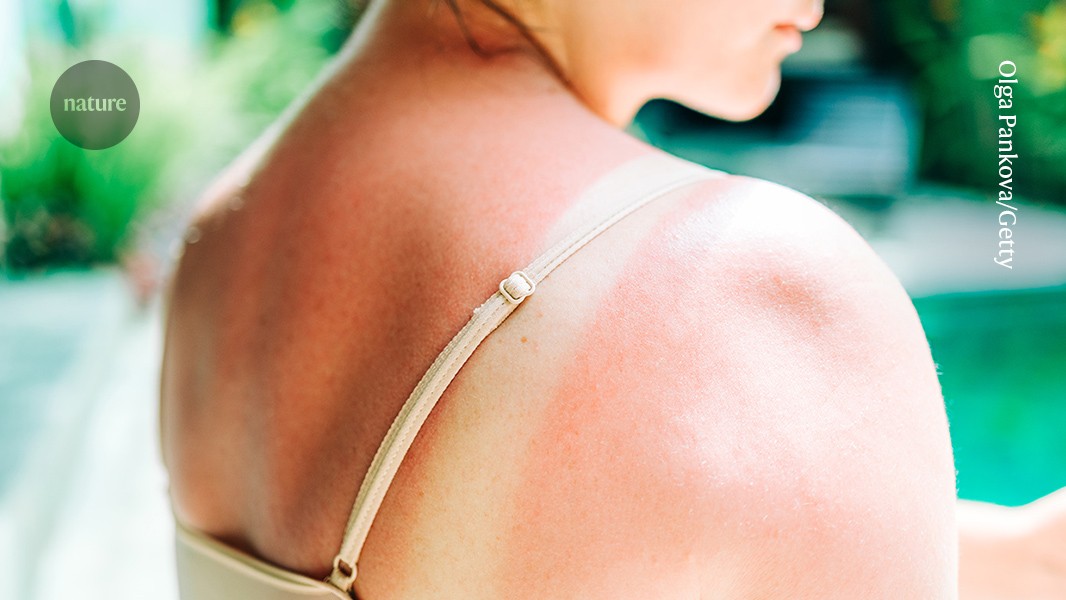
Severe sunburn increases the risk of developing melanoma, the most serious type of skin cancer.Credit: Olga Pankova/Getty
A personalized mRNA vaccine reduced the risk of skin cancer returning or the recipient dying by 42% when used alongside an immunotherapy drug, according to long-awaited results for what could become the first approved mRNA vaccine for cancer.
Oncologists regard a risk reduction of 10% as substantial, says Kristen Radford, an immunotherapist at Mater Research in Brisbane. A more than 40% risk reduction “would send many researchers over the Moon”, adds Seth Cheetham, a geneticist at the University of Queensland in Brisbane, Australia.
The personalized vaccine, called intismeran, is not designed to prevent skin cancer, or melanoma, from developing in the first place, but to stop it returning in people who have already undergone surgery to remove tumours.
Anticipation for the trial results has been building since August, when the vaccine’s developers — Merck, based in Rahway, New Jersey, and Moderna, which is headquartered in Cambridge, Massachusetts — announced early positive results. Data from the phase III trial will be presented at the European Society for Medical Oncology meeting in Madrid on 24 October. But when data were leaked online on 22 October, the companies released the key results.
The stock price for Moderna, a pioneer in mRNA vaccine technology, had been rising since the August announcement, but dropped by around 25% after the leak. Health-care financial analyst Evan Seigerman at BMO Capital Markets in New York City told media company Forbes that such reactions in the stock market probably reflect “inflated expectation into the full data release, rather than a true indictment on the efficacy of the combo therapy”.
The intismeran trial enrolled 1,137 people with moderate to advanced melanoma across 157 centres. Participants were randomly assigned to receive a tailor made vaccine (intismeran) alongside the immunotherapy drug pembrolizumab — which is already used to treat melanoma — or pembrolizumab plus an inactive placebo. Trial leader Georgina Long, an oncologist at Melanoma Institute Australia in Sydney, says participants have so far been followed for around 25 months and will continue to be monitored for several years to determine whether the vaccine improves overall survival. She adds that the therapy did not result in any major harmful side effects.
Roughly 15 years ago, people with advanced melanoma typically survived for only months. Today, nearly 55% are effectively cured with targeted drugs or immunotherapies, says Long. The combination of intismeran and pembrolizumab is designed for people whose cancer could return after surgery and who do not respond to immunotherapy alone, she says.
Jessamy Tiffen, a cancer geneticist at the Centenary Institute in Sydney, says that the trial results are exciting, but only time will tell how effective the treatment is beyond two years. “Cancer cells also have an insidious ability to adapt and evade whatever treatment we throw at them,” she says. Furthermore, some people did not respond to the vaccine, she says.