// KOTAKU — GAMING
Creative Assembly Finally Addresses The Shogun 2 Remaster Disaster By Pointing Fingers
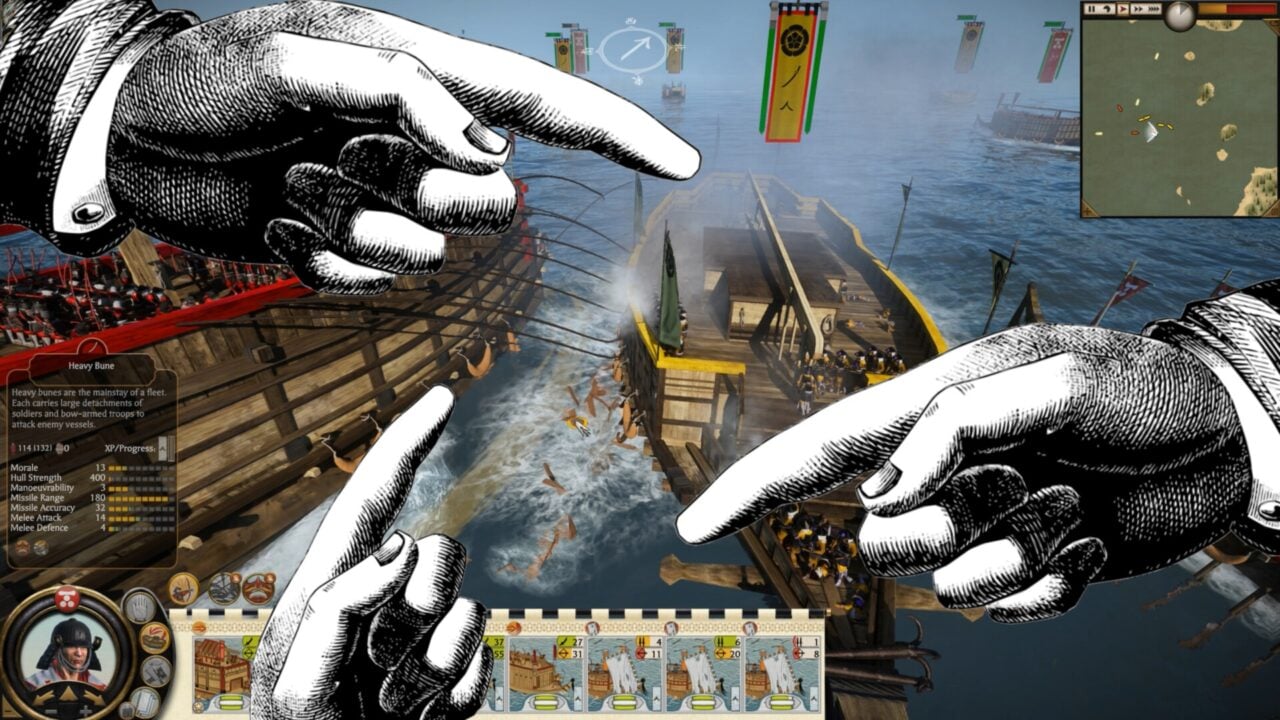
AICreative AssemblyMatabooSegaTotal War: Shogun 2Total War: Shogun 2 - Complete Edition
Over a week after a so-called “updated, enhanced, and complete version” of Total War: Shogun 2 was released in such a disastrous state that Sega immediately pulled it from sale, Total War developers Creative Assembly have finally addressed the situation. In a post made to the company’s forum, vice president of its Total War division Roger Collum explains that the remastered game “did not meet the bar” and says that like players, CA, too, are “angry and disappointed” by the release. He also attempts to pin down CA’s position on the use of AI, but at every stage seems very keen to redirect the blame.
Shogun 2, widely considered to be one of the best strategy games of all time, had some pretty terrible damage done to its reputation with the release of what was called the Complete Edition. Receiving overwhelmingly negative reviews from Steam users for looking ghastly and running poorly, it was also quickly discovered to be riddled with AI-upscaled versions of some of the game’s original art. Despite our attempts to contact both Sega and Creative Assembly about the situation our questions went unanswered, and Collum’s forum post marks the first time the development studio has responded to the situation.
Throwing Polish developer Mataboo, which appears to have been responsible for the update, under the bus, Collum is quick to note that “this was not a Creative Assembly developed game,” and that “we took our eyes off its external development.” While he doesn’t name Mataboo, the post is very clearly structured to make clear that this was the work of an outside group, because “all our teams [are] focused on our next big projects.” He does at least note, “However, whatever the development arrangements, Total War is our franchise and our name is on it.”
“The studio,” Collum says of Creative Assembly specifically, “is full of craft people who care deeply about the experiences we give to our players.” In response to the disaster, “we’ve pulled a small team of senior developers together to work with Sega and the external developer on the next steps.” Perhaps the most revealing line in the statement is that, because the game was remastered by a third party, “it wasn’t subject to our same internal reviews and quality assurance,” which rather raises the question “Why not?”
When it comes to the use of AI in the remaster, Collum is equally quick to point fingers. “I want to be very clear on the studio-wide stance on generative AI,” he says, “because I know there are many questions about where we stand. We are a craft studio. Our games are made by incredibly talented people, and we do not believe in a world where technology replaces the creativity of humans.” So what happened here? “At Creative Assembly we do not use generative AI to create game assets including AI-generated art. We demand the same of any external developers we work with. The situation with Shogun: Complete Edition is being investigated.”
However, that’s not to say that CA is free of AI. “We use AI tools where they help our craftspeople do their best work,” Collum continues, “as part of a continual evolution of how we use tools and technology in an evolving and competitive space. For me, the principle is pretty simple: AI can support the creator. It shouldn’t replace the creator.” Saying that he doesn’t believe AI should replace human creativity, he notes, “Can AI tools help with analysis, debugging, or speedy prototyping so our experts can focus on making incredible games? Absolutely.”
The use of AI in the remastered Shogun 2 appears to be restricted to upscaling some of the incredibly tiny assets in the original game’s encyclopedia, and while the results are unquestionably an embarrassment that should never have been included, we’re left wondering whether Mataboo had access to higher-res versions of the originals, or the resources to create new, original art in their stead. We’ve reac