// NATURE NEWS — SPAZIO & SCIENZA
Can science make your dog live longer? Longevity craze comes to pets
Heidi Ledford reports for Nature from Seattle, Washington.
Search author on:
PubMed
Google Scholar
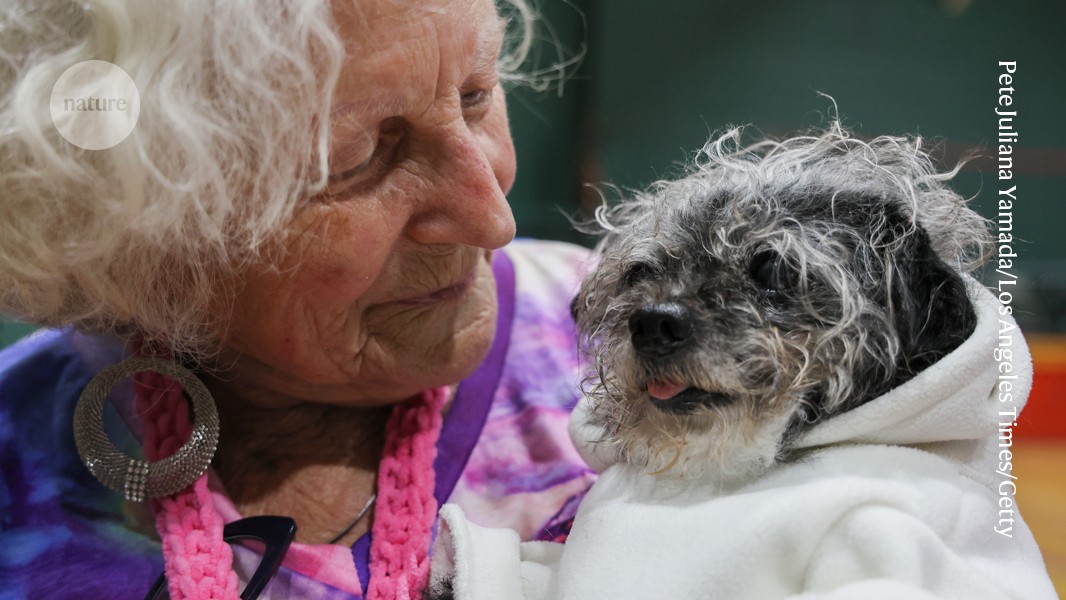
Not just for humans: gene therapy to extend longevity is under investigation for dogs, too.Credit: Juliana Yamada/Los Angeles Times/Getty
Vera Gorbunova has attended many a longevity conference over her decades of studying ageing. But never one quite like this.
Earlier this month, Gorbunova, a researcher at Rochester University in New York, joined scientists from industry and academia — and a fair few of their dogs — for the Animal Longevity Summit in Toronto, Canada. Given it was the inaugural summit, it was small. But it highlighted a growing interest in the science of extending the lifespan of pets.
On the agenda were presentations by academic researchers such as Gorbunova, who studies ageing in various animal species. Others presented projects about understanding cancer in dogs, regeneration in axolotls and the genetics of mammals that thrive in extreme environments. Alongside the university scientists were researchers at companies pursuing gene therapies for dogs, probiotic kibble for cats, and cryopreservation of pets.
Big dogs age faster than little ones — rogue ‘jumping genes’ might be to blame
“It was maybe a somewhat different crowd of people than you see at the typical ageing conferences,” Gorbunova says.
The conference reflected a market reality: as the pursuit of increasing human longevity and healthspan has grown, fuelled by hefty investment, it only stands to reason that some of that interest would spill over to pets, says Cameron Hurlburt, a senior analyst at Ani VC, a venture-capital firm in Miami, Florida. The US pet- and animal-health market is estimated to be worth US$150 billion and could grow as more people in the United States purchase pet health insurance, he says.
Most of the current efforts to promote longer pet healthspans focus on improving animal diets, including probiotic formulations, Hurlburt says. And when it comes to therapies, many companies are looking to repurpose drugs that are already approved for humans, rather than starting from scratch.