// TOM'S HARDWARE US — HARDWARE & GADGET
Standalone Nvidia Vera CPUs land in Oracle Cloud's multi-gigawatt deployment — our independent benchmarking of a local server reveals Vera's massive memory bandwidth lead over dual Xeon 6 server
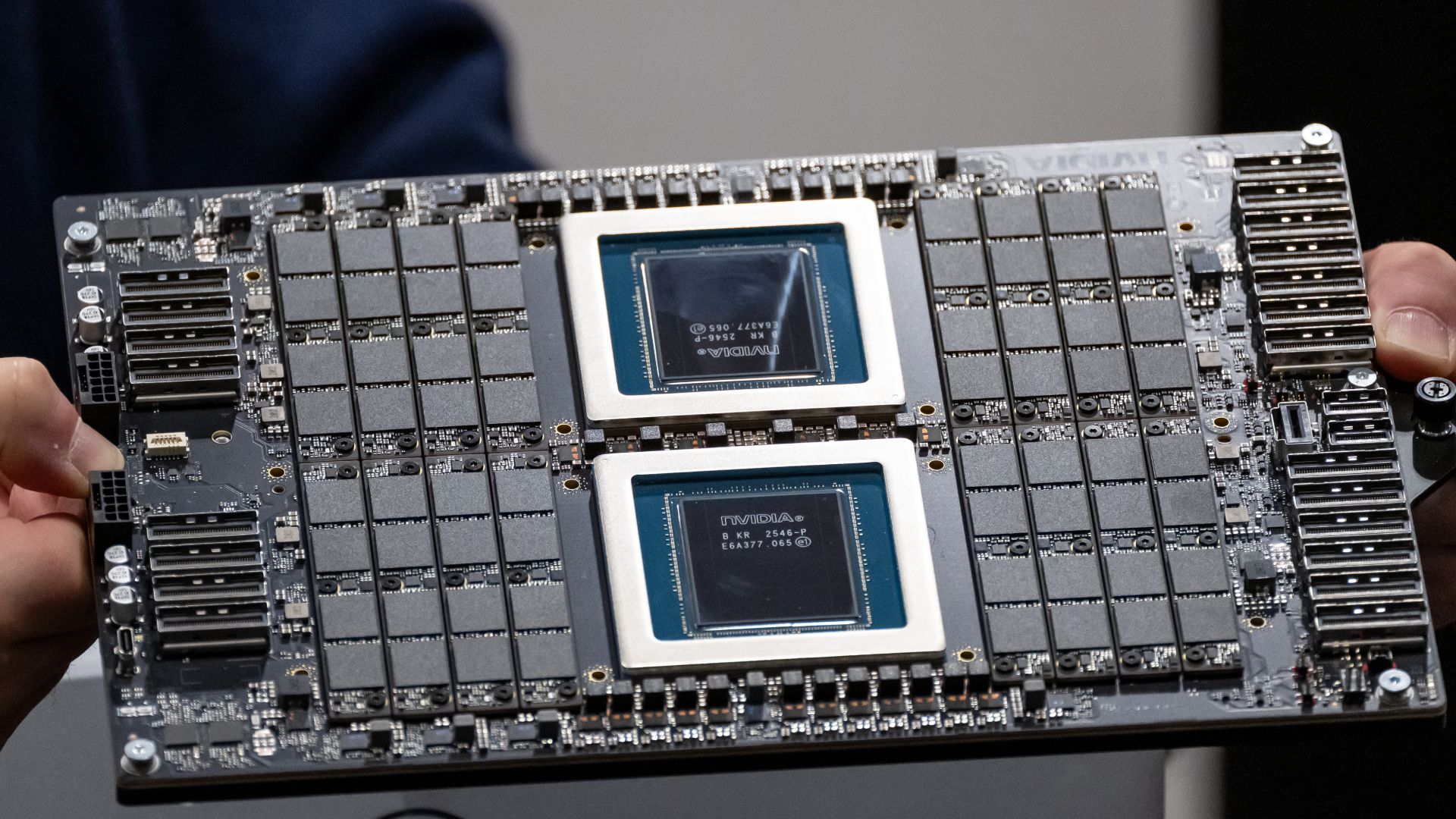
Standalone Vera is generally available on OCI Superclusters now.
When you purchase through links on our site, we may earn an affiliate commission. Here’s how it works.
Nvidia and Oracle have announced general availability of Nvidia’s Vera Rubin NVL72 rack and Vera CPUs on Oracle Cloud Infrastructure (OCI) Superclusters at Oracle AI World on Tuesday. The announcement comes hot on the heels of Google Cloud announcing general availability for Vera Rubin last week, putting two major hyperscaler feathers in Nvidia’s cap. However, Oracle’s announcement is interesting, specifically calling out standalone Vera instances on OCI Superclusters. We've included a few benchmarks we've performed on a Vera server for a forthcoming review to highlight some of the chip's performance characteristics, but do note that these tests were not conducted on OCI infrastructure.
Neoclouds have been banging the drum of Vera for the past several weeks, with instances under way at Nscale, CoreWeave, and Nebius, among others, so it makes sense to see Vera in the GPU-dominant and AI-focused neoclouds. A standalone deployment at a hyperscaler like Oracle sends a different signal, however.
Although hyperscalers maintain large fleets of hardware, sometimes even renting from the neoclouds, the CPU focus is primarily on x86, with OCI Superclusters otherwise offering the Ampere Altra for an Arm-based instance. It’s Nvidia’s first standalone CPU push into the hyperscale data center, placing Vera alongside the x86 competition regardless of the GPU compute.
Vera is not meant to upend the x86 guard, at least in isolation. Ian Buck, Nvidia’s mind behind CUDA and the face of Nvidia’s AI infrastructure buildout, said in March — when the chip was revealed — that the world couldn’t be served by a single, 88-core SKU. However, Vera is opening the door at hyperscalers like Oracle to expand in future CPU generations.
AMD and Intel maintain the lead when it comes to single-socket density, which is only set to expand in the next generation, as AMD’s upcoming EPYC Venice CPUs can pack up to 512 threads in a single socket. However, Vera offers some distinct advantages due to its topology depending on the workload, many of which are becoming increasingly relevant in the agentic AI era.
Memory bandwidth, for instance, is one of Vera’s strong suits, and that’s not just a marketing claim. Nvidia has said the memory system is capable of 1.2 TB/s of bandwidth, but we can see Nvidia’s lead outside of theoretical numbers in our testing below.
Take the industry-standard Stream benchmark as an example. Nvidia’s use of LPDDR5X-9600, along with a monolithic die and distributed mesh for caching, allows it to more than double the bandwidth available on a dual Intel Xeon 6980P system, even when it’s paired with MRDIMMs sporting speeds of 8,800 MT/s. We’re showing triad here, as it’s the most “demanding” of Stream’s operations, but the leads for Vera are similar across add, copy, and scale as well.
This bandwidth is critical for some types of agentic loops, particularly those dealing with large database queries or extensive documentation. You can see the OpenMP “spread” policy offers a massive boost to Vera’s memory bandwidth, as well. Both AMD and Intel maintain centralized memory control and system-level cache, while Vera distributes it in a mesh across the die. The result, at least in OpenMP set properly, is much higher memory bandwidth by binding processes as far away from each other as possible.