// SPACE.COM — SPAZIO & SCIENZA
Satellites watch an escaping Antarctic iceberg | Space photo of the day for Oct. 28, 2026
When you purchase through links on our site, we may earn an affiliate commission. Here’s how it works.
An iceberg has quickly escaped from the Weddell Sea in Antarctica, on its way to an icy new destination.
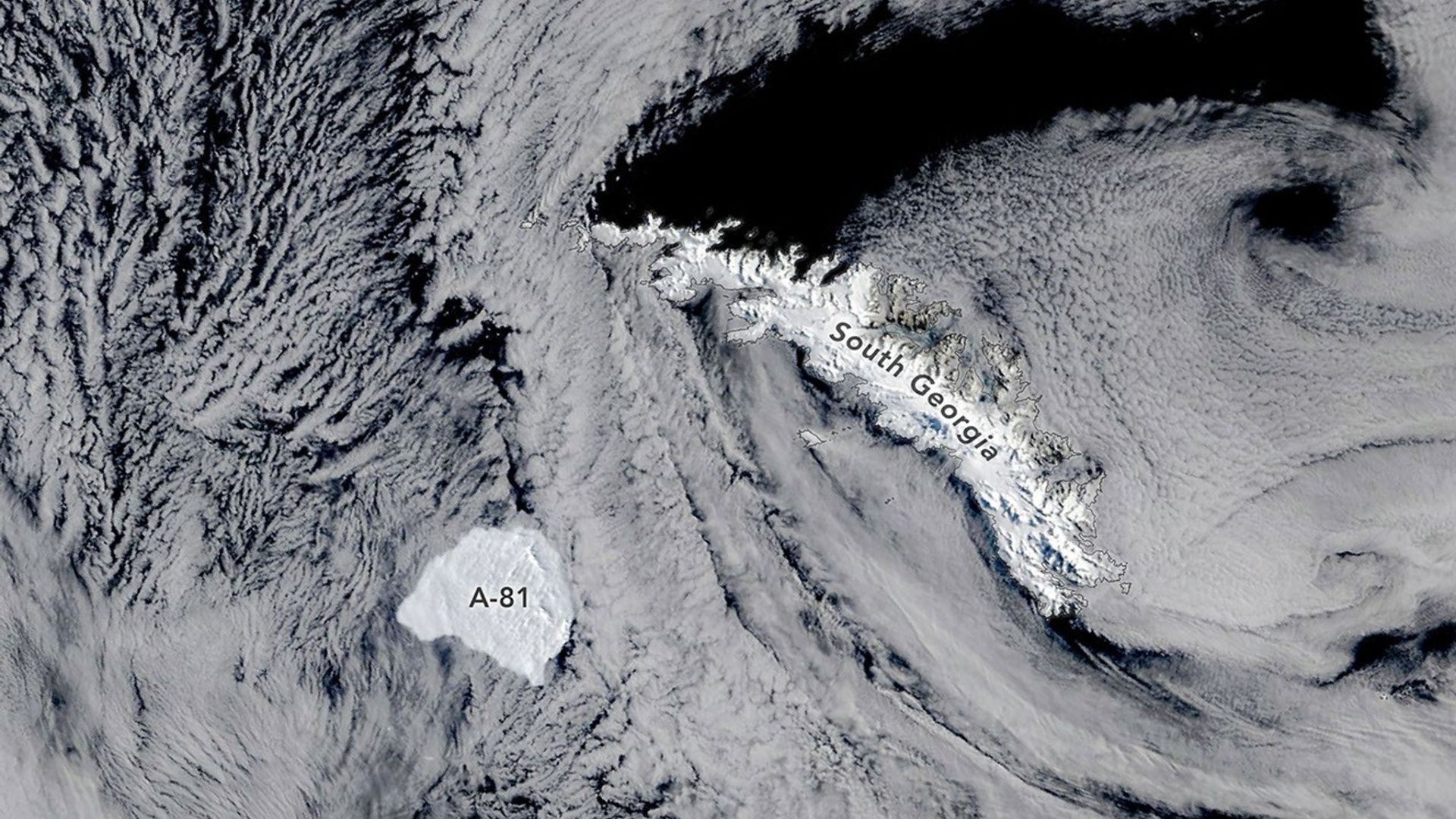
As captured by a satellite in orbit, the Antarctic iceberg A-81 has quite quickly (for an iceberg) parted ways from its icy home, breaking off to drift toward a shallow underwater shelf in Georgia.
The 600-square-mile (1,550-square-kilometer) iceberg first broke off from the Brunt Ice Shelf in January of 2023. Now, generally speaking, giant icebergs don't travel that fast. But In just three years, this massive iceberg has traveled 1,400 miles (2,300 kilometers) north of the Brunt Ice Shelf. For an iceberg, that's really fast. Over this time period, the iceberg drifted through the Weddell Sea in Antarctica's Southern Ocean before reaching the tip of the Antarctic Peninsula, floating further into the Scotia Sea and then finally now reaching the edge of a remote island in South Georgia.
In this satellite snapshot captured on Oct. 20, 2026, we can see the iceberg in its current location near an underwater shelf off the coast of South Georgia. While it isn't abnormal for icebergs like A-81 to break off from larger ice shelves, Brunt has recently had multiple large icebergs break off one quickly after the other, according to a statement from NASA.
This image was captured by the MODIS (Moderate Resolution Imaging Spectroradiometer), an instrument on board NASA's Terra satellite.
Earth-observing satellites like Terra keep a close eye on changes on our home planet. In addition to this image, observations from Terra have showed how the iceberg has traveled over the last few years.
With satellites like Terra, scientists can keep a close eye on these changes in Antarctic ice, which is becoming increasingly important as climate change continues to progress across the globe, affecting everything from Arctic ice to sea levels rising, worsening natural disasters and more.
Chelsea Gohd served as a Senior Writer for Space.com from 2018 to 2022 before returning in 2026, covering everything from climate change to planetary science and human spaceflight in both articles and on-camera in videos. With a M.S. in Biology, Chelsea has written and worked for institutions including NASA JPL, the American Museum of Natural History, Scientific American, Discover Magazine Blog, Astronomy Magazine, and Live Science. When not writing, editing or filming something space-y, Gohd is writing music and performing as Foxanne, even launching a song to space in 2021 with Inspiration4. You can follow her online @chelsea.gohd and @foxanne.music
You must confirm your public display name before commenting