// ARS TECHNICA — MODA & SOCIETÀ
As US ties fray, Europe plans first undersea cable link to Greenland
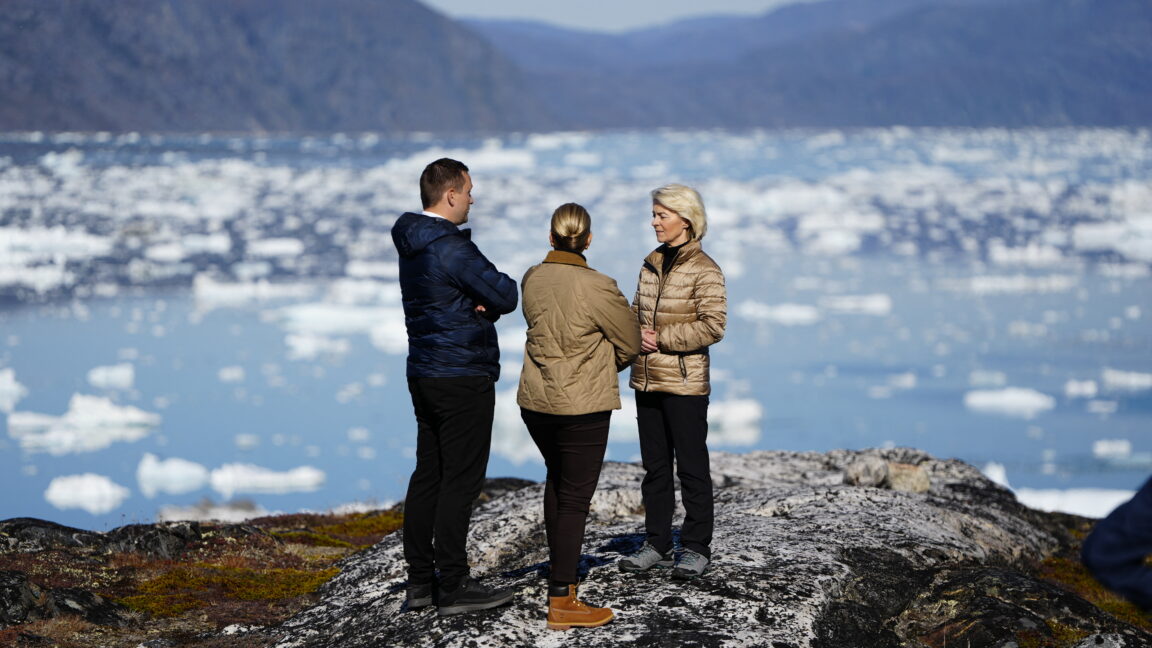
Europe’s Pan-Arctic Cable will bypass US to link Canada, Japan, and South Korea.
The European Union plans to create the first subsea Internet cable directly connecting Europe to Greenland. The Pan-Arctic Cable project could also extend to Canada and eventually link with Japan and South Korea, notably bypassing the United States.
The Pan-Arctic Cable is described as a European Union flagship project in a European Commission joint communication published on October 20, 2026. The policy document describes a new European strategy for the Arctic that supports “a sovereign, secure and resilient submarine cable connection linking Greenland directly to the EU,” while also suggesting that “like-minded partners like Canada” could provide a stepping stone for future cable expansion toward Asia.
“It is interesting that this project is even being considered, because five years ago it would have seemed like not a particularly commercially attractive proposition,” Elisabeth Braw, a senior fellow at the Atlantic Council who leads the Threats to the Global Maritime Order Initiative, told Ars. “But the fact that it’s being considered is very much on trend and a sign of our times.”
The project has gained official support after repeated Trump administration attempts to claim Greenland were finally settled through a trilateral security agreement between the United States, Greenland and Denmark in September 2026. The agreement preserves Greenland’s autonomous territory status within the Kingdom of Denmark while expanding US military access. But relations have grown increasingly strained between the United States and its allies in Europe and Canada since President Trump initiated trade wars with multiple countries and has taken an increasingly pro-Russia stance on the war in Ukraine.
Europe has also been eyeing new Internet cable routes to Asia because more than 90 percent of communications between Europe and Asia run through undersea cables in the Red Sea, according to TeleGeography. Maintaining such cables has become riskier since open warfare resumed between the Yemeni government and Houthi faction this year, with Houthi forces having fired missiles and drones at commercial ships in the Bab el-Mandeb Strait chokepoint and the broader Red Sea.
The Pan-Arctic Cable took shape when European companies and research organizations joined forces with a Greenland telecom operator to sign an agreement on developing the project in 2025, according to Submarine Cable Networks.
Since that time, the project has received European Union backing through the Connecting Europe Facility Digital program. The European Union has already invested $119 million (107 million euros) to “advance Greenland’s secure and sovereign connectivity” along with funding the Pan-Arctic Cable plan, according to the new European Commission policy document on Europe’s Arctic strategy.
But the goal of eventually extending the undersea cable to Japan and South Korea by way of Canada faces considerable challenges, including requiring more European icebreaker ships to support the installation and maintenance of the cable in icy Arctic waters. Multiple pan-Arctic projects have been proposed in the past and some are still in development.
One earlier project known as the Arctic Connect subsea cable aimed to connect Europe and Asia using the Northern Sea Route running along Russia’s Arctic coastline—but that was eventually halted in May 2021 before the full-scale Russian invasion of Ukraine led to growing Russian isolation from Europe.