// SPACE.COM — SPAZIO & SCIENZA
Planetary defense: How military and civil satellites are watching fireballs to help keep Earth safe from space rocks
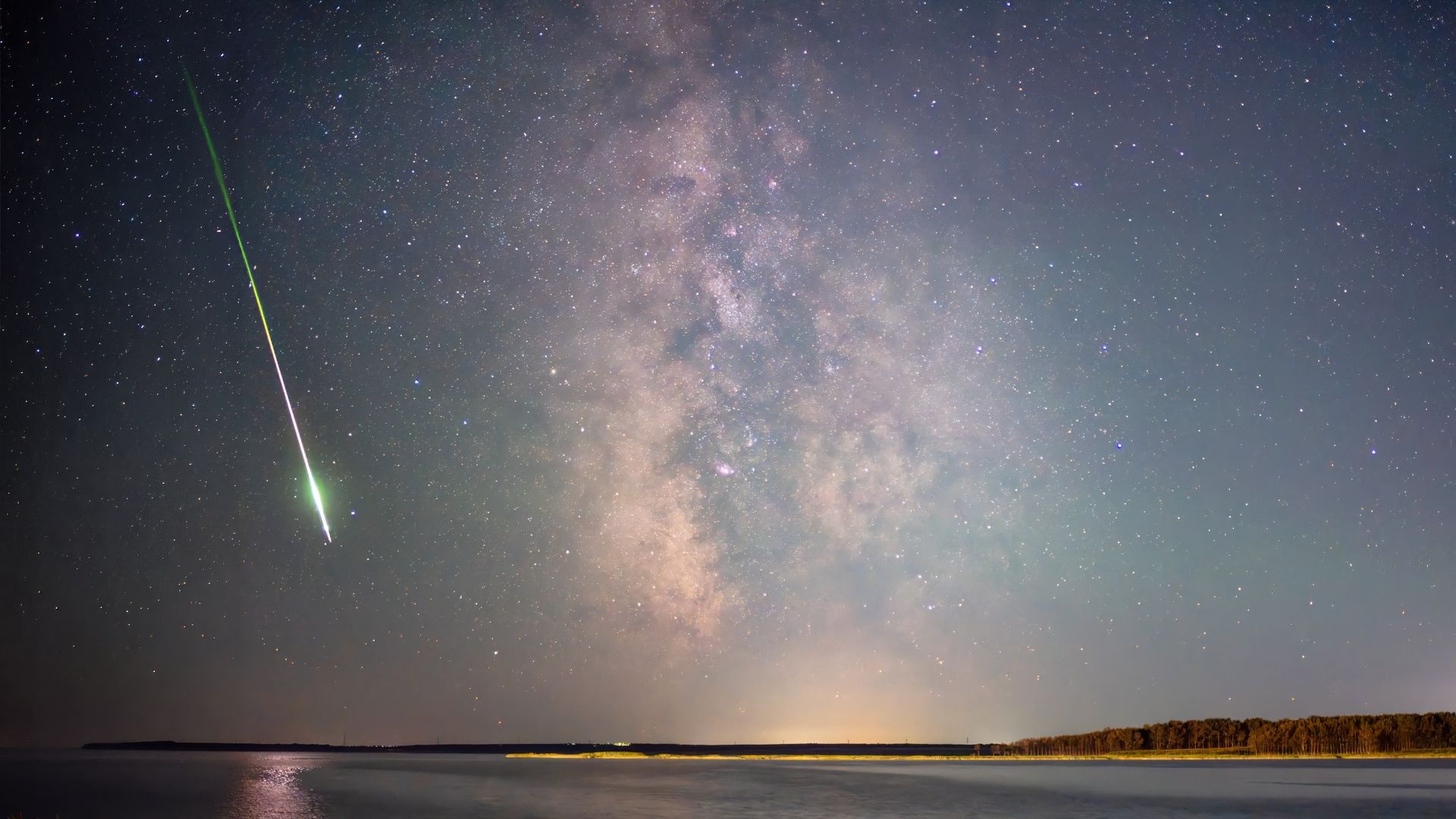
"Planetary defense is not only about finding an object before it reaches Earth. It is also about understanding what happens during atmospheric entry."
When you purchase through links on our site, we may earn an affiliate commission. Here’s how it works.
It came from outer space, exploding high above the South Atlantic off the coast of Argentina.
That April 1 event — an incoming meteor, also termed a bolide — was observed by both U.S. space-based military and civil sensors.
Hush-hush U.S. government satellite sensors detected the speedy fireball cutting through our atmosphere. The object's brightness peaked at an altitude of nearly 60 miles (90.5 kilometers) over the South Atlantic.
That dazzling spectacle was also caught by the National Atmospheric and Oceanic Administration's GOES-E and Europe's Meteosat Third Generation (MTG) Imager-1 satellite. Those two independent spacecraft in geostationary orbit detected the bolide via onboard lightning imagers.
This skyfall show is among a number of recent episodes that spotlight the value of combining multi-sensor data to not only portray fireball dynamics but also to help appreciate human-caused space debris impacts, as well as strengthening planetary defense knowhow.
Take, for instance, another extraterrestrial incident.
In this case, an April 24, 2025 fireball over south-central Alaska yielded one of the most densely recorded "seismoacoustic" datasets ever obtained for a nature-made bolide en route to busting up.
A network of 37 seismic stations, 16 single infrasound sensors, and four infrasound arrays recorded 30 ballistic and multiple fragmentation arrivals. All this was complemented by Doppler weather radar detections of falling meteorites and independent optical video observations.