// SPACE.COM — SPAZIO & SCIENZA
Viltrox AF 35mm f/1.8 II EVO FE (APO) lens review — how good is this budget lens for astrophotography?
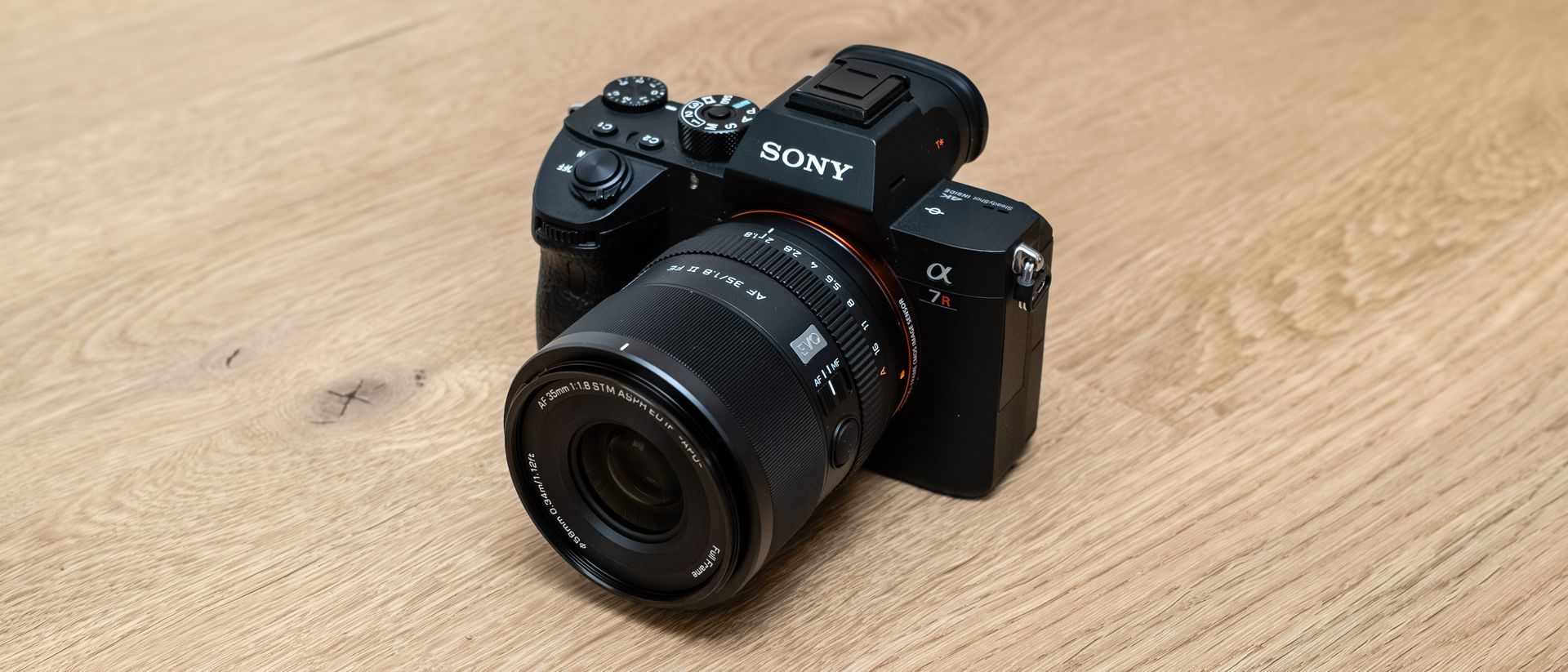
The Viltrox AF 35mm f/1.8 II EVO FE (APO) is an impressive lens for the price and certainly won’t break the bank. Image quality is impressive but imperfect, yet it's still an attractive lens.
Why you can trust Space.com
Our expert reviewers spend hours testing and comparing products and services so you can choose the best for you. Find out more about how we test and review products.
Budget primes can be, surprisingly, excellent choices for photographers shooting all subjects. It’s all too easy to get carried away with the best specs, such as a large maximum aperture and impressive optical design often seen in more expensive options. But affordable lenses like the Viltrox AF 35mm f/1.8 II FE (APO) have the potential to impress and delight in equal measure.
The 35mm f/1.8 is a compact and lightweight lens offering a reasonably fast maximum aperture, making it a prime candidate for astrophotography. It’s also the same size and almost the same weight as the Viltrox AF 55mm f/1.8 FE (APO), another lens that could potentially grace your camera bag.
With a highly attractive price tag of just $399 / £385, and mount options for Nikon Z and Sony FE, many astrophotographers will be wondering if this is a lens worth considering. It features 13 elements in 10 groups, as well as featuring an apochromatic (APO) design for reducing chromatic aberration as much as possible. As much as possible is key here because not all lenses are as successful as the manufacturer claims, although that’s not a comment on the 35mm f/1.8. Read on to discover if this could be one of the best lenses for astrophotography.
For a budget lens, the 35mm f/1.8 produces great, yet not perfect, image quality. On the plus side, images are nice and sharp, particularly in the centre, even when shooting wide open at f/1.8. At this aperture setting, though, there is some astigmatism at the left edges of the frame. This is where stars appear as crosses. This is a surprise since it’s an APO lens, and, equally surprising, it’s isolated, but it is something you have to consider.
You do have to zoom into the image to see it, so it may not be a dealbreaker. Photos shot at f/1.8 are sharpest in the centre, with some fall-off towards the edges, with the corners exhibiting the least sharpness. There’s also the strongest vignetting at f/1.8. At the time of writing, there’s no Adobe Lightroom lens profile for the lens, but you can manually remove the vignetting and even create a preset of your own.
The vignette disappears as soon as f/4, with a gradual increase in sharpness across the frame between f/2.8 and f/5.6. f/8 and f/11 appear identical in terms of sharpness and occupy the sweet spot, while diffraction is clearly at work when you stop down to f/16. In reality, it’s unlikely you’d shoot beyond f/11 with this lens, even if you were shooting landscapes.
Overall, image quality is impressive despite not being perfect and stopping down to f/2.8 when shooting astro does provide greater clarity across the frame. This is, as you know, at the expense of having to shoot at a slightly higher ISO setting to compensate.
While f/1.8 lenses may not have the speed and light-gathering capabilities of faster f/1.4 and f/1.2 lenses, they’re considerably smaller and lighter. The lens only has a 58mm filter thread, so if you use any night filters, they will be at the less expensive end of the price scale.